- English
- French
- German
- Portuguese
- Spanish
- Russian
- Japanese
- Korean
- Arabic
- Greek
- German
- Turkish
- Italian
- Danish
- Romanian
- Indonesian
- Czech
- Afrikaans
- Swedish
- Polish
- Basque
- Catalan
- Esperanto
- Hindi
- Lao
- Albanian
- Amharic
- Armenian
- Azerbaijani
- Belarusian
- Bengali
- Bosnian
- Bulgarian
- Cebuano
- Chichewa
- Corsican
- Croatian
- Dutch
- Estonian
- Filipino
- Finnish
- Frisian
- Galician
- Georgian
- Gujarati
- Haitian
- Hausa
- Hawaiian
- Hebrew
- Hmong
- Hungarian
- Icelandic
- Igbo
- Javanese
- Kannada
- Kazakh
- Khmer
- Kurdish
- Kyrgyz
- Latin
- Latvian
- Lithuanian
- Luxembou..
- Macedonian
- Malagasy
- Malay
- Malayalam
- Maltese
- Maori
- Marathi
- Mongolian
- Burmese
- Nepali
- Norwegian
- Pashto
- Persian
- Punjabi
- Serbian
- Sesotho
- Sinhala
- Slovak
- Slovenian
- Somali
- Samoan
- Scots Gaelic
- Shona
- Sindhi
- Sundanese
- Swahili
- Tajik
- Tamil
- Telugu
- Thai
- Ukrainian
- Urdu
- Uzbek
- Vietnamese
- Welsh
- Xhosa
- Yiddish
- Yoruba
- Zulu
Aluminum Casting Prototyping Service
To validate designs before going into full-scale production, prototype aluminum casting refers to the creation of working test parts from aluminum alloys using controlled molding methods like low-pressure, sand, or investment casting. Engineers can use this method to check the material's mechanical strength, accuracy in measurements, and how it will behave in real life. By making prototypes that are both light and strong, makers can find design flaws early on, cut down on costly production mistakes, speed up time-to-market, and make sure that parts meet strict performance standards in industrial, aerospace, and automobile settings.
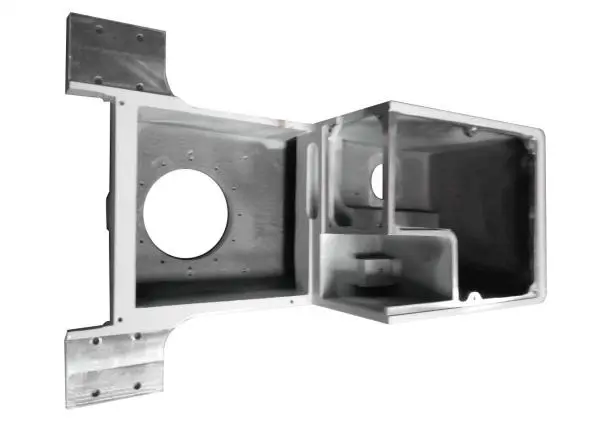
Understanding Aluminum Prototype Casting
Aluminum modeling is now a must for teams working on new products that want to find the best mix between speed, cost, and accuracy. We've seen how picking the right metal and process can make or break a project timeline as we work with companies that make everything from cars to robots. Choosing the right prototype aluminum casting approach ensures structural integrity from the start.
Common Aluminum Alloys for Prototyping
Due to its excellent casting properties, A356 stands out as a top choice for sample work. This metal has a good strength-to-weight ratio, great resistance to corrosion, and great machinability. We use these qualities when making complicated shapes like robot shells or hydraulic parts. Silicon and magnesium in the metal make it more fluid during casting and allow for complex thin-wall parts without affecting the strength of the structure.
When a lot of post-casting cutting needs to be done, 6061 aluminum is another good choice. Because it is easier to machine, it can be used for samples that need to be made with tight specs and for CNC finishing operations. We've had good results using 6061 for housings for energy equipment, where precise measurements directly affect how quickly the parts can be put together.
Principal Casting Methods for Prototypes
In low-pressure casting, controlled pressure is used to push liquid aluminum up into molds. This lowers the amount of turbulence and holes in the metal. This method works especially well for medium-batch prototypes (usually between 50 and 5,000 pieces), where quality is more important than speed. This process is used at our Xi'an plant to make robot shells that weigh 16.7 kg. It achieves levels of density that standard gravity casting can't match.
Sand casting is still a good way to make big, complicated samples with low volume needs. Because sand models can be changed without having to buy expensive new tools, the process can quickly adapt to changes in design. Surface finish and measurement limits, on the other hand, may need more machining.
For aircraft and high-precision uses, investment casting is the best way to get the best surface quality and tightest specs. Wax patterns are put inside clay plates for this process, which makes it possible to make complex shapes like cooling channels or lattice structures. The starting costs are higher, but for important prototypes, the lower need for additional machining often makes up for it.
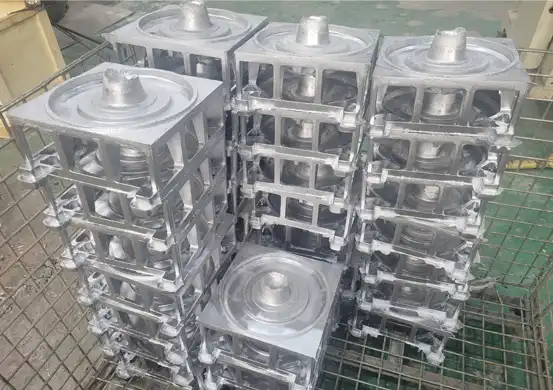
Comparing Aluminum Prototype Casting with Other Prototyping Methods
Purchasing managers often ask us how prototype aluminum casting compares to other ways of making prototypes. Each way is good for different things, and knowing these differences can help you balance professional needs with limited funds.
Mechanical Performance and Durability
In terms of temperature stability and load-bearing capacity, aluminum cast samples are better than plastic counterparts. We tried A356 samples that can work in temperatures above 200°C. At that temperature, industrial plastics start to break down, but A356 samples don't. Because it can handle high temperatures well, aluminum is used for engine parts and power equipment housings, where heat loss directly affects service life.
Cast aluminum has a more regular grain structure than metal parts that are 3D printed. Layer-by-layer building in additive manufacturing can cause directional weaknesses. On the other hand, controlled solidification in casting creates isotropic qualities, which means that strength stays the same no matter the direction of load.
Cost Structures and Batch Economics
Die casting has shorter cycle times than low-pressure ways, but it costs a lot to make the models, usually between $15,000 and $50,000 for complicated ones. This is only a good idea when making more than 1,000 prototypes or when using the same tools for production right away. Our low-pressure method cuts the cost of tools by 40–60% while keeping the quality high enough for confirmation tests.
3D printing gives you more creative freedom than any other method, and for very small orders (under 10 pieces), you don't have to pay for any tools. But the price per unit goes up quickly after 50 pieces, and the qualities of the material rarely meet the technical standards for cast aluminum. We suggest using additive methods to test your ideas and then switching to casting once the designs are stable.
Application Suitability
Plastic prototyping works well for consumer goods and casings that care more about weight and looks than strength. However, the rigidity of aluminum keeps parts for construction equipment like backhoe joints and pump housings from deforming under hydraulic loads that would deform plastic counterparts.
Metal 3D printing is useful for aircraft designs that need bio-inspired lattice structures or cooling channels inside that can't be cast. But when shapes stay the same, casting gives the same results in a third of the time and for half the cost per kilogram.
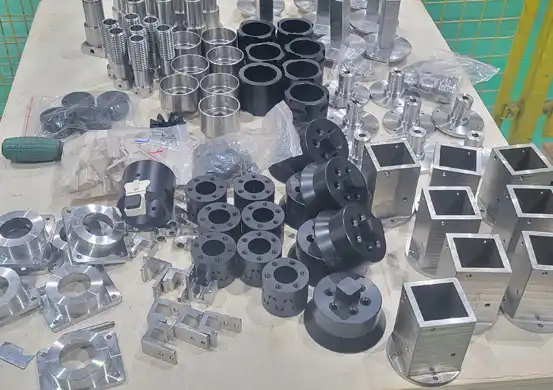
The Aluminum Prototype Casting Process Explained
Before committing to a supplier, quality engineers can set reasonable goals and find possible risk areas by understanding how the prototype aluminum casting process works.
Mold Design and Preparation
Our engineering team works with customers during the design-for-manufacturability review to look at things like parting line placement, draft angles, and the regularity of wall thickness. Correct mold design stops common flaws and lowers the need for cutting after casting. We use CAD models to guess how metal will move and find places where it's likely to shrink, then we change the gates to fit those areas.
For low-pressure molds, making the tools usually takes three to four weeks, depending on how complicated they are. For batches bigger than 2,000 units, steel molds last longer, but aluminum tooling is good for trial runs and cuts lead time to less than two weeks.
Melting and Pouring Operations
In our induction furnaces, the A356 metal melts at about 615°C. The thickness stays the same because the temperature is controlled to within ±5°C. We use grain refiners and degassing agents to keep hydrogen absorption to a minimum. Hydrogen absorption is a main cause of microporosity, which makes the material less strong.
In low-pressure casting, 0.3 to 0.8 bar of pressure is used to slowly fill the mold space from the bottom up. Compared to gravity pouring, this controlled filling lowers the amount of oxide inclusions and air that gets trapped. Holding pressure during solidification makes up for shrinking, which makes the casts denser and with fewer holes inside them.
Finishing and Quality Control
Once the casts are cool, they are shot-blasted to get rid of surface scale and make it easier for finishes to stick. Critical measurements, like mounting holes and matching surfaces, can be made to within 0.05 mm with CNC cutting. As part of our ISO9001:2015 certification, our building has to have a documented review at every stage of the process.
We use CMM tools to check the sizes, do an X-ray to make sure the insides are solid, and test the mechanical strength of sample coupons from each batch. This helps quality engineers to connect process factors with end properties, so if there are any problems, they can quickly fix them.
Typical Lead Times and Constraints
Our Xi'an plant usually completes prototype projects in this order: designing and making the tools (2–4 weeks), casting and finishing (1–2 weeks), and inspecting and packing (3–5 days). Through faster tooling and specialized production slots, rush orders can cut down on wait times by 30%.
Each part can hold between 0.5 kg and 50 kg of weight, and its largest length is no more than 800 mm. Larger parts need to be made in more than one piece and then bolted or soldered together. Our combined machining services take care of all of this.
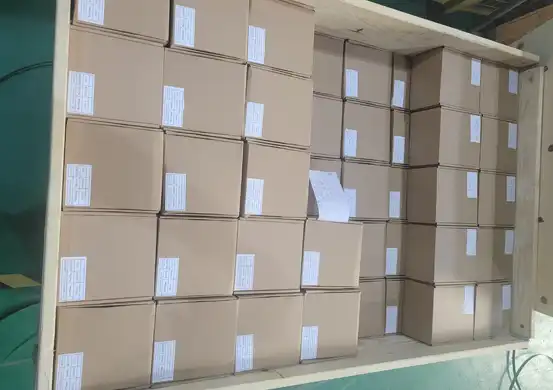
How to Choose the Right Aluminum Prototype Casting Supplier
When choosing a factory partner, supply chain managers need to look at more than just unit prices. They also need to think about long-term dependability, technical skill, and the ability to adapt to changes in the prototype aluminum casting project.
Certifications and Compliance
ISO9001 certification makes sure that quality management methods are standardized, but third-party checks are a better way to make sure that the status is still current. IATF16949 is necessary when prototypes are turned into finished cars because it requires statistical process control and PPAP paperwork.
Environmental and safety standards, like ISO14001 and ISO45001, show that a provider cares about running a business in a way that is good for the environment and for workers. When corporate social responsibility checks go to upstream suppliers, these guidelines are important.
Manufacturing Capabilities and Technology
Visit possible providers to find out how up-to-date their equipment is and how they handle upkeep. Old furnaces or cleaning methods that are done by hand bring variation that makes it hard to try prototypes to see if they work. Automated low-pressure casting cells with built-in temperature tracking are used at our plant. This makes sure that the process can be repeated, which is impossible with human methods.
Ask about the pros and cons of hiring vs. outsourcing. When a supplier does mold-making, casting, grinding, and surface treatment all under one roof, it makes it easier for everyone to talk to each other and be accountable. Because our engineers, production, and quality teams work together in the same building, we've been able to fix design problems in just 48 hours.
Customization and Responsiveness
Design changes are always needed for prototype projects. Check to see how providers handle calls for engineering changes. Do they charge extra for small mold changes, or do they see being flexible as part of the partnership? We cover small modification costs (less than 5% machine change) because we know that improvement is what makes both of us successful.
Get case studies from areas that are related to yours. A supplier with a lot of experience in aerospace precision might find it hard to work with the high costs of building tools, while a supplier whose main focus is on making a lot of cars might not be able to handle multiple changes to the prototype. Our experience in robots, industrial tools, and energy gives us a good understanding of how different clients want things to be done.
Practical Evaluation Questions
Prior to choosing a short list of options, buying teams should make sure that:
- Minimum order quantity: Does the seller accept amounts smaller than 100 pieces, or do they focus on making a lot of them at once?
- Pricing transparency: Are the costs of the tools different from the prices per unit? When do the benefits of repayment start?
- Lead time guarantees: What are the consequences or ways to fix things if delivery dates are missed?
- Design support: Will the seller give DFM feedback on its own, or will it only answer direct questions?
Conclusion
Prototype aluminum casting is a way to get design ideas into parts that are ready for production. It has mechanical properties that plastic or printed options can't match. Procurement and engineering teams can speed up product development and keep costs low by knowing alloy selection, process trade-offs, and source evaluation criteria. Low-pressure casting is especially useful for making medium-batch prototypes that need to be structurally sound and have consistent dimensions. These are traits that are needed in the automobile, building equipment, and industrial machinery industries. When you work with an expert prototype aluminum casting provider, you get access to a wide range of manufacturing options, quality control systems, and quick technical support that can help you turn validation problems into competitive benefits.
FAQ
What lead times should we expect for aluminum casting prototypes?
Usually, it takes 4–6 weeks from the time the plan is approved until the product is delivered. This includes 2–4 weeks for making the tools and 1–2 weeks for casting, cutting, and inspecting. This can be cut down to 3–4 weeks with expedited service if the client agrees to simpler tooling methods. Setting up low-pressure casting takes longer than setting up sand casting, but the uniformity is better for confirmation testing of a prototype aluminum casting.
Is aluminum casting cost-effective for small prototype batches?
Yes, especially when validating the design means making sure the mechanical features match what was planned for production. For orders of less than 10 pieces, casting is more expensive per unit than 3D printing. However, after 50 units, casting becomes cost-effective. The cost of the tools—$3,000 to $12,000 for low-pressure molds—is quickly recouped, and the cost of the materials stays the same, unlike expensive powders used in additive manufacturing.
How do you prevent common casting defects like porosity?
We use several methods to stop defects, such as removing hydrogen from molten aluminum, controlling fill rates to reduce turbulence, and adding holding pressure during solidification to make up for shrinking. An X-ray check confirms that the inside is sound, and statistical process control keeps track of the factors that are linked to the formation of defects. When failure rates go over 2%, our ISO9001:2015 system requires a root-cause study.
Connect with a Trusted Aluminum Casting Prototyping Supplier
To speed up the development of your product, you need a production partner who knows how to be precise with technology and flexible with projects. Rongbao Enterprise has been casting for 20 years and has ISO-certified quality processes and the ability to do the whole production process, from designing the molds to CNC finishing them. Our Xi'an plant specializes in low-pressure prototype aluminum casting for production runs of up to 5,000 pieces per year. It works with companies in North America, Europe, and Asia that make cars, building equipment, and industrial equipment. Our engineering team can help you with design quickly and clearly, whether you need a single A356 metal robot shell prototype or a test run of 500 hydraulic housings. Email us at steve.zhou@263.net or zhouyi@rongbaocasting.com to talk about your sample needs with a dependable aluminum casting company that wants your project to succeed.
References
1. Campbell, J. (2015). Complete Casting Handbook: Metal Casting Processes, Metallurgy, Techniques and Design. Butterworth-Heinemann.
2. Kaufman, J.G., & Rooy, E.L. (2004). Aluminum Alloy Castings: Properties, Processes, and Applications. ASM International.
3. Clegg, A.J., & Das, A.A. (2013). Precision Casting Processes. Pergamon Press.
4. American Foundry Society. (2018). Low Pressure Casting Technology and Applications. AFS Technical Publications.
5. Bonollo, F., Urban, J., Bonatto, B., & Botter, M. (2005). Gravity and Low Pressure Die Casting of Aluminum Alloys: A Technical and Economical Benchmark. La Metallurgia Italiana.
6. Jorstad, J.L., & Apelian, D. (2009). Pressure-Assisted Processes for High-Integrity Aluminum Castings. International Journal of Metalcasting.
Learn about our latest products and discounts through SMS or email