- English
- French
- German
- Portuguese
- Spanish
- Russian
- Japanese
- Korean
- Arabic
- Greek
- German
- Turkish
- Italian
- Danish
- Romanian
- Indonesian
- Czech
- Afrikaans
- Swedish
- Polish
- Basque
- Catalan
- Esperanto
- Hindi
- Lao
- Albanian
- Amharic
- Armenian
- Azerbaijani
- Belarusian
- Bengali
- Bosnian
- Bulgarian
- Cebuano
- Chichewa
- Corsican
- Croatian
- Dutch
- Estonian
- Filipino
- Finnish
- Frisian
- Galician
- Georgian
- Gujarati
- Haitian
- Hausa
- Hawaiian
- Hebrew
- Hmong
- Hungarian
- Icelandic
- Igbo
- Javanese
- Kannada
- Kazakh
- Khmer
- Kurdish
- Kyrgyz
- Latin
- Latvian
- Lithuanian
- Luxembou..
- Macedonian
- Malagasy
- Malay
- Malayalam
- Maltese
- Maori
- Marathi
- Mongolian
- Burmese
- Nepali
- Norwegian
- Pashto
- Persian
- Punjabi
- Serbian
- Sesotho
- Sinhala
- Slovak
- Slovenian
- Somali
- Samoan
- Scots Gaelic
- Shona
- Sindhi
- Sundanese
- Swahili
- Tajik
- Tamil
- Telugu
- Thai
- Ukrainian
- Urdu
- Uzbek
- Vietnamese
- Welsh
- Xhosa
- Yiddish
- Yoruba
- Zulu
5 Common Defects in Custom Sand Casting
Custom sand casting represents a cornerstone manufacturing process. Fundamentally, this method transforms molten metal into precision components through carefully prepared sand molds. This time-tested technique serves diverse industries. Specifically, these include automotive, aerospace, and industrial equipment manufacturing. In these sectors, reliability and dimensional accuracy remain paramount. However, defects can occur. Therefore, understanding the most prevalent defects in custom sand casting operations enables procurement managers and engineers. By doing so, they make informed decisions. Furthermore, they reduce rejection rates. Ultimately, they establish partnerships with suppliers who demonstrate superior quality control. The following comprehensive analysis explores five critical defect categories. Simultaneously, it provides actionable prevention strategies. These strategies directly impact production efficiency and cost management.
Sand Inclusion Defects and Prevention Strategies
Sand inclusion represents one of the most frustrating challenges in custom sand casting operations. Typically, this occurs when loose sand particles become embedded within the final component. Unfortunately, this contamination compromises both surface finish and structural integrity. It is particularly problematic for components requiring smooth operation. Moreover, it affects parts needing aesthetic appeal. Generally, the defect manifests as rough, gritty surfaces. Alternatively, it appears as visible particles protruding from the casting surface.
Root Causes of Sand Inclusion
Primarily, the contributors to sand inclusion stem from inadequate mold preparation. Furthermore, poor material selection plays a major role. For instance, insufficient mold compaction allows sand particles to dislodge. This happens specifically during metal pouring. Meanwhile, incorrect sand grain size creates unstable mold surfaces. Additionally, inadequate venting systems fail. They do not evacuate gases effectively. Consequently, this creates turbulence. This turbulence loosens sand particles. Subsequently, it incorporates them into the molten metal stream.
Moisture content in sand mixtures also plays a critical role in mold stability. Excessive moisture weakens sand bonds. Conversely, insufficient moisture prevents proper compaction. Therefore, the binder-to-sand ratio requires precise control. Inadequate binding agents result in friable molds. These molds shed particles during custom sand casting operations.
Prevention Methods and Best Practices
To begin with, effective sand inclusion prevention starts with rigorous material selection. It also requires strict preparation protocols. High-quality silica sand with uniform grain distribution provides stable mold surfaces. Simultaneously, appropriate binder systems ensure adequate strength during metal pouring. Furthermore, controlled moisture content optimizes compaction characteristics. Typically, operators maintain this between 3-5%, depending on the sand type.
In addition, advanced venting design eliminates gas entrapment. It also reduces mold erosion. Strategic placement of vents allows smooth gas evacuation. Importantly, this occurs without creating areas of weakness. Modern foundries employ vacuum-assisted molding systems. These systems enhance compaction uniformity. As a result, they reduce inclusion risks significantly.
Finally, quality control measures include regular sand testing. Technicians check for grain fineness, moisture content, and clay percentage. Implementing these protocols has demonstrated measurable improvements. For example, leading suppliers achieve a 30% reduction in sand inclusion rates. They achieve this through systematic process optimization.
Porosity Formation and Control Measures
Porosity manifests as internal voids or cavities within castings. Unfortunately, this significantly compromises mechanical properties. Potentially, it causes catastrophic failures in high-stress applications. This defect category includes gas porosity from trapped gases. It also includes shrinkage porosity from inadequate feeding. Furthermore, microporosity develops from rapid solidification. Therefore, understanding porosity formation mechanisms enables targeted prevention strategies in custom sand casting.
Understanding Porosity Types
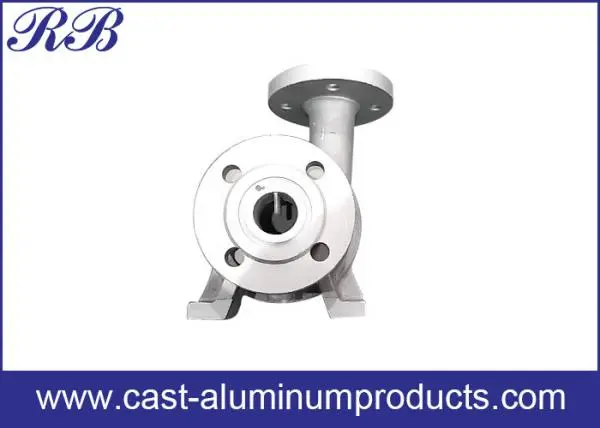
First, gas porosity results from hydrogen absorption during melting. Alternatively, it comes from inadequate degassing procedures. The molten aluminum alloy ZL101A is commonly used in fire pump accessories. However, it readily absorbs hydrogen from atmospheric moisture. Consequently, this creates bubble formation during solidification. On the other hand, shrinkage porosity occurs differently. It happens when insufficient liquid metal feeds contracting areas during cooling. Meanwhile, microporosity develops from rapid heat extraction rates.
Advanced Prevention Techniques
Currently, modern porosity control relies on sophisticated simulation software. This technology predicts solidification patterns. Moreover, it identifies potential problem areas before custom sand casting begins. Computer modeling enables optimal gating and riser design. This ensures adequate feeding throughout the solidification process. Additionally, temperature control systems maintain precise melt temperatures. Typically, foundries aim for 730-750°C for aluminum alloys. This prevents overheating. Overheating exacerbates gas absorption significantly.
Furthermore, degassing procedures utilize rotary degassing systems. Alternatively, operators use tablet degassers. These methods effectively remove hydrogen from molten metal. Regular testing uses reduced pressure testing equipment. This quantifies gas content. It ensures levels remain below critical thresholds. These comprehensive approaches prove essential. They are particularly vital for aerospace and automotive applications. In these fields, porosity tolerance approaches zero.
Misruns and Cold Shuts: Flow-Related Defects
Misruns and cold shuts represent flow-related defects. They result from incomplete mold filling. Or, they stem from premature metal solidification during custom sand casting operations. These defects create visible discontinuities. They also cause incomplete sections. Sometimes, they result in weak joints where metal streams failed to fuse properly. The consequences extend beyond aesthetic concerns. Significantly, they reduce mechanical strength. This creates potential failure points.
Identifying Causative Factors
Primarily, low pouring temperatures constitute the main cause of flow-related defects. Insufficient superheat prevents complete mold filling before solidification begins. Furthermore, inadequate gating system design restricts metal flow. Meanwhile, improper runner sizing creates excessive turbulence. It may also cause insufficient flow rates. Additionally, mold design deficiencies impede smooth metal flow patterns. These include sharp corners or inadequate draft angles.
Pouring technique significantly influences flow characteristics as well. Inconsistent pouring rates introduce air entrapment. Interrupted streams do the same. Moreover, excessive pouring height causes flow disruption. Finally, environmental factors affect melt behavior. For example, ambient temperature and humidity impact solidification rates.
Optimization Strategies for Flow Control
Ultimately, successful flow control requires integrated approaches. These combine proper metallurgy with optimized mold design. Operators must maintain adequate pouring temperatures. Typically, this is 100-150°C above liquidus temperature for aluminum alloys. This ensures sufficient fluidity throughout the filling process. Additionally, advanced gating system design employs computational fluid dynamics. This optimizes runner placement and sizing.
Simulation software enables predictive analysis of filling patterns. It identifies potential problem areas before production begins. Modern foundries utilize these tools. They validate gating designs and pouring parameters. Consequently, this significantly reduces trial-and-error approaches. Implementation of these advanced techniques demonstrates substantial improvements. Specifically, yield rates and component quality improve across automotive and industrial applications.
Mold Shift and Dimensional Accuracy Issues
Mold shift represents a critical defect category. Here, misalignment between mold halves creates dimensional inaccuracies. These inaccuracies render components unusable for precision applications. This defect proves particularly problematic for automotive and aerospace components. These parts require tight tolerances. Even minor dimensional variations can compromise fit and function in custom sand casting. Therefore, understanding mold shift causes enables the implementation of robust prevention protocols.
Analysis of Mold Shift Causes
Notably, assembly errors during mold preparation constitute the primary source of mold shift defects. Inadequate registration systems fail. They do not maintain proper alignment during mold closing operations. Furthermore, insufficient clamping pressure allows movement during metal pouring. Additionally, poor mold handling procedures introduce alignment errors. This is particularly true in high-volume production environments.
Mold design deficiencies contribute significantly to shift susceptibility too. Inadequate draft angles increase extraction forces. Potentially, this disturbs mold alignment during pattern removal. Moreover, insufficient mold strength allows deformation. This occurs under metallostatic pressure. Finally, improper core positioning creates internal stresses. These stresses promote shifting.
Precision Control Methods
Generally, prevention strategies encompass comprehensive quality systems. These address design, assembly, and handling procedures. Advanced registration systems utilize precision-machined locating pins. They also use bushings. These tools ensure repeatable alignment accuracy. Furthermore, high-strength molding materials resist deformation. They withstand casting pressures while maintaining dimensional stability.
In addition, computer-aided design software incorporates optimal draft angles. It also calculates fillet radii. These features facilitate pattern removal. Simultaneously, they minimize mold disturbance. Automated molding equipment reduces human error. It ensures consistent assembly procedures. Finally, quality control protocols include dimensional verification. This happens at multiple process stages. It enables early detection and correction of alignment issues.
Surface Defects: Roughness, Cracks, and Blowholes
Surface quality directly impacts functional performance. It also determines the aesthetic acceptability of cast components. Surface defects encompass various manifestations. These include excessive roughness, thermal cracks, and gas-related blowholes. Often, these imperfections require costly secondary operations. Sometimes, they result in component rejection. Therefore, prevention strategies become economically critical for suppliers and purchasers alike.
Surface Defect Classification and Origins
Typically, surface roughness stems from sand grain characteristics. It also relates to mold surface quality. Coarse sand grains create naturally rough surfaces. Conversely, poor binder distribution results in irregular surface textures. Inadequate mold compaction allows surface irregularities. These transfer directly to the casting surface. Fortunately, the selection of appropriate surface treatment methods can help. For instance, shot blasting can significantly improve final surface quality.
Thermal cracks develop from rapid cooling rates. These rates create differential thermal stresses within the casting. Typically, these defects appear as fine surface fissures. They may propagate under service loads. On the other hand, blowholes result from gas entrapment. This happens at the mold-metal interface. It creates characteristic pit-like depressions on casting surfaces.
Advanced Surface Quality Enhancement
Currently, modern surface quality control employs multi-faceted approaches. These combine material selection, process optimization, and advanced treatment methods. Fine sand systems utilize zircon or chromite sands. These produce superior surface finishes compared to conventional silica sands. Additionally, specialized binder systems create smooth mold surfaces. They do this while maintaining adequate strength for demanding custom sand casting applications.
Controlled cooling protocols minimize thermal stress development. They achieve this through graduated temperature reduction. Furthermore, advanced mold design incorporates thermal modeling. This predicts cooling patterns. It also optimizes section transitions. These comprehensive approaches enable the achievement of superior surface qualities. Ultimately, they meet demanding aerospace and automotive specifications. They also reduce post-casting processing requirements.
Rongbao Enterprise: Your Trusted Custom Sand Casting Solutions Partner
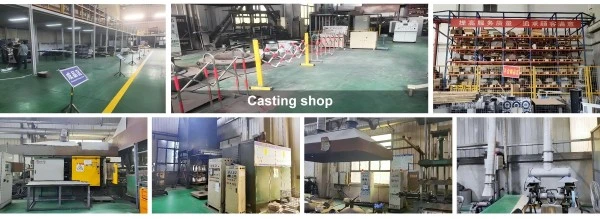
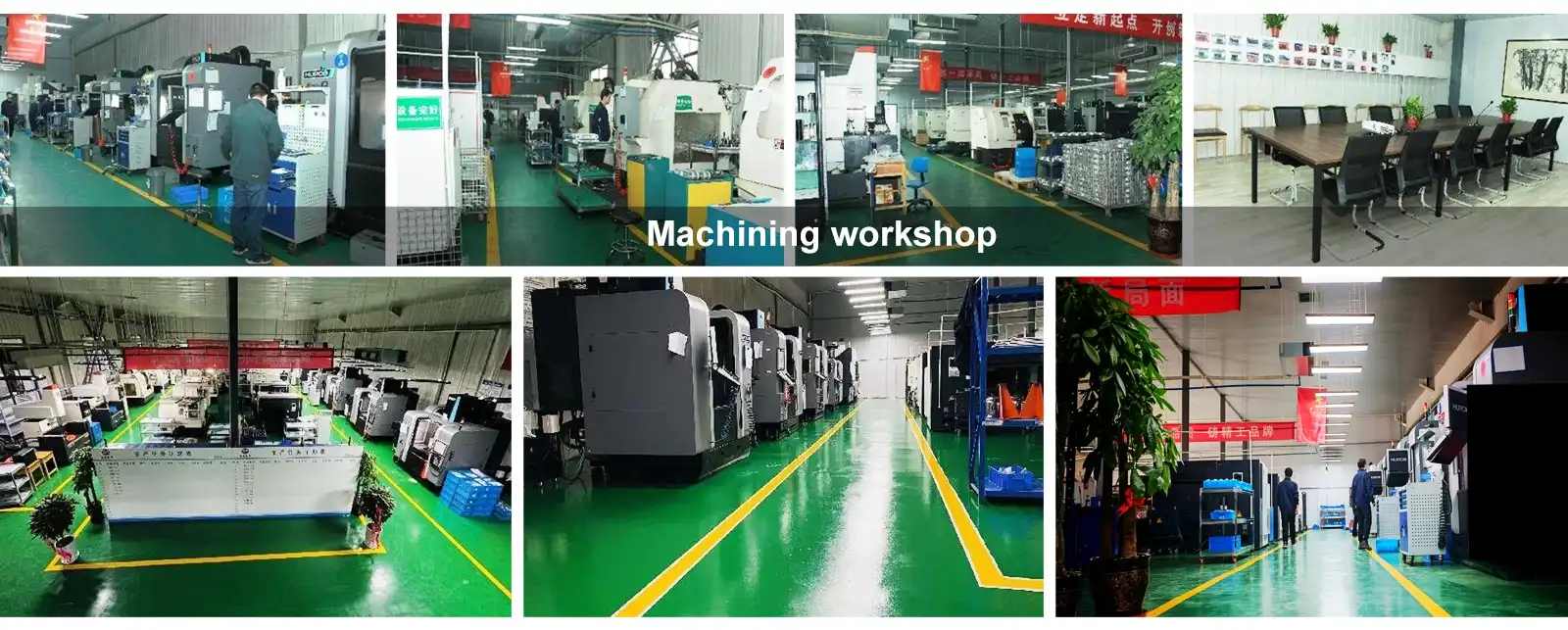
Proudly, Rongbao Enterprise stands at the forefront of precision metal casting. We deliver comprehensive manufacturing solutions for fire pump accessories. We also serve industrial components across diverse sectors. Our state-of-the-art facility is located in Xi'an, China. It combines advanced gravity casting capabilities with precision CNC machining. Furthermore, we offer professional surface treatments. These include shot blasting operations. With ISO9001:2015, ISO14001, and ISO45001 certifications, we maintain rigorous quality standards throughout our manufacturing processes.
Our expertise spans complete component solutions. Specifically, we utilize ZL101A aluminum alloy for demanding applications. These require both strength and corrosion resistance. Moreover, production capabilities accommodate large-scale orders. We handle up to 5000 pieces while maintaining strict dimensional tolerances. We achieve this through advanced quality control systems. Additionally, each component undergoes comprehensive inspection protocols. This ensures consistent performance across production batches.
The comprehensive service portfolio includes custom design development. It also covers precision custom sand casting operations and CNC machining. Finally, we provide professional packaging in protective wooden boxes. This ensures secure international shipping. Twenty years of industry experience combined with continuous process improvement helps us. It enables the delivery of superior components. We exceed customer expectations while maintaining competitive lead times and pricing structures.
Conclusion
In conclusion, understanding and preventing common defects in custom sand casting operations is vital. It directly impacts procurement success, product reliability, and overall manufacturing costs. The five critical defect categories require attention. These are sand inclusion, porosity, misruns and cold shuts, mold shift, and surface defects. Each requires specific prevention strategies. Furthermore, they demand quality control measures. Successful defect prevention relies on comprehensive approaches. These combine proper material selection, advanced process control, and rigorous quality systems. Ultimately, procurement professionals benefit from partnering with experienced suppliers. These partners demonstrate mastery of these technical challenges. Simultaneously, they maintain consistent quality standards and delivery performance.
Partner with Rongbao Enterprise for Superior Custom Sand Casting Solutions
Rongbao Enterprise delivers exceptional quality and reliability. As your dedicated custom sand casting manufacturer, we combine advanced gravity casting technologies with comprehensive quality management systems. Our expert engineering team provides complete design-to-delivery solutions. We specialize in fire pump accessories and precision industrial components. We ensure optimal performance and cost-effectiveness. Contact steve.zhou@263.net and zhouyi@rongbaocasting.com to discuss your specific requirements. Discover how our proven capabilities can enhance your supply chain performance.
FAQ
What materials work best for custom sand casting applications?
Aluminum alloys like ZL101A offer excellent castability. They also provide corrosion resistance and mechanical properties. These are suitable for fire pump accessories and industrial components. Steel alloys provide superior strength for high-stress applications. Additionally, specialized alloys serve aerospace and automotive requirements. They come with precise material certifications.
How can procurement teams evaluate supplier casting capabilities?
Comprehensive supplier evaluation should include facility audits. Focus on equipment capabilities and quality control systems. Also, check for certification compliance. Review sample components for surface finish quality. Check dimensional accuracy and internal soundness through appropriate testing methods. Finally, assess production capacity, delivery performance history, and technical support capabilities.
What minimum order quantities apply for custom casting projects?
Production quantities vary significantly based on component complexity. Tooling requirements and material specifications also matter. Many suppliers accommodate orders from prototype quantities. They also handle large-scale production runs exceeding 5000 pieces. Pricing structures reflect volume economies and tooling amortization considerations.
References
- Campbell, John. "Complete Casting Handbook: Metal Casting Processes, Metallurgy, Techniques and Design." Butterworth-Heinemann, 2015.
- Brown, John R. "Foseco Ferrous Foundryman's Handbook." Butterworth-Heinemann, 2000.
- Dieter, George E. "Engineering Design: A Materials and Processing Approach." McGraw-Hill Education, 2017.
- ASM International. "ASM Handbook Volume 15: Casting." ASM International Materials Park, 2008.
- Beeley, Peter R. "Foundry Technology." Butterworth-Heinemann, 2001.
- Stefanescu, Doru M. "Science and Engineering of Casting Solidification." Springer, 2015.
Learn about our latest products and discounts through SMS or email