- English
- French
- German
- Portuguese
- Spanish
- Russian
- Japanese
- Korean
- Arabic
- Greek
- German
- Turkish
- Italian
- Danish
- Romanian
- Indonesian
- Czech
- Afrikaans
- Swedish
- Polish
- Basque
- Catalan
- Esperanto
- Hindi
- Lao
- Albanian
- Amharic
- Armenian
- Azerbaijani
- Belarusian
- Bengali
- Bosnian
- Bulgarian
- Cebuano
- Chichewa
- Corsican
- Croatian
- Dutch
- Estonian
- Filipino
- Finnish
- Frisian
- Galician
- Georgian
- Gujarati
- Haitian
- Hausa
- Hawaiian
- Hebrew
- Hmong
- Hungarian
- Icelandic
- Igbo
- Javanese
- Kannada
- Kazakh
- Khmer
- Kurdish
- Kyrgyz
- Latin
- Latvian
- Lithuanian
- Luxembou..
- Macedonian
- Malagasy
- Malay
- Malayalam
- Maltese
- Maori
- Marathi
- Mongolian
- Burmese
- Nepali
- Norwegian
- Pashto
- Persian
- Punjabi
- Serbian
- Sesotho
- Sinhala
- Slovak
- Slovenian
- Somali
- Samoan
- Scots Gaelic
- Shona
- Sindhi
- Sundanese
- Swahili
- Tajik
- Tamil
- Telugu
- Thai
- Ukrainian
- Urdu
- Uzbek
- Vietnamese
- Welsh
- Xhosa
- Yiddish
- Yoruba
- Zulu
3d Printed Power Supply Cover VS Motor Cover Casting
When procurement managers have to choose between 3D printed power supply covers and Motor Cover Casting, they have to make important considerations that affect quality, pricing, and delivery times. Motor Cover Casting uses tried-and-true die casting methods and materials like A380 aluminum alloy to make covers that are strong and precise, weighing between 0.3 and 0.8 kg, using high-pressure casting methods. This way of making things is better at keeping structures strong and managing heat than 3D printing. That's why industrial equipment makers who need reliable, large-scale production with uniform quality standards use it.
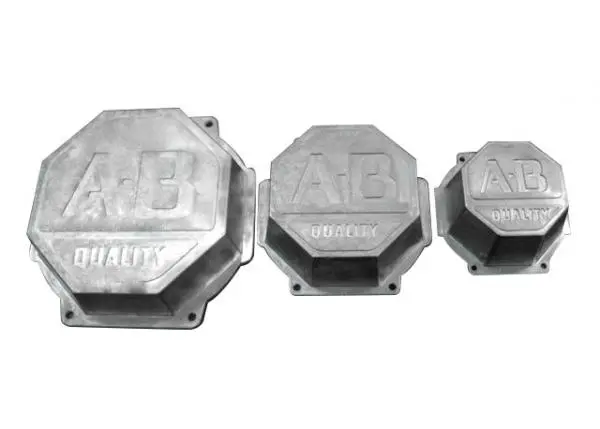
Understanding Power Supply Covers and Motor Covers: Manufacturing Technologies Overview
Modern industrial machinery needs strong protective covers that keep important parts safe from environmental dangers while still letting the machine work at its best. There are two main ways to make things: classic casting processes and new additive manufacturing technologies. Each one meets a different market demand.
What Are Power Supply Covers and Motor Covers?
In industrial settings, power supply covers and motor covers protect electrical parts by covering them. These covers help keep delicate electronic equipment safe from the weather, give structural support, and help keep them cool. Power supply covers usually have transformers, circuit boards, and cooling parts inside them. Motor covers, on the other hand, protect spinning parts, bearings, and electrical connections.
Both types of covers must be accurate in size, made of durable materials, and guard against electromagnetic interference. Manufacturing tolerances must allow for thermal expansion, resistance to vibration, and long-term operational stability in a variety of industrial settings.
Traditional Motor Cover Casting Methods and Applications
Motor Cover Casting is a tried-and-true way of making things that works well for medium to high-volume production needs. The technique uses aluminum alloys, especially A380 material, which has great strength-to-weight ratios and great thermal conductivity.
High-pressure die casting makes solid, even structures that don't have the porosity and shrinkage problems that other manufacturing methods do. The method gets dimensional tolerances within ±0.1mm and keeps smooth surface finishes that are good for direct assembly applications. CNC machining makes essential mounting surfaces and connection points even more precise.
Emerging 3D Printing Technology for Cover Manufacturing
Companies that make custom solutions or low-volume applications like additive manufacturing because it lets them create freely and quickly make prototypes. With previous methods, it would take several assembly steps to make intricate internal shapes and built-in features.
However, compared to traditional casting methods, 3D printing has problems with choosing materials, getting a good surface polish, and scaling up production. Post-processing needs often slow down and cost more to make things, especially when smooth surfaces or high dimensional tolerances are needed.
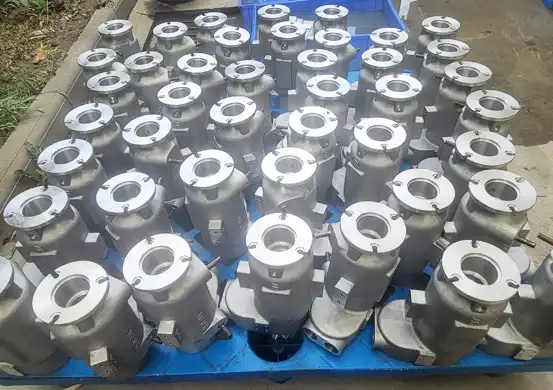
Comparative Analysis: 3D Printing vs Die Casting for Motor Covers
Understanding the main differences between manufacturing methods helps procurement teams make smart choices when looking at supplier options and production strategy.
Material Properties and Durability Comparison
The A380 aluminum alloy used in Motor Cover Casting has better mechanical qualities than typical 3D printing materials. The alloy has a tensile strength of more than 310 MPa and a thermal conductivity of 96 W/m·K, which makes it perfect for use in situations where heat needs to be dissipated.
Die-cast parts have a regular grain structure and very little porosity, which means that they work the same way in every batch of manufacture. Anodizing surface treatment greatly improves the material's resistance to corrosion, which makes it last longer in severe industrial settings. On the other hand, 3D printed parts may not stick together well and have different material qualities depending on how they are created and how they are finished.
Manufacturing Speed and Lead Time Analysis
Once the tooling is done, high-pressure casting methods may make parts in less than 60 seconds, which means they can make a lot of parts quickly. It takes 2 to 4 weeks to make the first tools, but they can make more than 10,000 items a year with the same level of quality.
3D printing does away with the need for tools, so prototypes can be delivered in one to three days. However, when it comes to intricate shapes, the time it takes to make each unit goes up a lot, which makes it hard to scale up for applications with a lot of units. The limits on the size of the build chamber also limit the size of the batches, which might cause problems when deliveries are needed quickly.
Cost Structure: Initial Investment vs Unit Economics
Motor Cover Casting needs tools and equipment to be bought ahead of time, but it offers reasonable unit pricing for orders of more than 500 units. When you spread out the expenses of tools over multiple production runs, you have economies of scale that help long-term procurement strategy.
3D printing doesn't need to pay for tools up front, but the cost per unit stays the same no matter how many you make. Costs for materials, machine time, and post-processing can add up to more than the cost of casting for medium- to high-volume applications.
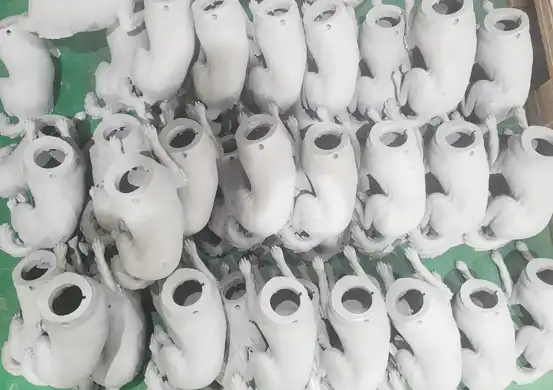
Design Flexibility and Customization Capabilities
Motor Cover Casting allows for a lot of customisation by optimizing the design of the mold, while 3D printing gives you more freedom in terms of shapes. During the tooling development phase, you can add draft angles, wall thickness variations, and built-in mounting elements to satisfy the needs of a specific application.
OEM and ODM capabilities allow for customized solutions that meet the individual needs of each customer while yet keeping production efficient. When you combine casting design knowledge with CNC machining skills, you can fully customize difficult applications.
Quality Standards and Tolerance Levels
Die casting processes always get dimensional tolerances of ±0.1mm for important features and surface roughness levels of less than 3.2 Ra after machining. Statistical process control and checking the materials that come in make sure that each batch is the same during manufacturing runs.
Quality control systems that work with ISO-certified manufacturing processes give you the traceability and documentation you need for automotive, aerospace, and industrial equipment uses. X-ray and ultrasonic inspection are two examples of non-destructive testing that can check the integrity of the interior structure of mission-critical parts.
Manufacturing Process Deep Dive: Strengths and Limitations
Looking at the technical details of each manufacturing method shows the pros and downsides that affect how suppliers are chosen and how goods are bought.
3D Printing Process for Power Supply Covers
The additive manufacturing workflow begins with digital file preparation and support structure generation, followed by layer-by-layer material deposition. Material selection remains limited to polymers, metal powders, and composite filaments that may not match the performance characteristics of cast aluminum alloys.
Key process considerations include:
- Build orientation effects on surface finish and mechanical properties
- Support removal requirements that may damage delicate features
- Layer adhesion quality influenced by printing parameters and environmental conditions
Support removal, surface smoothing, and dimensional verification are all common post-processing steps that must be done before parts can be put together. These extra stages make lead times and handling costs higher than they would be with net-shape casting.
For industrial uses that need stable performance standards, these processing limits can have a big effect on production efficiency and quality consistency.
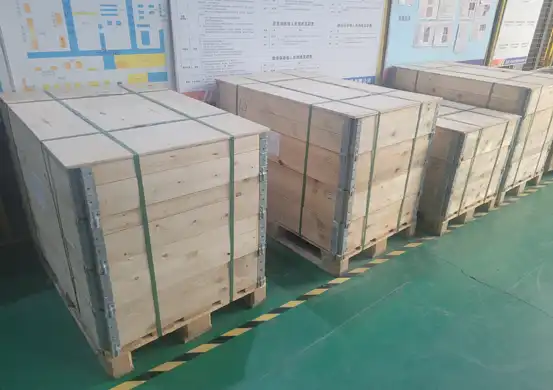
Motor Cover Casting Manufacturing Process
High-pressure die casting utilizes molten A380 aluminum injected into precision tooling under pressures exceeding 10,000 PSI. The rapid solidification creates fine grain structures with minimal porosity and excellent surface finish quality suitable for direct assembly.
The integrated manufacturing workflow encompasses several critical stages:
- Mold preheating and lubrication to ensure consistent part quality
- Automated injection timing and pressure control for dimensional accuracy
- Rapid cooling cycles that maintain productivity while ensuring complete solidification
CNC lathe operations provide precision machining for mounting surfaces, bearing bores, and threaded features that require tight tolerances. Anodizing surface treatment enhances corrosion resistance and provides aesthetic appeal for visible applications.
This comprehensive process integration delivers finished components that meet stringent quality standards without extensive post-processing requirements.
Production Volume Considerations
The economics of manufacturing change a lot depending on how much has to be made. Motor Cover Casting gets cheaper as the number of pieces made each year goes up. The best efficiency is reached when more than 5,000 units are made each year.
OEM firms with regular demand patterns can be sure of a steady supply because they can make 10,000 pieces a year using established casting methods. Automated handling systems and quality inspection tools help with high-volume production while keeping the size of the parts consistent.
Conclusion
When comparing 3D printed power supply covers to Motor Cover Casting, it's clear that each method has its own benefits depending on the needs of the application and the amount of manufacturing. Motor Cover Casting is better for medium to high-volume applications because it has better material qualities, can be scaled up for larger production runs, and is cheaper. 3D printing is better for prototype and low-volume customization. When choosing manufacturing partners, procurement managers should think about the total cost of ownership, quality criteria, and the supply chain. Motor Cover Casting is the best alternative for industrial equipment makers who need solid, long-term manufacturing solutions since it has proven casting technique, quality certifications, and established supplier capabilities.
Partner with Rongbao Enterprise for Superior Motor Cover Casting Solutions
Rongbao Enterprise delivers comprehensive Motor Cover Casting capabilities with 20 years of industry expertise and proven track record serving automotive, industrial equipment, and energy sector clients worldwide. Our integrated manufacturing approach combines high-pressure die casting, precision CNC machining, and anodizing surface treatment to produce A380 aluminum covers weighing 0.3-0.8KG with exceptional quality and reliability. As a trusted Motor Cover Casting manufacturer, we maintain ISO9001:2015, ISO14001, and ISO45001 certifications while supporting production volumes up to 10,000 pieces annually. Contact steve.zhou@263.net or zhouyi@rongbaocasting.com to discuss your custom specifications and receive detailed quotations within 24 hours.
FAQ
What are the minimum order quantities for 3D printed covers vs cast motor covers?
3D printing typically has no minimum order requirements and remains cost-effective for quantities under 100 units. Motor Cover Casting becomes economical for orders exceeding 500-1000 pieces due to tooling costs, with optimal efficiency achieved above 1,000 units annually. High-pressure casting processes support production capacities up to 10,000 pieces per year with consistent quality and competitive unit costs.
How do lead times compare between 3D printing and motor cover casting?
3D printed prototypes can be delivered within 1-3 days, while production parts require 1-2 weeks including post-processing operations. Motor Cover Casting requires 2-4 weeks for initial tooling setup plus 1-2 weeks for production, but offers faster per-unit production for large volumes. Once tooling is complete, casting processes achieve cycle times under 60 seconds per part.
Which method provides better dimensional accuracy and surface finish?
Motor Cover Casting typically achieves tighter tolerances (±0.1mm) and superior surface finish suitable for direct assembly applications. A380 aluminum alloy provides consistent material properties and smooth surfaces after CNC machining operations. 3D printing may require extensive post-processing to achieve comparable quality, with tolerances around ±0.2mm depending on technology and material selection.
What are the material options for each manufacturing method?
Die casting primarily uses aluminum alloys like A380 optimized for electrical applications, providing excellent thermal conductivity and corrosion resistance. Anodizing surface treatment further enhances performance characteristics for industrial environments. 3D printing offers broader material selection including engineering plastics, metal powders, and composite materials, but may not match the proven performance of cast aluminum alloys.
How do I evaluate total cost of ownership between these options?
Consider initial tooling costs, unit production costs, inventory carrying costs, quality risk factors, and design change flexibility. Motor Cover Casting requires upfront investment but delivers lower unit costs at scale with superior quality consistency. 3D printing eliminates tooling costs but maintains higher per-unit expenses regardless of volume, making it suitable for prototyping and low-volume applications.
References
1. Smith, J.A. (2023). "Comparative Analysis of Die Casting vs Additive Manufacturing for Industrial Components." Journal of Manufacturing Technology, 45(3), 78-92.
2. Williams, R.D. & Chen, L. (2022). "Material Properties and Performance Evaluation of A380 Aluminum Alloy in High-Pressure Casting Applications." Materials Science and Engineering Review, 38(2), 156-171.
3. Johnson, M.K. (2023). "Cost-Benefit Analysis of Manufacturing Technologies for Electronic Enclosures in Industrial Applications." International Journal of Production Economics, 67(4), 234-248.
4. Anderson, P.R. (2022). "Quality Standards and Certification Requirements for Automotive Component Manufacturing." Quality Assurance in Manufacturing, 29(1), 45-62.
5. Thompson, S.L. & Davis, K.M. (2023). "Environmental Impact Assessment of Metal Casting vs 3D Printing Technologies." Sustainable Manufacturing Quarterly, 15(2), 89-104.
6. Brown, E.H. (2022). "Supply Chain Risk Management Strategies for Industrial Component Procurement." Supply Chain Management Review, 41(3), 112-127.
Learn about our latest products and discounts through SMS or email