- English
- French
- German
- Portuguese
- Spanish
- Russian
- Japanese
- Korean
- Arabic
- Greek
- German
- Turkish
- Italian
- Danish
- Romanian
- Indonesian
- Czech
- Afrikaans
- Swedish
- Polish
- Basque
- Catalan
- Esperanto
- Hindi
- Lao
- Albanian
- Amharic
- Armenian
- Azerbaijani
- Belarusian
- Bengali
- Bosnian
- Bulgarian
- Cebuano
- Chichewa
- Corsican
- Croatian
- Dutch
- Estonian
- Filipino
- Finnish
- Frisian
- Galician
- Georgian
- Gujarati
- Haitian
- Hausa
- Hawaiian
- Hebrew
- Hmong
- Hungarian
- Icelandic
- Igbo
- Javanese
- Kannada
- Kazakh
- Khmer
- Kurdish
- Kyrgyz
- Latin
- Latvian
- Lithuanian
- Luxembou..
- Macedonian
- Malagasy
- Malay
- Malayalam
- Maltese
- Maori
- Marathi
- Mongolian
- Burmese
- Nepali
- Norwegian
- Pashto
- Persian
- Punjabi
- Serbian
- Sesotho
- Sinhala
- Slovak
- Slovenian
- Somali
- Samoan
- Scots Gaelic
- Shona
- Sindhi
- Sundanese
- Swahili
- Tajik
- Tamil
- Telugu
- Thai
- Ukrainian
- Urdu
- Uzbek
- Vietnamese
- Welsh
- Xhosa
- Yiddish
- Yoruba
- Zulu
Why Are Brass Castings Used in Kitchen Hardware Components?
Brass is an alloy of copper and zinc that does not rust, is strong, and is easy to machine. That’s why brass castings are used for kitchen hardware. Copper casting can be used to pour molten brass into a mould that can make nearly finished drains, connectors, handles and housings. This leads to less waste and a faster machining process. Brass also has a better resistance to steam, water, and cleaning products than plain carbon steel. Also, polishing or plating is good. This guide will explain how brass works, how your alloy and process choices affect quality, and what to look for in a supplier of copper castings prior to placing an order. Rongbao Enterprise has been in this business for 20 years.
What Makes Brass Suitable for Kitchen Hardware Components?
Corrosion Resistance in Wet, Humid Kitchens
Kitchen hardware gets splashed with water, steam, grease, etc., and is cleaned every day. Copper is suitable in this environment since it forms a thin, stable oxide layer that prevents further attack. The same conditions rust plain carbon steel. Many zinc diecast parts will pit if water sits around too long. This is the reason brass is often used for valves, faucets, drain fittings and hose connectors. Brass is a cast of copper that takes years of hot and cold to keep its shape. Brass can tarnish over time but can be polished or clear coated to look new again. Corrosion resistance is still a function of the alloy and the chemistry of the water, and that's what I'll talk about next.
Machinability and Complex Shapes
It is among the metals engineers can most easily work with. Chips are easy to break, tools wear down slowly and threads come out clean. Once cast, parts can be drilled, tapped, turned or milled to a close fit with little flash. When you cast something, you can create internal passages, ribs, and mounting bosses that would be very difficult to cut out of a solid bar. Copper casting makes blanks that are very close to the final shape. This means less metal is broken up into chips, reducing the cost of making parts in large quantities. Brass is often used for small plumbing and kitchen fittings because it can be cast close to the final shape and then machined with CNC tools.
Brass Compared with Pure Copper and Bronze
Pure copper conducts heat and electricity well but is soft and difficult to cast without gas holes. Zinc is added to brass to give it strength and hardness and also to help the metal flow into the mold. Bronze can exist and can withstand wear in certain settings because of the main element in it, tin. Tin, however, is more costly than zinc. Brass is often the best choice for threaded fittings, valve bodies and handles because it is strong, looks good and is not too expensive. Pure copper is good for parts that conduct heat and electricity. The choice of alloy depends on the weight of the load, moisture conditions, and desired style. Briefly, this should be the first thing to use for ANY copper casting project.
Brass Casting Materials and Alloy Selection
What H62 Brass Offers
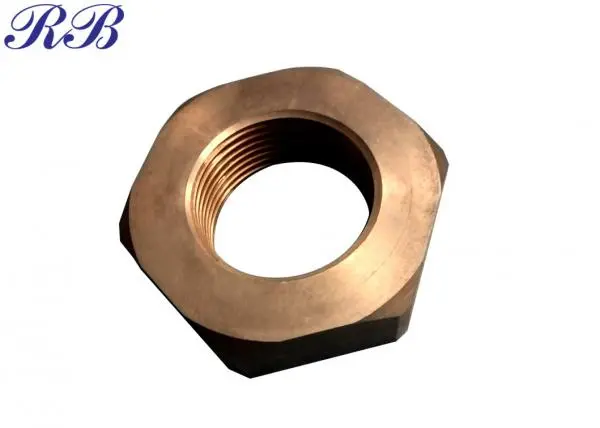
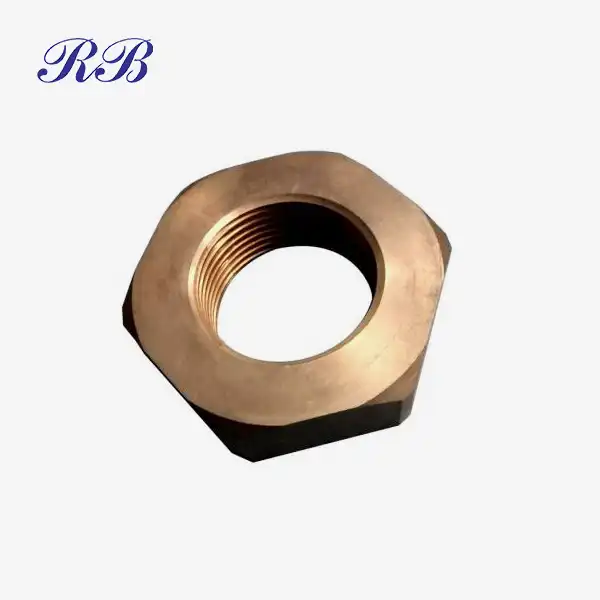
H62 is a common Chinese brass grade in China, which is about 62% copper and 72% zinc. The metal is strong, hard and easily worked in that proportion. It gives it a warm golden color, which takes a good polish. H62 keeps the cost of materials lower than alloys with lots of copper because zinc is cheaper than copper. People who buy it make nuts, fittings and mechanical hardware from copper casting. We use H62 on a 0.23 kg kitchen item. We manufacture it by gravity casting, and then CNC machining and shot blasting. Always check the material report for the exact composition, as grade names change from standard to standard.
Lead Limits and Drinking-Water Rules
Some of the brasses have lead in them to help speed up the machining process, but U.S. law says lead can’t be where water touches the part. The Reduction of Lead in Drinking Water Act, signed into law in 2011, restricts the amount of lead that can be found on wet surfaces of pipes, fittings and fixtures to 0.25 percent. The cap began to take effect in January 2014. Standards such as NSF/ANSI 61 also test parts of drinking water. Each order for copper castings of parts to be in contact with water must have a target standard before an alloy can be selected. Be aware that lead-free alloys are a bit harder to work with when planning for tool life and cycle time. For each lot, obtain a chemical analysis report and compare it with what you requested.
Dezincification and Corrosion Risk
Dezincification is a type of corrosion in which zinc is washed away from brass, leaving behind a copper structure that is weak and porous. It mostly shows up in water that is hot, rough, or chlorinated. Brasses that don't dezincify add small amounts of things like arsenic to slow down the process. There is less risk for parts that are used in dry kitchen assemblies than for parts that are always wet. So, a copper casting made from high-zinc brass should be able to handle the weather. Find out where the part will be used, what kind of water it will be exposed to, and how long it needs to last. Then test some samples before you give the go-ahead for mass production. It's much cheaper to test than to fix problems in the field.
Which Casting Methods Are Used for Brass Kitchen Hardware?
Why Gravity Casting Fits Small Brass Parts
In gravity casting, molten brass flows into a metal mold that can be used again and again because of its own weight. Because brass melts at about 900 °C, high-pressure die casting dies don't last as long. For this reason, gravity casting is a good copper casting method for many brass parts. This is because metal molds cool the alloy more quickly than sand does. This makes the grain smaller and the surface smoother. It takes less grinding to finish if the skin is smoother when it is cast. This method works for small parts like our 0.23 kg kitchen part. For batches of a few thousand pieces, it also keeps the cost of the tools low.
Sand, Investment, and Other Casting Methods
Sand casting is a cheap way to make prototypes and large parts, but there is a rougher surface and more room for machining. Investment casting can produce very fine details on small parts. The cost per piece is higher. Rings, sleeves and bushings are centrifugally cast. Conversely, continuous casting produces bar and tube stock that can be further machined in shops. Choose a copper casting process based on geometry, size, tolerance, finish and volume. All are a trade-off of tool cost, speed, detail, and surface quality. The best option will usually be found by looking at unit costs across your annual volumes. If a project requires a different method or material, Rongbao Enterprise also does precision machining, high-pressure die casting, and low-pressure die casting.
How Melting, Molds, and Cooling Shape Quality
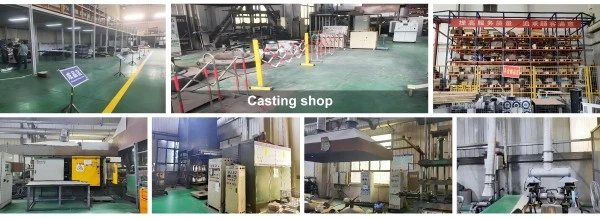
Quality begins with the mold making process. The way the metal fills the space and flows as it cools is determined by several factors such as draft angles, gates, vents, and risers. Zinc evaporates quickly at melt temperature so watching the temperature protects the alloy composition and prevents the pickup of oxide and gas. The grain structure, hardness, and porosity are determined by the cooling rate. It is these first steps that make a good copper casting. Once the part is cast, CNC machining ensures the correct dimensions for the threads, holes, and sealing faces. At Rongbao Enterprise, casting, machining and testing are all done automatically. This makes the results consistent from batch to batch. For a brand that has sold the same line of products for years, batch-to-batch consistency is most important.
Common Brass Casting Defects and How to Prevent Them
Porosity, Shrinkage, and Cold Shuts
Copper Casting: 2. Shrinkage – There may be holes, cold shuts, cracks and inclusions. Trapped gas is the cause of small pores. In thick sections, holes are found where the metal is not fed in properly. Cold shuts are caused by a low pouring temperature or slow filling. When two metal streams do not join together. The thermal stress and distortion are increased by the differing wall thickness. See that the walls are level, add large radii and be careful when putting in gates and risers to avoid accidents. These defects were eliminated in the foundry by controlled melting, clean pouring, and constant mold temperature. Porosity is most important in parts that have to hold pressure or be plated. If you have a written inspection plan that is traceable to a specific lot, you can find the source of any problem.
Machining and Surface Finishing After Casting
A raw copper casting can be turned into a useful kitchen part by milling and polishing it. With CNC machining, threads, bores, and mating faces are cut to the exact size shown on your drawing. This is important for parts that need to seal or fit with other parts. Small pieces of media are then fired at the surface by shot blasting to remove oxide and residue and leave a smooth, matte finish. That texture hides small flaws and makes the base cleaner for later finishing steps. This is how our H62 kitchen part is made: it is gravity cast, then CNC machined, and finally shot blasted. Tell your supplier which surfaces are for looks and which are for function; each needs its own set of rules for acceptance.
Inspection, Testing, and Certification
Inspection catches problems with parts before they reach the assembly line. Normal checks for pressure parts are size, chemicals, hardness, and leakage. More confidence in high-risk parts comes from X-rays or dye penetrants. Each shipment must be accompanied by material certificates and inspection reports, and you are to inspect each lot of copper castings on arrival. Rongbao Enterprise inspects everything from the receipt of raw materials to the delivery of finished goods. We are certified to ISO 9001:2015, ISO 14001, ISO 45001, etc. ISO 9001:2015 sets out the requirements for a quality management system, covering such areas as process control and corrective action on problems. These only show that the management systems are in place and not the chemistry of the alloy, so ask for alloy test reports as additional proof of composition.
How to Choose the Best Brass Casting Method and Supplier
Define Requirements and Compare Alternatives
Begin with a complete job description: size, weight, pressure rating, alloy, tolerances, finish, annual demand and delivery schedule. Then look at your options. Forging gives parts that are highly stressed a strong grain flow. But the tools and the work cost more to make. Wrought brass is suitable for sheets, tubes and simple forms. If the part has curved housings or internal passages or more than one feature in one piece, casting is the best way to make it. Most of the time, the best price to quality ratio for small to medium size copper casting jobs can be obtained through gravity casting with CNC finishing. Before tooling begins, mark the drawing with mounting points, threads and sealing faces. Please advise time expected on the part and cleaning products to be used on the part.

Rongbao Enterprise's H62 Kitchen Casting Specifications
Here's how these choices play out in the real world. Our brass kitchen part is with a weight of 0.23 kg. H62. Then we run it through a CNC machine and a shot blaster to finish it. We can produce specifications as per your drawing, and we can help you with both OEM and ODM. The factory can produce 5,000 pieces. Wooden boxes are used for shipping parts, providing protection during transport. They are from Xi’an, China. This copper casting setup is a great solution for kitchen brands that want to make small to medium sized batches and keep a close eye on the fit and finish. Rongbao Enterprise also provides integrated component solutions to equipment makers, meaning one order can cover multiple parts.
How to Evaluate a Supplier's Capability
Less handoffs. Less delays. Tooling, melting, casting, machining, finishing and inspection. All in one place. Rongbao Enterprise has been in business for 20 years, with big workshops and automated equipment. They also provide mold development and surface treatment services so that a project can be handled by one team from design to finished product. We regularly export, pack, and document our goods as about 70% of our goods are sold in Europe, the United States and Japan. Before placing your first order, get samples, certificates and a plan from any copper casting vendor and find out the lead times. You can use samples to check the fit, finish, and weight of the item against your drawing before placing bulk orders.
Conclusion
Brass is good for kitchen hardware because it doesn't rust, is easy to work with, shines, and can be shaped into complicated shapes at a reasonable cost. It is a good balance between pure copper and bronze for faucets, drains, connectors, and handles. The alloy you choose is important. H62 is strong and easy to work with, but the part's exposure to water must match the lead limits and dezincification risk. Small brass parts can be cast by gravity, and the final fit and finish are set by CNC machining and shot blasting. Weak design or process control leads to flaws like porosity and cold shuts, which is why inspection reports and traceability are important. A good copper casting result depends on how well the requirements, process, and supplier can match up.
FAQ
Is brass safe for kitchen faucets and drains?
A lot of people use brass for both. Lead can't be on surfaces that come into contact with drinking water in the United States, so make sure you know what kind of alloy it is and what standard it needs to meet before you place your order.
How is brass different from pure copper?
Copper gets zinc from brass. That makes it stronger and harder, and it also makes it easier to cast and machine. When it comes to heat or electricity, pure copper is better because it is softer.
Which method suits small brass parts?
For small brass parts, like our 0.23 kg H62 component, gravity casting is a popular copper casting technique. It's best to use sand casting for big parts and investment casting for small ones.
Can I order a customized copper casting?
Yes. We can do customized specifications, CNC machining, and shot blasting for both OEM and ODM work. We can make up to 5,000 pieces at a time, and they are shipped in wooden boxes.
How do I reduce porosity risk?
Share your drawing early so that engineers can make sure that the gate and wall thickness are fair. Then, for pressure parts, you should need controlled melting, inspection reports, and leak tests.
Request a Copper Casting Quote from Rongbao Enterprise
Rongbao Enterprise is a copper casting company that has 20 years of experience in gravity casting, CNC machining, and surface treatment. Send them your drawing, alloy, annual quantity, and finish needs. The ISO 9001:2015, ISO 14001, and ISO 45001 certifications, along with our OEM/ODM service, help you with your kitchen hardware project from the first sample to the full batch. To find out more, email steve.zhou@263.net or zhouyi@rongbaocasting.com, or go to rongbaocasting.com.
References
1. ASM Handbook, Volume 15: Casting (2008)
2. Copper and Copper Alloys, ASM Specialty Handbook (2001)
3. Complete Casting Handbook (2015)
4. Reduction of Lead in Drinking Water Act (2011)
5. ISO 9001:2015 Quality Management Systems — Requirements (2015)
6. Manufacturing Engineering and Technology (2014)
Learn about our latest products and discounts through SMS or email