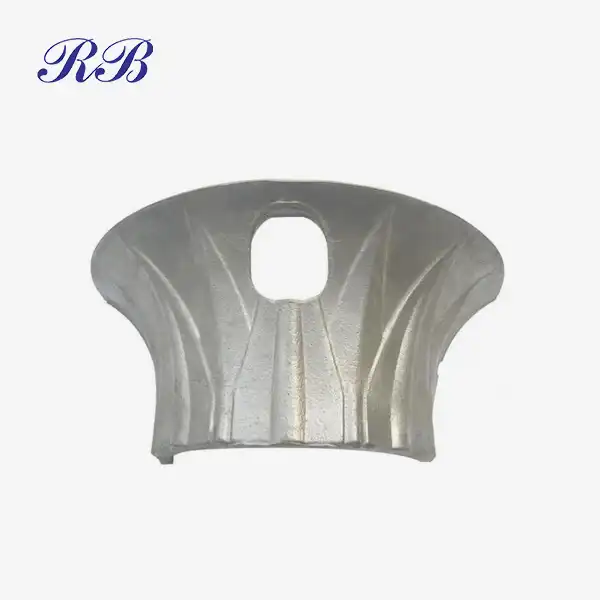
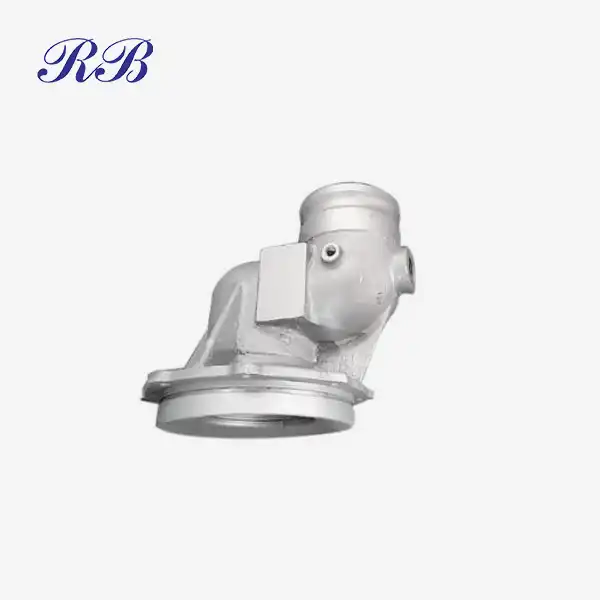
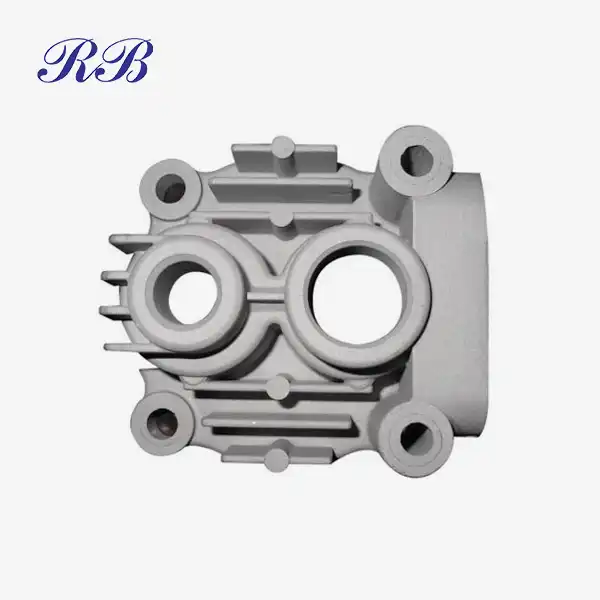
Low Pressure Casting Gear Parts for Fire Pump
One of the most demanding uses for cast components is in fire pumps. These systems must function reliably in harsh environments and activate immediately in an emergency, frequently after years of inactivity. The impeller—the rotating component that generates hydraulic pressure—bears the brunt of this responsibility. Manufacturing fire pump impellers through low pressure casting addresses several engineering challenges simultaneously. The A356 aluminum alloy commonly specified for these applications offers an excellent strength-to-weight ratio, but only when processed correctly to minimize internal defects that could propagate into catastrophic failures.
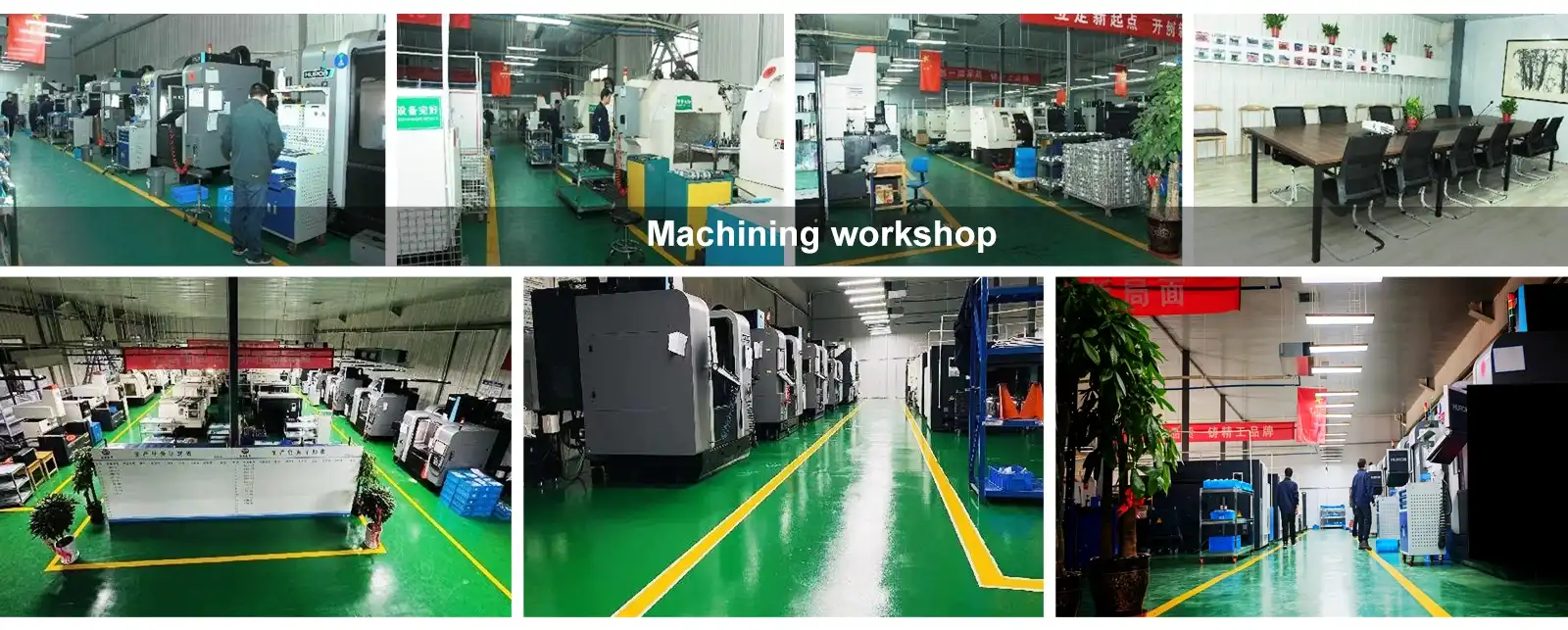
At Rongbao, our production of low pressure casting gear parts for fire pump applications follows strict protocols established through years of refinement. Each impeller begins as molten A356 aluminum heated to precise temperatures, then transferred to the casting furnace where it rises gently into the mold cavity. The gradual fill rate—typically 10 to 50 millimeters per second—allows the metal to conform to complex blade geometries without creating the turbulence that plagues gravity casting methods. This becomes particularly critical in impeller design, where blade profiles must maintain specific curvatures to generate optimal flow characteristics. Any porosity near the blade roots could initiate cracks under cyclic loading, eventually leading to blade separation during operation.
The casting process for these components extends beyond simple mold filling. After the cavity fills completely, pressure maintains for an extended period—sometimes several minutes—allowing directional solidification from the blade tips toward the hub. This controlled solidification pattern, impossible to achieve through conventional methods, ensures that any shrinkage porosity concentrates in the feeder sections rather than the functional blade surfaces. Post-casting operations include CNC machining to achieve final dimensional tolerances, typically within 0.05 millimeters for critical sealing surfaces. Shot blasting follows, removing oxide scale while simultaneously imparting compressive residual stresses that enhance fatigue resistance.
Our facility in Xi'an maintains capacity for producing 5,000 impeller units monthly, though actual production schedules adapt to customer requirements. Each casting undergoes dimensional verification, visual inspection, and selective radiographic examination to detect subsurface anomalies. The certifications we maintain—ISO9001:2015 for quality management, ISO14001 for environmental systems, and ISO45001 for occupational health and safety—reflect our commitment to systematic process control rather than mere final product inspection. This approach has proven essential when manufacturing components where field failures carry potentially tragic consequences.
Why Low Pressure Casting Is Ideal for Fire Pump Impellers?
The suitability of low pressure casting for fire pump impellers stems from multiple technical factors that intersect at the boundaries of materials science, fluid dynamics, and reliability engineering. Consider first the mechanical property requirements: fire pump impellers must withstand rotational speeds exceeding 3,000 RPM while maintaining structural integrity across temperature ranges from below freezing to over 100°C. The A356 alloy, when properly cast and heat-treated to T6 condition, achieves tensile strengths approaching 290 MPa with elongation values around 8%. However, these properties depend critically on microstructural uniformity—the distribution and size of silicon particles within the aluminum matrix, the extent of porosity, and the presence of intermetallic compounds.
Low pressure casting influences these microstructural features through its unique solidification characteristics. The bottom-up filling pattern naturally promotes the escape of dissolved gases that would otherwise form pores. Simultaneously, the maintained pressure during solidification compensates for volumetric shrinkage, feeding additional metal into regions that solidify last. Research comparing different casting methods has consistently demonstrated that low pressure castings exhibit porosity levels below 2% by volume, compared to 5-8% typical of gravity die casting. For rotating machinery, even small pores act as stress concentrators where fatigue cracks initiate, making this difference operationally significant.
The hydraulic efficiency of pump impellers depends heavily on blade surface quality and dimensional accuracy. Conventional casting methods often require substantial machining allowances—sometimes 3-5 millimeters—to remove surface defects and achieve final dimensions. This extensive material removal increases manufacturing costs and can expose subsurface porosity that was sealed during initial solidification. Low pressure castings typically require machining allowances under 1 millimeter, preserving more of the as-cast surface that already exhibits superior finish. The blade profiles maintain better conformance to design specifications, translating directly into pump efficiency gains that, over the system's operational lifetime, can offset the slightly higher initial casting costs.
From a manufacturing perspective, the process offers reproducibility advantages that matter when producing safety equipment. Each casting cycle follows an identical sequence: mold heating to the specified temperature, metal introduction at controlled rates, pressure maintenance during solidification, and finally mold opening after complete cooling. This consistency contrasts with gravity casting where metal delivery depends on ladle handling techniques that introduce operator-dependent variables. While producing data logs that record every parameter for every casting, low pressure equipment's automated nature minimizes human mistake. This information is crucial for quality investigations and certification audits.
Quality Guarantees for the Fire Pump Impeller
Quality assurance for fire pump components operates under a different paradigm than typical manufactured goods. These parts might never operate under actual emergency conditions during their installed lifetime, yet they must perform flawlessly if called upon. This reality demands verification approaches that go beyond confirming dimensional compliance or surface appearance. Our quality framework addresses this through layered validation: process qualification that proves the manufacturing method produces acceptable parts consistently, individual part inspection that identifies specific defects, and periodic destructive testing that verifies actual mechanical properties.
Process qualification began before production commenced, involving extensive trials where we deliberately varied parameters to map their influence on casting quality. Temperature variations of just 10°C in the mold or metal can shift solidification patterns enough to affect porosity distribution. Fill rates that exceed optimal values create turbulence and oxide inclusions; rates too slow allow premature solidification. These trials established process windows—ranges of parameters that reliably yield acceptable castings—which then became embedded in our operating procedures. Every production run operates within these validated windows, with automated monitoring systems flagging excursions before they produce defective parts in Low pressure die casting.
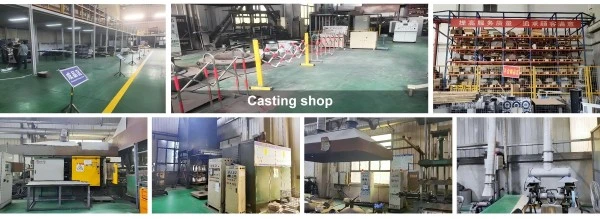
Individual inspection protocols reflect the critical nature of the application. Visual examination catches obvious surface defects: cold shuts where metal fronts failed to fuse properly, misruns where cavities didn't fill completely, or surface porosity indicating gas entrapment. Dimensional verification using coordinate measuring machines confirms that blade angles, hub diameters, and overall geometry fall within specified tolerances. For a representative sample from each production batch, we conduct radiographic inspection—passing X-rays through the casting to reveal internal porosity or inclusions invisible from the surface. Castings exhibiting defects exceeding acceptance criteria get scrapped rather than attempting repairs that might compromise structural integrity.
The mechanical properties verification program includes periodic testing where impellers from production lots undergo destructive evaluation. Tensile test specimens machined from the castings confirm that material strength and ductility meet specifications. Grain structure, silicon particle dispersion, and porosity properties are revealed by metallographic analysis. The material created by our process still has the same properties as when it was first certified, according to these destructive tests. The data accumulates into a statistical database allowing us to detect subtle process drift before it produces out-of-specification parts.
Beyond our internal controls, third-party certification provides independent verification. Auditors observe manufacturing processes, do their own sampling and testing, and frequently examine our quality records. The ISO certifications we maintain require demonstrating not just that our current processes work, but that we have systems ensuring they'll continue working—procedures for equipment maintenance, personnel training, supplier evaluation, and continuous improvement. Customers are reassured by these certificates that corporate commitment is reflected in written processes and that quality is not dependent on the vigilance of a single inspector.
Conclusion
More than merely process selection, the combination of low pressure die casting technology with fire safety equipment manufacture reflects an engineering mindset that places a premium on dependability. Fire pump impellers made using this technology satisfy emergency equipment standards for mechanical characteristics, microstructural homogeneity, and dimensional precision. The controlled nature of the process, from metal delivery through solidification, creates castings largely free of the defects that limit component life in less critical applications. The outcome of the thorough process and product verification of these castings validates the trust that building owners, fire safety experts, and eventually the people who rely on them in times of emergency have in them.
In order to maintain the methodical approach necessary for certifications, our work at Rongbao keeps improving these production capabilities while integrating technology advancements. Each impeller leaving our Xi'an facility represents not just successful execution of casting parameters but validation of quality systems developed over years of focused effort. For projects requiring low pressure casting gear components, we would be pleased to talk about how our capabilities could satisfy your requirements, particularly in cases where component failure might have serious consequences. Technical inquiries and project specifications can be directed to our engineering team at steve.zhou@263.net or zhouyi@rongbaocasting.com, where we can explore how our manufacturing approach aligns with your quality and performance expectations.
References
- Campbell, J. (2015). Complete Casting Handbook: Metal Casting Processes, Metallurgy, Techniques and Design. Butterworth-Heinemann.
- Kaufman, J. G., & Rooy, E. L. (2004). Aluminum Alloy Castings: Properties, Processes, and Applications. ASM International.
- Boileau, J. M., & Allison, J. E. (2003). The effect of solidification time and heat treatment on the fatigue properties of a cast 319 aluminum alloy. Metallurgical and Materials Transactions A, 34(9), 1807-1820.
- Dispinar, D., & Campbell, J. (2004). Critical assessment of reduced pressure test. Part 1: Porosity phenomena. International Journal of Cast Metals Research, 17(5), 280-286.
- Tiryakioğlu, M., & Campbell, J. (2014). Quality Index for Aluminum Alloy Castings. International Journal of Metalcasting, 8(3), 39-42.