- English
- French
- German
- Portuguese
- Spanish
- Russian
- Japanese
- Korean
- Arabic
- Greek
- German
- Turkish
- Italian
- Danish
- Romanian
- Indonesian
- Czech
- Afrikaans
- Swedish
- Polish
- Basque
- Catalan
- Esperanto
- Hindi
- Lao
- Albanian
- Amharic
- Armenian
- Azerbaijani
- Belarusian
- Bengali
- Bosnian
- Bulgarian
- Cebuano
- Chichewa
- Corsican
- Croatian
- Dutch
- Estonian
- Filipino
- Finnish
- Frisian
- Galician
- Georgian
- Gujarati
- Haitian
- Hausa
- Hawaiian
- Hebrew
- Hmong
- Hungarian
- Icelandic
- Igbo
- Javanese
- Kannada
- Kazakh
- Khmer
- Kurdish
- Kyrgyz
- Latin
- Latvian
- Lithuanian
- Luxembou..
- Macedonian
- Malagasy
- Malay
- Malayalam
- Maltese
- Maori
- Marathi
- Mongolian
- Burmese
- Nepali
- Norwegian
- Pashto
- Persian
- Punjabi
- Serbian
- Sesotho
- Sinhala
- Slovak
- Slovenian
- Somali
- Samoan
- Scots Gaelic
- Shona
- Sindhi
- Sundanese
- Swahili
- Tajik
- Tamil
- Telugu
- Thai
- Ukrainian
- Urdu
- Uzbek
- Vietnamese
- Welsh
- Xhosa
- Yiddish
- Yoruba
- Zulu
What is the ASTM standard for stainless steel flanges?
When selecting and specifying stainless steel flanges for fire protection, chemical processing and industrial piping systems, precise alignment with corresponding ASTM standards is essential to ensure regulatory compliance, operational safety and long-term system reliability. A prevalent error in engineering specification and procurement is the confusion between cast and forged flange standards, which frequently causes inspection rejections, assembly incompatibility and premature component failure. Cast stainless steel flanges adhere to ASTM A351, while forged alternatives comply with ASTM A182. A thorough grasp of the scope, differences and supplementary specifications enables accurate flange selection tailored to diverse operating conditions.
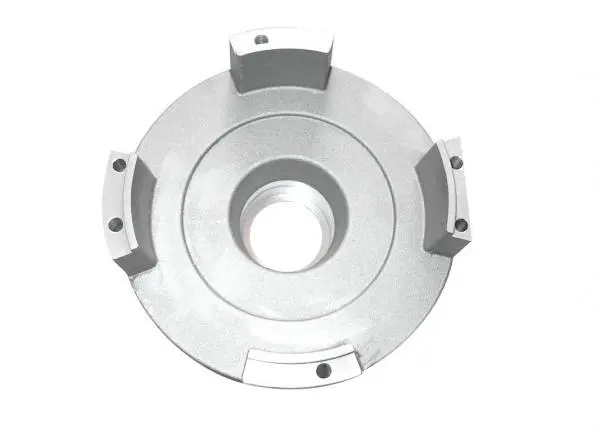
Two Core ASTM Standards for Stainless Steel Flanges
ASTM International establishes independent specifications for cast and forged stainless steel piping components, as casting and forging technologies yield distinct material microstructures, mechanical properties and defect tolerance thresholds. No single ASTM standard covers all stainless steel flanges — the correct specification is exclusively determined by the component’s manufacturing process.
ASTM A351 – Specification for Cast Stainless Steel Flanges
ASTM A351/A351M is the authoritative industry standard for austenitic stainless steel castings used in pressure-containing and structural industrial components, serving as the primary specification for precision cast stainless steel flanges. Optimized for casting characteristics, this standard regulates metal solidification behavior, inherent casting defect control and balanced multi-directional mechanical performance.
CF8 and CF8M are the most widely adopted grades for industrial cast flanges. CF8 is equivalent to wrought 304 stainless steel, delivering reliable general corrosion resistance ideal for fire protection systems and conventional industrial pipelines. CF8M, incorporated with molybdenum, matches the performance of wrought 316 stainless steel, offering exceptional resistance to pitting and crevice corrosion for chemical, coastal and high-humidity harsh environments.
A standout advantage of A351-compliant cast flanges is isotropic structural stability. One-piece gravity casting forms uniform strength in all directions, making these flanges well-suited for complex integrated structures with internal flow channels and multi-directional alternating stress loads — common in mechanical connection and fluid system applications.
ASTM A182 – Specification for Forged Stainless Steel Flanges
ASTM A182/A182M governs hot-forged or rolled alloy and stainless steel pipe flanges, fittings and high-temperature pressure parts. The standard mandates high-temperature hot working to form continuous directional grain flow, significantly enhancing unidirectional tensile strength and fatigue resistance for extreme load and high-frequency operating scenarios.
Common A182 grades include F304/F304L and F316/F316L. The “L” suffix denotes low-carbon composition (maximum 0.030% carbon), which prevents welding sensitization and retains stable corrosion resistance after thermal cycling. Critically, ASTM A182 is not applicable to cast flanges, as cast microstructures cannot meet the standard’s strict hot-working and directional grain formation requirements.
Supplementary Specifications for Full Flange Compliance
Qualified flange specification relies on more than material standards. Full lifecycle compliance requires coordinated dimensional, pressure-temperature rating and testing standards to guarantee precise fitting, stable performance and complete quality traceability.
ASME B16.5 – Unified Dimensional & Pressure-Temperature Rating Standard
While ASTM standards define material quality,ASME B16.5 unifies core dimensional and performance criteria for NPS 1/2 to NPS 24 industrial flanges, covering bolt circle dimensions, sealing surface finish, wall thickness and standardized pressure class ratings. All Rongbao cast stainless steel flanges are CNC-machined with a tight tolerance of ±0.05mm, fully complying with ASME B16.5 requirements to ensure universal interchangeability and reliable gasket sealing.
Standardized Testing System for Batch Consistency
To sustain stable batch quality and full ASTM compliance, all Rongbao flanges undergo standardized international testing procedures: ASTM E8 for tensile and yield strength verification, ASTM E18 for hardness testing, and ASTM E353 for complete chemical composition analysis. Unified testing protocols eliminate cross-laboratory data deviations, providing traceable, certifiable performance data for every shipment.
Rongbao’s Core Advantages in ASTM A351 Compliance Manufacturing
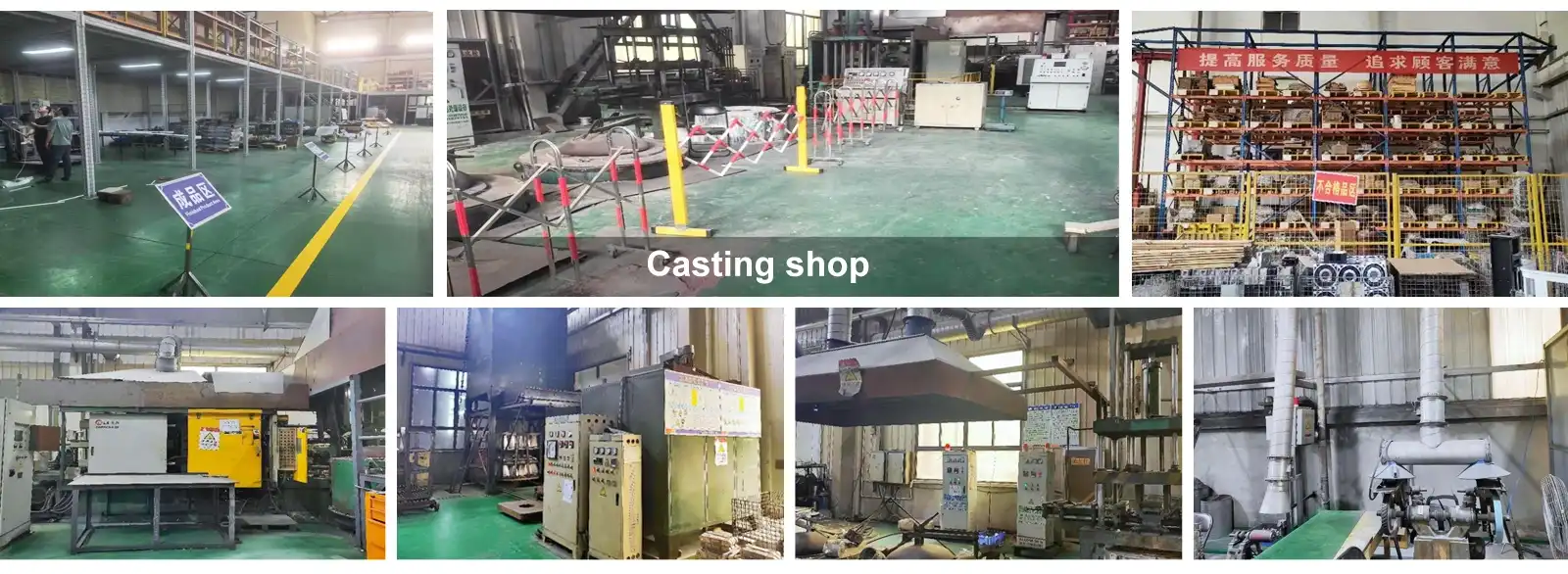
As a national high-tech enterprise with 20 years of precision casting experience, Rongbao specializes in ASTM A351-compliant cast stainless steel flanges, serving global fire protection, chemical processing and industrial piping projects. We own a full in-house production chain covering mold development, gravity casting, CNC precision finishing and professional surface treatment, delivering standardized, traceable products for high-end global markets.
Precise Alloy Control & Defect Optimization
We strictly calibrate the proportion of core alloy elements (chromium, nickel, molybdenum) and limit harmful impurities in full compliance with ASTM A351 specifications. Optimized gravity casting technology stabilizes molten metal filling and solidification, effectively reducing porosity, shrinkage cavities and inclusions. The uniform, dense casting microstructure ensures consistent mechanical properties and corrosion resistance during long-term continuous service.
Full-Link Traceable Quality Assurance System
Backed by ISO9001:2015 (quality management), ISO14001 (environmental management) and ISO45001 (occupational safety) triple certifications, our quality control system covers every production procedure. Each batch of flanges undergoes ultrasonic and X-ray non-destructive testing (NDT), high-precision dimensional calibration and pressure simulation tests. Complete Mill Test Reports (MTR) are provided for all shipments, supporting full quality traceability and global project audit compliance.
Scenario-Oriented Customized Compliance Solutions
Based on abundant domestic and overseas engineering experience, we deliver targeted optimization for diverse application scenarios. For fire protection systems operating in long-term static water environments, we enhance structural stability and oxidation resistance on the premise of full A351 compliance. For chemical and marine equipment exposed to corrosive media and salt fog, we adjust alloy proportions to upgrade anti-corrosion performance, ensuring stable operation in harsh working conditions.
Industrial Procurement Standard Selection Guide
Scientific standard selection avoids over-specification cost waste and under-specification safety hazards, perfectly balancing project performance and budget control.
Choose ASTM A351 cast stainless steel flanges for medium-batch procurement, complex integrated structures with internal flow channels, multi-directional alternating stress scenarios, fire protection systems and general industrial pipelines. Featuring high material utilization, flexible customization and stable isotropic performance, A351 cast flanges are the most cost-effective and compliant solution for most industrial projects.
Choose ASTM A182 forged stainless steel flanges only for: Extreme working conditions including ultra-high unidirectional load, high-frequency fatigue impact and simple-structure high-pressure pipelines. Forged flanges deliver redundant performance at higher costs, making them uneconomical for conventional mass industrial procurement.
FAQs
Q1: What is the valid ASTM standard for cast stainless steel flanges?
A1: The exclusive authoritative standard is ASTM A351/A351M, applicable to all austenitic stainless steel cast flanges for pressure-bearing and structural applications. The most commonly used compliant grades are CF8 (304 equivalent) and CF8M (316 equivalent), with complete specifications for chemical composition, mechanical performance and defect acceptance.
Q2: Can cast stainless steel flanges meet ASTM A182 standards?
A2: No. ASTM A182 is formulated exclusively for forged and rolled steel products, which rely on hot working to form directional grain structures. Cast flanges feature completely different forming mechanisms and microstructures, and cannot satisfy A182’s core process and performance requirements. Misapplying A182 standards to cast products will lead to project inspection failure.
Q3: What compliance documents can you provide for customer audits?
A3: We provide full official compliance documents, including MTRs with authentic chemical and mechanical test data, batch heat number certificates and third-party laboratory inspection reports, fully supporting global project review and quality traceability.
Q4: Are A351 cast flanges qualified for fire protection systems?
A4: Yes. ASTM A351 standardizes stable structural strength and excellent corrosion resistance for cast flanges. Our gravity-cast flanges undergo precision CNC machining and professional surface treatment, resisting long-term static water erosion and maintaining structural stability, fully meeting fire protection system service requirements.
Why Choose Rongbao as Your ASTM-Compliant Flange Supplier?
Rongbao is a specialized manufacturer focused on ASTM A351-compliant cast stainless steel flanges, serving global fire protection, chemical machinery, fluid pipeline and general industrial equipment industries. Our integrated production chain covers mold development, gravity casting, CNC precision machining and diversified surface treatments including shot blasting, anodizing and powder coating.
All products pass triple ISO international certifications, with 70% of our outputs exported to Europe, America, Japan and other high-standard markets. We support full OEM/ODM customization, from prototype trial production to mass delivery. With a controllable lead time of 20–30 working days and a flexible MOQ starting from 100 pieces, our professional engineering team provides free DFM optimization and standard matching consultation, helping customers avoid specification mismatch risks and reduce overall project costs.
Conclusion
The applicable ASTM standard for stainless steel flanges is strictly determined by manufacturing technology: cast flanges comply with ASTM A351, while forged flanges follow ASTM A182. For most industrial scenarios requiring complex structures, multi-directional stress resistance and balanced cost performance, ASTM A351 cast stainless steel flanges serve as the most practical and fully compliant solution.
With standardized production workflows, strict A351 compliance control systems and rich global project experience, Rongbao delivers stable, low-maintenance and cost-effective flange connection solutions for industrial equipment worldwide.
Contact Us
For ASTM A351 compliant stainless steel flange customization, standard parameter verification or official compliance document support, please contact our professional technical team for tailored solutions and accurate quotations. Email: steve.zhou@263.net & zhouyi@rongbaocasting.com
References
1. ASTM International. (2022). ASTM A351/A351M-22: Standard Specification for Castings, Austenitic, for Pressure-Containing Parts. West Conshohocken, PA: ASTM International.
2. ASTM International. (2022). ASTM A182/A182M-22: Standard Specification for Forged or Rolled Alloy and Stainless Steel Pipe Flanges, Forged Fittings, and Valves and Parts for High-Temperature Service. West Conshohocken, PA: ASTM International.
3. American Society of Mechanical Engineers. (2020). ASME B16.5-2020: Pipe Flanges and Flanged Fittings: NPS 1/2 Through NPS 24 Metric/Inch Standard. New York, NY: ASME.
4. ASTM International. (2021). ASTM E8/E8M-21: Standard Test Methods for Tension Testing of Metallic Materials. West Conshohocken, PA: ASTM International.
5. McGuire, M.F. (2008). Stainless Steels for Design Engineers. Materials Park, OH: ASM International.
Learn about our latest products and discounts through SMS or email