- English
- French
- German
- Portuguese
- Spanish
- Russian
- Japanese
- Korean
- Arabic
- Greek
- German
- Turkish
- Italian
- Danish
- Romanian
- Indonesian
- Czech
- Afrikaans
- Swedish
- Polish
- Basque
- Catalan
- Esperanto
- Hindi
- Lao
- Albanian
- Amharic
- Armenian
- Azerbaijani
- Belarusian
- Bengali
- Bosnian
- Bulgarian
- Cebuano
- Chichewa
- Corsican
- Croatian
- Dutch
- Estonian
- Filipino
- Finnish
- Frisian
- Galician
- Georgian
- Gujarati
- Haitian
- Hausa
- Hawaiian
- Hebrew
- Hmong
- Hungarian
- Icelandic
- Igbo
- Javanese
- Kannada
- Kazakh
- Khmer
- Kurdish
- Kyrgyz
- Latin
- Latvian
- Lithuanian
- Luxembou..
- Macedonian
- Malagasy
- Malay
- Malayalam
- Maltese
- Maori
- Marathi
- Mongolian
- Burmese
- Nepali
- Norwegian
- Pashto
- Persian
- Punjabi
- Serbian
- Sesotho
- Sinhala
- Slovak
- Slovenian
- Somali
- Samoan
- Scots Gaelic
- Shona
- Sindhi
- Sundanese
- Swahili
- Tajik
- Tamil
- Telugu
- Thai
- Ukrainian
- Urdu
- Uzbek
- Vietnamese
- Welsh
- Xhosa
- Yiddish
- Yoruba
- Zulu
Casting Coupling Flange Parts vs. Forged Flange: Which Is Better for Your Application?
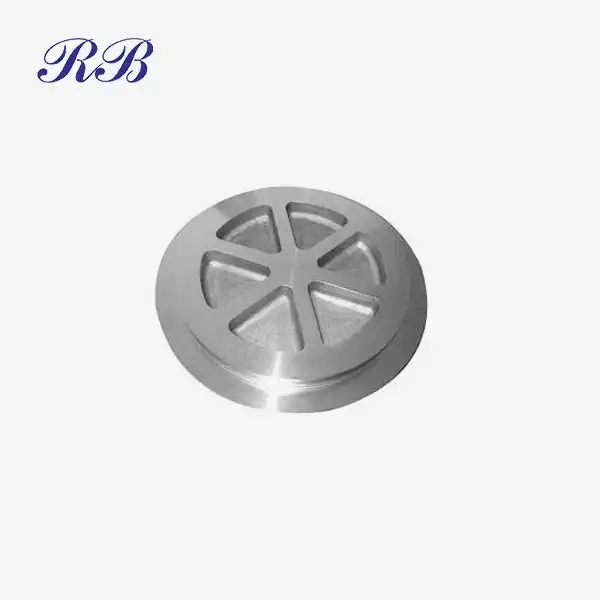
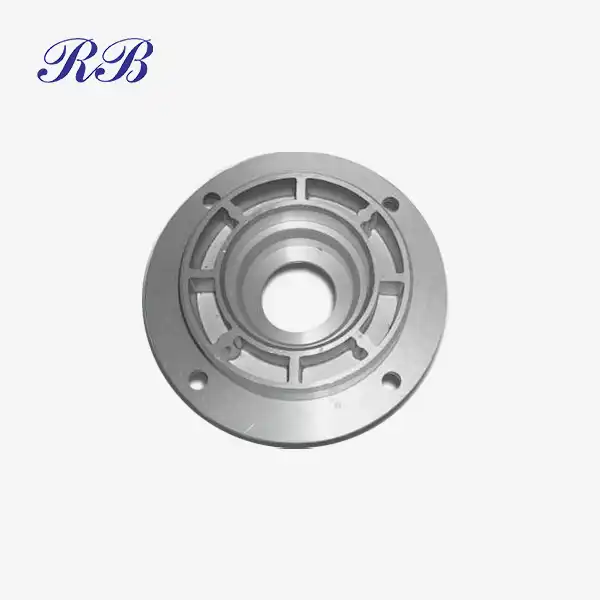
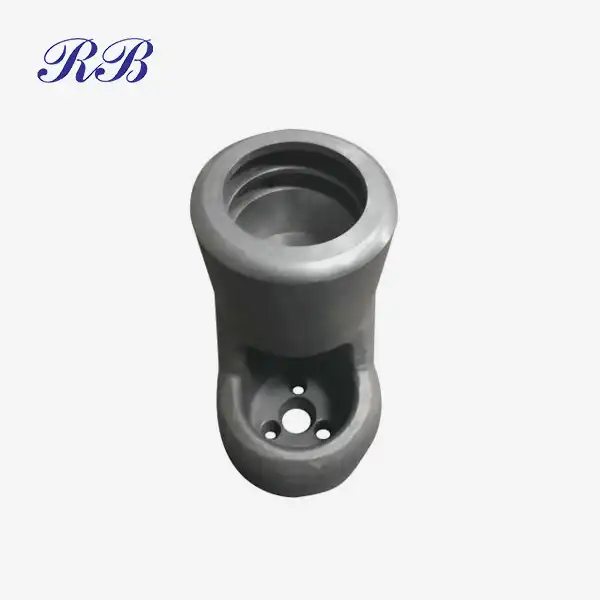
Industrial flange components serve as critical connecting parts for mechanical transmission, hydraulic systems and fluid pipeline equipment. When selecting flange accessories for engineering projects, manufacturers often struggle to choose between casting coupling flange parts and traditional forged flanges. These two manufacturing processes deliver distinct differences in design flexibility, material performance, production cost and batch adaptability. Simply put, cast flange components excel in complex structural design, medium-volume cost control and multi-directional stress stability, while forged flanges show advantages in ultra-high unidirectional strength and extreme fatigue resistance. Reasonable selection based on actual application scenarios can effectively reduce manufacturing costs and improve equipment operational stability.
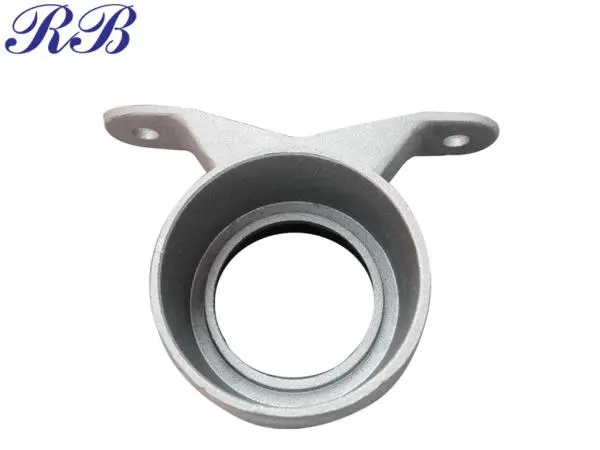
Core Manufacturing Principles: Casting vs. Forging
The fundamental performance gap between the two types of flanges stems from completely different manufacturing logic. Understanding their production processes helps engineers and procurement teams accurately match product types to project demands, avoiding performance redundancy or functional insufficiency.
Low-Pressure Casting Process for Coupling Flange Components
Professional low-pressure casting is the core manufacturing process for high-quality casting coupling flange parts. This process injects molten alloy liquid into customized precision molds under stable low-pressure conditions, realizing one-piece near-net-shape forming. Different from traditional high-pressure die casting and gravity casting, low-pressure casting features uniform mold filling, low internal defect rate and excellent forming consistency. It can stably create flanges with complex internal flow channels, irregular wall thicknesses and integrated mounting structures that are difficult to process through forging, retaining complete structural integrity while ensuring dimensional accuracy.
Thermal Deformation Forming of Forged Flanges
Forged flanges are manufactured through high-temperature heating and high-pressure mechanical deformation. The metal blank is repeatedly pressed and forged under specific temperature conditions to reshape the metal grain structure into a directional and compact arrangement. Multiple heating and forging cycles eliminate internal material gaps, significantly improving the unidirectional tensile strength and fatigue resistance of the product. However, the forging process has strict limitations on structural design, unable to realize complex internal passages and integrated special-shaped structures, and requires a large amount of secondary machining to complete finished products.
Process Adaptability and Application Boundaries
Each process has its exclusive applicable scenarios and limitations. Low-pressure casting is suitable for medium-batch production of 500–50,000 pieces annually, perfectly matching customized flange demands for construction machinery, automotive transmission and fluid pipeline systems. Forging is more suitable for small-batch production of high-load and single-stress structural parts, with higher cost advantages only in ultra-large batch production above 50,000 pieces. Clarifying the process boundaries is the primary premise for accurate flange selection.
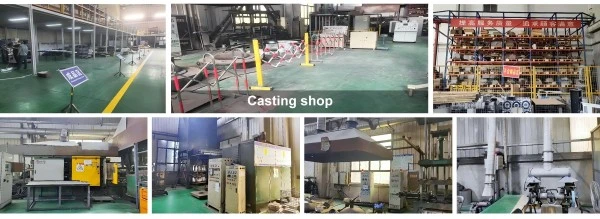
Material Performance and Structural Characteristics Comparison
Material properties and structural mechanical characteristics directly determine the service life and operational reliability of flanges in industrial equipment. The two processes shape completely different mechanical performances, forming differentiated application advantages.
Isotropic Stability of Casting Coupling Flange Parts
Casting coupling flange parts adopt integral casting forming with uniform internal material distribution and no directional grain orientation, presenting typical isotropic mechanical characteristics. The tensile strength, toughness and rigidity of the product remain consistent in all directions, which is very suitable for coupling connection scenarios with multi-directional comprehensive stress. Adopting high-quality ZL101A aluminum alloy as the core material, cast flanges achieve an excellent strength-to-weight ratio, realizing lightweight optimization while ensuring structural strength. They maintain stable mechanical properties after uniform heat treatment, with outstanding dimensional stability and anti-deformation ability in long-term operation.
Anisotropic Strength Advantages of Forged Flanges
Forged flanges form a regular directional grain flow through thermal forging deformation, showing obvious anisotropic characteristics. The tensile strength and fatigue resistance in the grain extension direction are significantly improved, with stronger bearing capacity under single-direction high-load impact. In professional industrial tests, the unidirectional tensile strength of forged flanges is higher than that of cast products of the same specification, and they perform better in extreme working conditions requiring long-term single-direction tension and pressure resistance.
Practical Performance Differences in Industrial Scenarios
In actual industrial applications, cast flanges excel in comprehensive balance performance. Their uniform material structure avoids local stress concentration, effectively preventing flange cracking and leakage in complex working conditions such as mechanical vibration and alternating stress. Forged flanges have prominent single-performance advantages but poor adaptability to multi-directional complex stress. Their rigid structure is prone to brittle failure in frequent variable-load working environments, making them unable to adapt to diversified coupling connection scenarios.
Cost Analysis: Tooling, Unit Price and Lifecycle Value
Comprehensive cost is a key factor for industrial project procurement, including initial tooling investment, unit production cost, processing cost and later maintenance cost. Casting and forging flanges form completely different cost structures, matching different batch procurement demands.
Initial Tooling and Lead Time Cost Gap
The mold development cost of casting coupling flange parts is moderate, with lower initial investment, shorter mold opening cycle and faster project launch speed. It is very friendly for new product trial production and medium-batch customized orders. In contrast, forging requires high-cost precision forging dies and repeated thermal processing equipment investment, with high initial tooling cost and long production cycle, resulting in higher early project investment risk.
Unit Production and Processing Cost Advantage
The near-net-shape forming feature of casting coupling flange parts greatly reduces subsequent machining workload, with ultra-high material utilization rate. The integral forming of complex structures eliminates multiple secondary processing procedures, effectively reducing labor and equipment costs. Forged flanges require extensive cutting, polishing and hole processing after forming, with serious material waste and high post-processing costs, leading to higher comprehensive unit price in medium-batch orders.
Lifecycle Comprehensive Cost Comparison
In terms of long-term service cost, cast flanges with stable isotropic performance have low failure rate and minimal later maintenance cost, suitable for long-term continuous operation of general industrial equipment. Forged flanges have high single strength but poor adaptability to complex working conditions, with higher risk of local fatigue failure in variable-load environments, resulting in higher long-term replacement and maintenance costs.
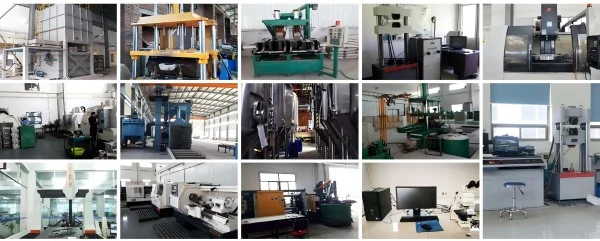
Design Flexibility and Customization Capabilities
With the increasingly personalized demand for industrial equipment customization, structural design flexibility has become an important indicator for flange selection. Casting processes show irreplaceable advantages in customized development of complex structural flanges.
Complex Structure Integrated Forming Ability
Casting coupling flange parts support integrated forming of complex structures that cannot be realized by forging. It can integrate internal fluid channels, mounting bosses, limit structures and sealing grooves in one piece, realizing structural integration and functional integration. This design effectively reduces equipment assembly procedures, eliminates assembly gaps and leakage points caused by split installation, and improves the overall sealing performance and structural compactness of the coupling connection part.
Diversified Customization and Rapid Iteration
Professional casting manufacturers provide full-process OEM/ODM customization services. According to customer drawings, 3D models and actual working condition demands, they can adjust flange wall thickness, aperture specification, structural shape and surface treatment process. Supported by 3D printing rapid prototyping technology, it realizes fast design verification and shortens product iteration cycle. Whether it is standard-specification flanges or special-shaped customized coupling parts, it can meet the precise matching needs of segmented industrial equipment.
Application Value of Integrated Structural Design
The integrated customized design of casting coupling flange parts simplifies the overall equipment structure, reduces the number of accessories, and lowers inventory management pressure for enterprises. The optimized aerodynamic and hydraulic internal structure can effectively improve fluid transmission efficiency, reduce equipment operation energy consumption, and bring long-term energy-saving and efficiency-increasing benefits for industrial production.

Quality Control System and Industrial Certification Standards
Stable quality control and standardized industrial certification are the core guarantees for flange products to adapt to high-standard industrial scenarios. Professional manufacturers implement full-link quality inspection for cast flange products, with reliable quality traceability system.
Full-Link Precision Quality Inspection for Cast Flanges
The production of casting coupling flange parts adopts full-process quality monitoring, including raw material composition detection, mold parameter calibration, casting temperature control and finished product performance testing. Professional non-destructive testing (NDT) technologies such as ultrasonic inspection and X-ray detection are used to eliminate internal defects such as porosity and shrinkage cavity. Strict dimensional calibration ensures product dimensional accuracy and assembly consistency, with stable batch quality.
International Standard Certification System
Qualified cast flange products pass ISO9001:2015 quality management system, ISO14001 environmental management system and ISO45001 occupational health and safety system triple certification. All production links comply with international industrial manufacturing standards, with complete quality traceability files. Compared with scattered processing and quality control of forged parts, standardized casting production realizes more stable quality control and higher product qualification rate.
Stable Batch Consistency Advantage
The standardized mold-based production mode of casting coupling flange parts ensures consistent structural dimensions and mechanical properties of each batch of products, avoiding quality differences caused by manual forging errors. It can stably meet the supporting needs of large-scale industrial projects and high-standard equipment assembly, with higher batch stability than forged products.
Industry-Specific Scenario Selection Guidelines
Different industrial scenarios have different emphasis on flange performance, which determines the optimal choice between casting and forging processes. Targeted selection can maximize product performance and project cost-effectiveness.
Preferred Scenarios for Casting Coupling Flange Parts
Casting coupling flange parts are the best choice for most civil and general industrial equipment. In automotive transmission systems, construction machinery hydraulic pipelines, industrial pump valve connection and general mechanical coupling scenarios, their lightweight, multi-stress resistance and low-cost advantages are fully exerted. Especially for equipment with complex internal fluid channels and integrated structural requirements, cast flanges can solve the structural defects and high-cost problems of traditional forged parts, ensuring stable and efficient operation of the equipment.
Applicable Scenarios for Forged Flanges
Forged flanges are suitable for special extreme working conditions, such as high-pressure pipeline systems, heavy-duty mechanical single-direction load-bearing structures and high-fatigue industrial equipment. In scenarios that only require single-direction high strength and have no complex structural design requirements, the high-load resistance advantage of forged flanges can be effectively played to ensure equipment safety under extreme working conditions.
Quick Selection Principles for Engineering Projects
For medium-batch procurement, complex structure, multi-directional stress, lightweight demand and cost-sensitive projects, select casting coupling flange parts. For small-batch, ultra-high single-load, long-term unidirectional fatigue working conditions and extreme high-pressure projects, select forged flanges. This targeted matching mode can balance performance and cost to the greatest extent.
Rongbao Enterprise: Professional Casting Coupling Flange Manufacturing Strength
As a professional manufacturer of precision casting flange parts with 20 years of industry experience, Rongbao Enterprise focuses on the R&D and customized production of high-quality casting coupling flange parts, with complete independent production capacity and professional technical team.
The company adopts exclusive low-pressure casting process for flange production, matched with in-house mold development, CNC precision machining and professional shot blasting surface treatment technology. Relying on high-quality ZL101A aluminum alloy materials and standardized heat treatment process, the products achieve excellent strength-to-weight ratio and stable mechanical properties. With 14 independent utility model patents and national high-tech enterprise qualification, all products pass triple international certification, and 70% of the products are exported to Europe, America, Japan and other high-end international markets, passing strict supplier audits of well-known international enterprises.
We provide full-cycle OEM/ODM customized services, supporting prototype trial production and large-scale batch ordering. The professional engineering team provides free DFM manufacturability optimization to help customers optimize product structure, reduce comprehensive costs and improve operational stability. With stable production capacity, controllable delivery cycle and full-link after-sales service, we provide one-stop customized flange solution services for global industrial customers.
Conclusion
There is no absolute superiority between casting coupling flange parts and forged flanges, only scenario-based suitability. Forged flanges have advantages in single-direction ultra-high strength and extreme fatigue resistance, suitable for special high-load extreme working conditions. In contrast, casting coupling flange parts stand out in design flexibility, multi-directional stress stability, medium-batch cost control and batch consistency, covering most general industrial and commercial equipment application scenarios.
Supported by mature low-pressure casting technology, high-quality alloy materials and standardized quality control system, modern cast flange products solve the pain points of single structure, high cost and poor versatility of forged parts. With flexible customization capabilities, excellent comprehensive performance and high cost-effectiveness, they have become the preferred connecting components for automotive, construction machinery, fluid pipeline and general industrial equipment.
FAQs
Q1: What are the core advantages of cast coupling flanges compared with forged flanges?
A1: Casting coupling flange parts feature isotropic mechanical stability, complex structural integrated forming capability and lower medium-batch comprehensive cost. They can realize customized structures such as internal flow channels and integrated mounting seats that cannot be achieved by forging, with lighter weight and better multi-directional stress adaptability, effectively reducing equipment assembly difficulty and long-term maintenance costs.
Q2: Are cast aluminum alloy flanges reliable for industrial long-term use?
A2: Absolutely reliable. Qualified cast flanges adopt high-purity ZL101A aluminum alloy and professional low-pressure casting process, with uniform internal structure and no defect points. After standardized heat treatment and surface protection, they have excellent corrosion resistance and structural stability, adapting to long-term continuous operation of industrial equipment and meeting international industrial safety standards.
Q3: What customization services can be provided for cast flange parts?
A3: We support full-dimensional customized services for casting coupling flange parts, including structural design, dimensional specification, wall thickness adjustment, surface treatment and performance parameter optimization. The team provides professional DFM design optimization according to customer working conditions, realizing exclusive customized solutions from prototype trial production to mass production.
Q4: Which industrial scenarios are not suitable for cast flanges?
A4: Cast flanges are not recommended for extreme working conditions with long-term single-direction ultra-high load and frequent extreme fatigue impact. For such special scenarios, we recommend forged flanges with higher unidirectional strength to ensure equipment operational safety.
Partner with Rongbao for Custom Casting Coupling Flange Solutions
If you have customized procurement, technical consultation and solution matching demands for casting coupling flange parts, welcome to contact our professional technical team. We will combine your equipment working conditions, batch demand and budget standards to recommend the most suitable flange manufacturing solution and provide accurate quotation and technical support.
Contact us via steve.zhou@263.net and zhouyi@rongbaocasting.com to get professional customized industrial flange solutions.
References
1. Smith, J.R., et al. "Comparative Analysis of Cast versus Forged Flange Performance in Industrial Applications." Journal of Manufacturing Engineering, Vol. 45, No. 3, 2023, pp. 127-142.
2. Anderson, K.M. "Material Properties and Cost Analysis of Aluminum Alloy Coupling Flanges." International Casting Technology Review, Vol. 28, No. 7, 2023, pp. 89-104.
3. Chen, L.W., and Roberts, P.A. "Quality Control Standards for Precision Cast Flange Components in Automotive Applications." Society of Automotive Engineers Technical Paper 2023-01-0445, 2023.
4. Thompson, D.B. "Design Optimization Strategies for Cast Coupling Flange Assemblies." Manufacturing Process Innovation Quarterly, Vol. 12, No. 2, 2023, pp. 56-71.
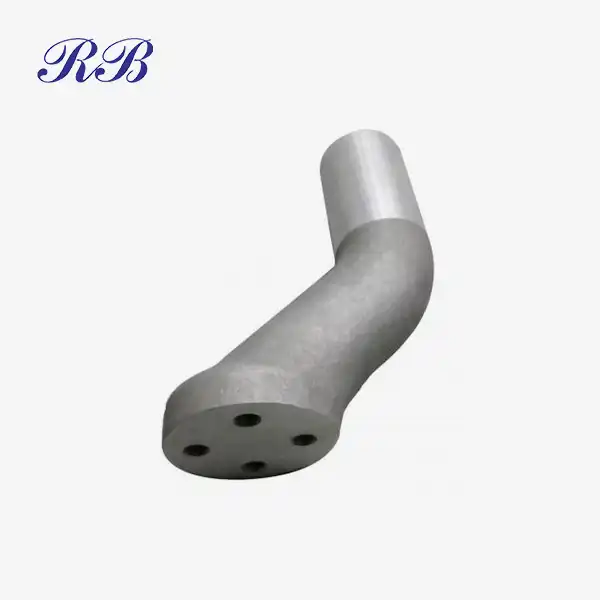
Learn about our latest products and discounts through SMS or email