- English
- French
- German
- Portuguese
- Spanish
- Russian
- Japanese
- Korean
- Arabic
- Greek
- German
- Turkish
- Italian
- Danish
- Romanian
- Indonesian
- Czech
- Afrikaans
- Swedish
- Polish
- Basque
- Catalan
- Esperanto
- Hindi
- Lao
- Albanian
- Amharic
- Armenian
- Azerbaijani
- Belarusian
- Bengali
- Bosnian
- Bulgarian
- Cebuano
- Chichewa
- Corsican
- Croatian
- Dutch
- Estonian
- Filipino
- Finnish
- Frisian
- Galician
- Georgian
- Gujarati
- Haitian
- Hausa
- Hawaiian
- Hebrew
- Hmong
- Hungarian
- Icelandic
- Igbo
- Javanese
- Kannada
- Kazakh
- Khmer
- Kurdish
- Kyrgyz
- Latin
- Latvian
- Lithuanian
- Luxembou..
- Macedonian
- Malagasy
- Malay
- Malayalam
- Maltese
- Maori
- Marathi
- Mongolian
- Burmese
- Nepali
- Norwegian
- Pashto
- Persian
- Punjabi
- Serbian
- Sesotho
- Sinhala
- Slovak
- Slovenian
- Somali
- Samoan
- Scots Gaelic
- Shona
- Sindhi
- Sundanese
- Swahili
- Tajik
- Tamil
- Telugu
- Thai
- Ukrainian
- Urdu
- Uzbek
- Vietnamese
- Welsh
- Xhosa
- Yiddish
- Yoruba
- Zulu
What is the accuracy of high pressure die-cast motor cover castings?
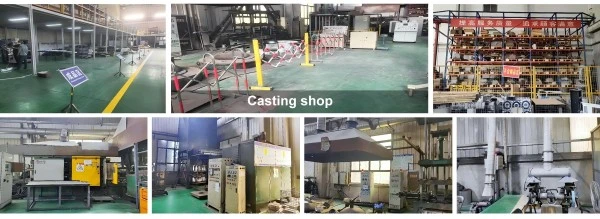
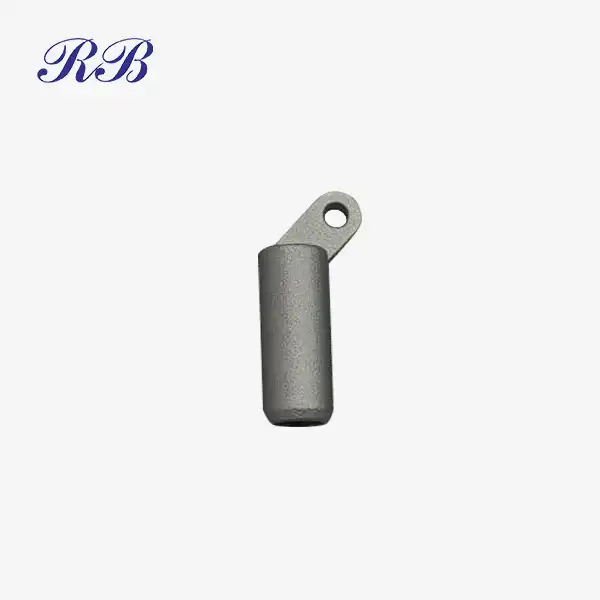
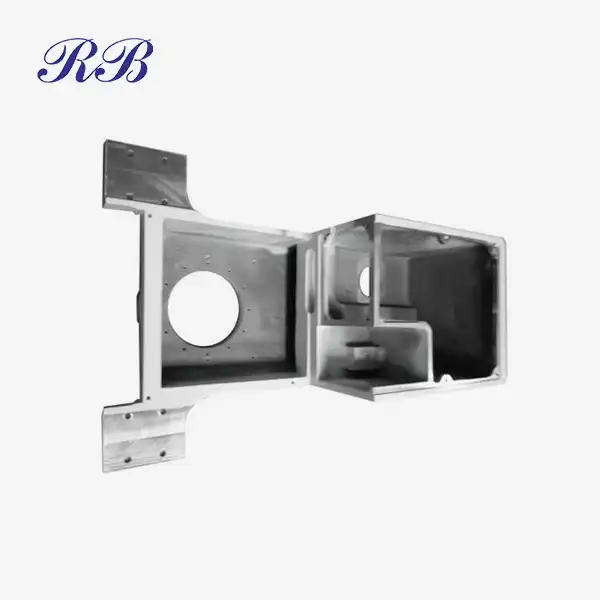
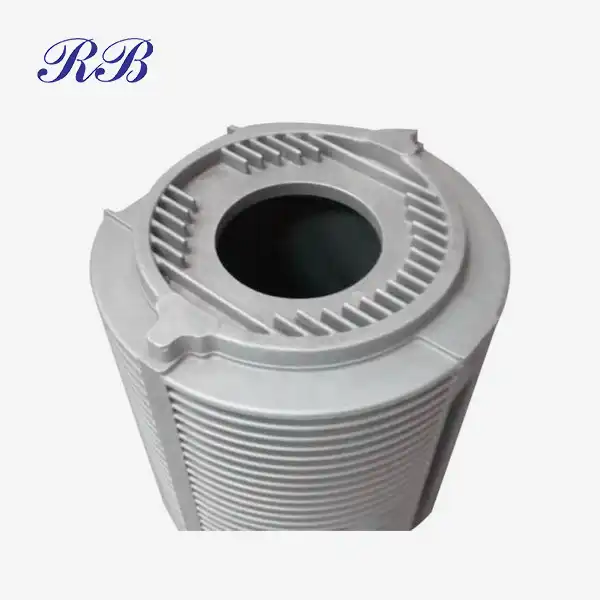
High pressure die casting is a widely used manufacturing process for producing motor cover castings with high dimensional accuracy and consistency. As a critical component in various industries including automotive, aerospace, and electronics, motor cover castings require precise tolerances and specifications to ensure proper fit and function. This article will explore the key factors that influence the accuracy of high pressure die-cast motor cover castings, including dimensional tolerances, form and position accuracy, and the impact of post-processing.
Dimensional Tolerance
Dimensional tolerance refers to the permissible variation in the size and shape of a manufactured part from its nominal dimensions. For high pressure die-cast motor cover castings, achieving tight dimensional tolerances is crucial for ensuring proper assembly and performance in the final application.
The dimensional accuracy of motor cover castings produced through high pressure die casting is generally quite high compared to other casting processes. Typical tolerances for aluminum alloy die castings like those used in motor covers can range from ±0.1 mm to ±0.5 mm depending on the specific dimension and overall part size. For example, a motor cover casing with dimensions around 100-200 mm may have tolerances in the range of ±0.2 to ±0.3 mm for critical features.
Several factors influence the dimensional tolerance capabilities in high pressure die casting of motor covers:
- Die design and quality - Precision-engineered dies with proper gating, venting, and cooling help minimize defects and dimensional variations.
- Machine parameters - Factors like injection pressure, speed, and temperature must be optimized and tightly controlled.
- Material properties - The shrinkage behavior of the specific aluminum alloy used affects final part dimensions.
- Part geometry - Complex shapes with thin walls and deep draws are more challenging to control dimensionally.
- Thermal management - Proper cooling of the die and cast part is critical for dimensional stability.
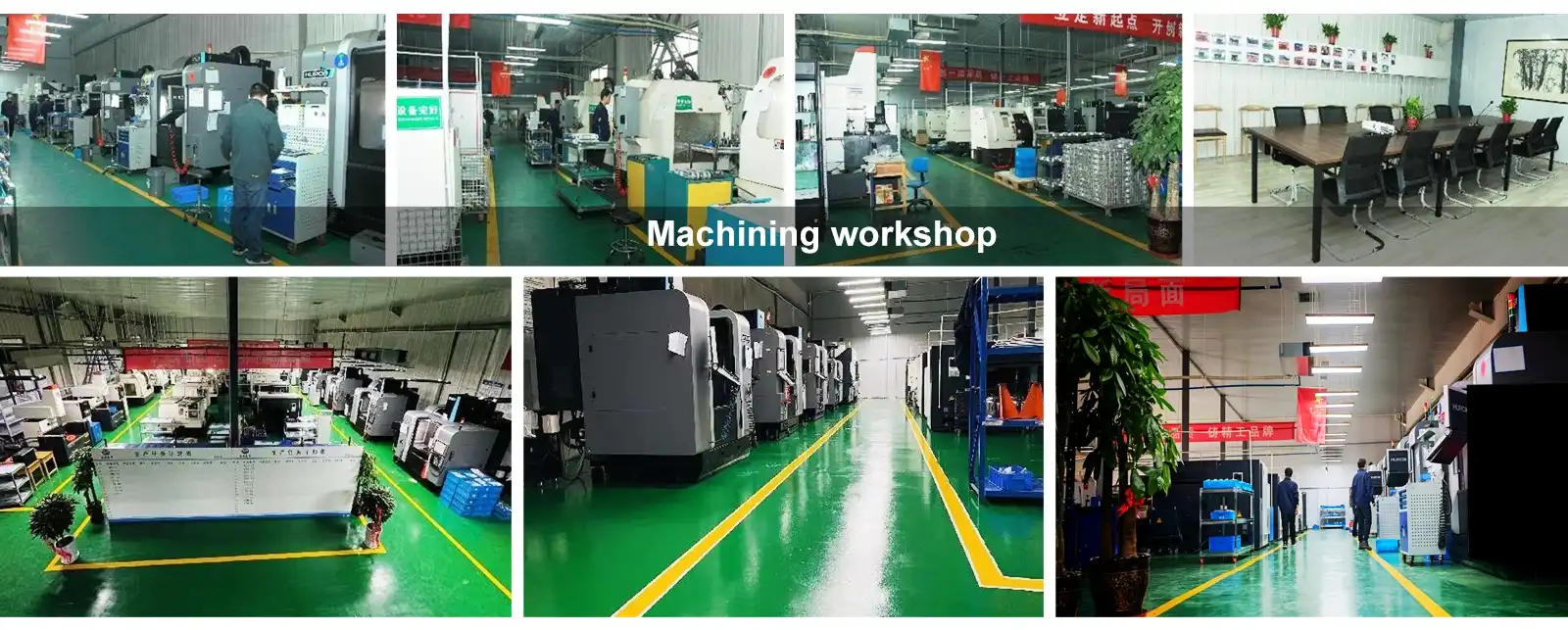
Leading die casting suppliers like Rongbao Enterprise utilize advanced simulation software, precision CNC machining of dies, and rigorous process controls to achieve the tightest possible tolerances for motor cover castings. For example, Rongbao's high pressure die-cast A380 aluminum alloy motor covers typically achieve tolerances of ±0.15 mm for critical dimensions in the 0.3-0.8 kg weight range.
Form and Position Accuracy
Beyond basic dimensional tolerances, the form and position accuracy of features on motor cover castings is crucial for proper fit and function. This includes characteristics like flatness, parallelism, perpendicularity, and true position of critical surfaces and features.
Form tolerances control the shape of individual features, such as:
- Flatness - Deviation of a surface from a perfect plane
- Cylindricity - Deviation of a cylindrical feature from a perfect cylinder
- Circularity - Deviation of a circular feature from a perfect circle
Position tolerances control the location of features relative to other features or datums, including:
- Parallelism - How parallel one surface or axis is to another
- Perpendicularity - How perpendicular a surface or axis is to a reference
- True position - The 3D location of a feature relative to datums
For high pressure die-cast motor cover castings, typical form and position tolerances may be in the range of 0.1-0.3 mm depending on the specific characteristic and overall part size. Achieving tight form and position accuracy requires precise die design, optimized gating and venting, and careful control of process parameters.
Advanced simulation tools allow die casting engineers to predict and optimize metal flow, solidification, and part distortion. This enables suppliers like Rongbao to design dies and processes that minimize issues like porosity, sink marks, and warpage that can impact form and position accuracy.
For example, flatness of large planar surfaces on motor covers may be held to 0.2 mm or better through proper support and ejection design in the die. True position of critical mounting holes might be controlled to within 0.15 mm relative to datum surfaces. Parallelism between mating surfaces could be maintained within 0.1 mm through balanced filling and controlled solidification.

Impact of Post-Processing
While high pressure die casting can produce near-net-shape parts with excellent accuracy, post-processing operations are often required to achieve final dimensional and surface requirements for motor cover castings. These secondary operations can have a significant impact on the overall accuracy of the finished parts.
Common post-processing steps for die-cast motor covers include:
- CNC machining - To achieve precise dimensions and surface finishes on critical features
- Deburring - To remove flash and sharp edges
- Straightening - To correct any warpage or distortion
- Surface treatments - Such as anodizing or powder coating
- Assembly operations - Like installing inserts or other components
Each of these processes can potentially affect the dimensional and geometric accuracy of the motor cover castings. Careful planning and process control is required to maintain tolerances through post-processing.
CNC machining is particularly impactful, as it can dramatically improve the accuracy of critical features. For example, bore diameters and locations that may have ±0.2 mm tolerance as-cast can often be machined to ±0.025 mm or better. Flatness and parallelism of machined surfaces can typically be held to 0.05 mm or less.
However, machining can also introduce new sources of variation if not properly controlled. Factors like fixturing errors, tool wear, thermal effects, and machining-induced stresses can all impact final part accuracy. Using robust machining processes with in-process measurement and adaptive control helps maintain tight tolerances.
Surface treatments like anodizing can also affect dimensions, typically increasing them slightly. The thickness of anodize layers must be accounted for in the design and manufacturing process. Rongbao's experienced engineers factor in the impacts of all post-processing steps to ensure motor cover castings meet final specifications.
About Rongbao
High pressure die casting is capable of producing motor cover castings with excellent dimensional and geometric accuracy. Typical tolerances in the range of ±0.1 to ±0.3 mm are achievable for most features, with even tighter control possible through optimized processes and secondary machining.
Achieving and maintaining this level of accuracy requires expertise in die design, process optimization, and quality control throughout the entire manufacturing chain. Leading suppliers like Rongbao Enterprise leverage advanced technologies and rigorous procedures to consistently deliver high-precision motor cover castings that meet the demanding requirements of industries like automotive, aerospace, and electronics.
For OEMs and engineers seeking high-accuracy die-cast motor covers, partnering with an experienced supplier is crucial. Rongbao's team of casting experts is available to consult on your specific application needs. Contact them at zhouyi@rongbaocasting.com or steve.zhou@263.net to discuss how their high pressure die casting capabilities can deliver the precision motor cover castings your products require.
References
- Campbell, J. (2015). Complete casting handbook: metal casting processes, metallurgy, techniques and design. Butterworth-Heinemann.
- Andresen, B. (2005). Die casting engineering: a hydraulic, thermal, and mechanical process. CRC Press.
- Vinarcik, E. J. (2003). High integrity die casting processes. John Wiley & Sons.
- Koryakin, A. G., & Koryakin, S. A. (2019). Improving the Accuracy of High-Pressure Die Casting. Russian Engineering Research, 39(7), 594-596.
- Abdulhadi, H. A., Ahmad, S. N. A. S., Ismail, I., Ishak, M., & Mohammed, G. R. (2017). Experimental investigation of thermal fatigue die casting dies by using response surface modelling. Metals, 7(6), 191.
_1751078338779.webp)
Learn about our latest products and discounts through SMS or email