- English
- French
- German
- Portuguese
- Spanish
- Russian
- Japanese
- Korean
- Arabic
- Greek
- German
- Turkish
- Italian
- Danish
- Romanian
- Indonesian
- Czech
- Afrikaans
- Swedish
- Polish
- Basque
- Catalan
- Esperanto
- Hindi
- Lao
- Albanian
- Amharic
- Armenian
- Azerbaijani
- Belarusian
- Bengali
- Bosnian
- Bulgarian
- Cebuano
- Chichewa
- Corsican
- Croatian
- Dutch
- Estonian
- Filipino
- Finnish
- Frisian
- Galician
- Georgian
- Gujarati
- Haitian
- Hausa
- Hawaiian
- Hebrew
- Hmong
- Hungarian
- Icelandic
- Igbo
- Javanese
- Kannada
- Kazakh
- Khmer
- Kurdish
- Kyrgyz
- Latin
- Latvian
- Lithuanian
- Luxembou..
- Macedonian
- Malagasy
- Malay
- Malayalam
- Maltese
- Maori
- Marathi
- Mongolian
- Burmese
- Nepali
- Norwegian
- Pashto
- Persian
- Punjabi
- Serbian
- Sesotho
- Sinhala
- Slovak
- Slovenian
- Somali
- Samoan
- Scots Gaelic
- Shona
- Sindhi
- Sundanese
- Swahili
- Tajik
- Tamil
- Telugu
- Thai
- Ukrainian
- Urdu
- Uzbek
- Vietnamese
- Welsh
- Xhosa
- Yiddish
- Yoruba
- Zulu
What is green sand casting?
Using a disposable sand mold to pour liquid metal into makes green sand casting a flexible, cost-effective, and widely used way to make metal parts. This basic sand casting method uses sand, clay, water, and other ingredients to make models that can be used again and again to make parts out of metal, iron, bronze, and steel. "Green" refers to how much water is in the sand mixture, not to its color. A pattern creates the mold cavity, which is then broken to remove the hardened casting. This method works well for big, complicated shapes in the car, building, and industrial equipment industries.
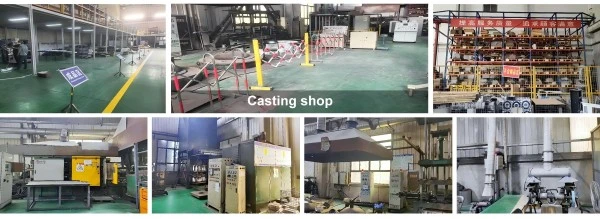
Understanding Green Sand Casting
Green sand casting is an important part of manufacturing that uses a carefully balanced mix of sand, clay, water, and chemicals to make models that can be used again and again for metal casting. This casting method is different from others because it is flexible, saves money, and is good for the earth. The process uses natural materials that can be recycled more than once. This means that less trash is made and less damage is done to the earth than with other manufacturing methods.
The basic idea is to make a negative cavity in packed sand that looks like the end part that is wanted. The sand blend usually has between 75 and 85% silica sand, 5 to 11 percent clay (bentonite), and 2 to 4 percent water. This makes the best balance of strength and permeability. This mix keeps the mold's structure solid while metal is poured into it, and it also lets gases escape, which keeps the finished casting from having flaws.
The Green Sand Casting Process
The first step in the production process is making a pattern. From this, a copy of the part that is wanted is made from metal, plastic, or wood. This plan needs to take into account how much the metal will shrink as it cools and have the right draft angles so it's easy to get out of the sand. The design is then put in a two-part flask system made up of the cope (upper half) and the drag (lower half). The green sand mixture is then packed and pressed around the pattern.
Core shooters and molding tools make it easier to make complex shapes and internal cavities, which lets makers make complex parts with hollow parts. The design of the gate system is very important for controlling the flow of metal, which makes sure that the mold is fully filled while reducing turbulence that could cause flaws. Risers are placed in a way that takes into account shrinking and provides directional solidification.
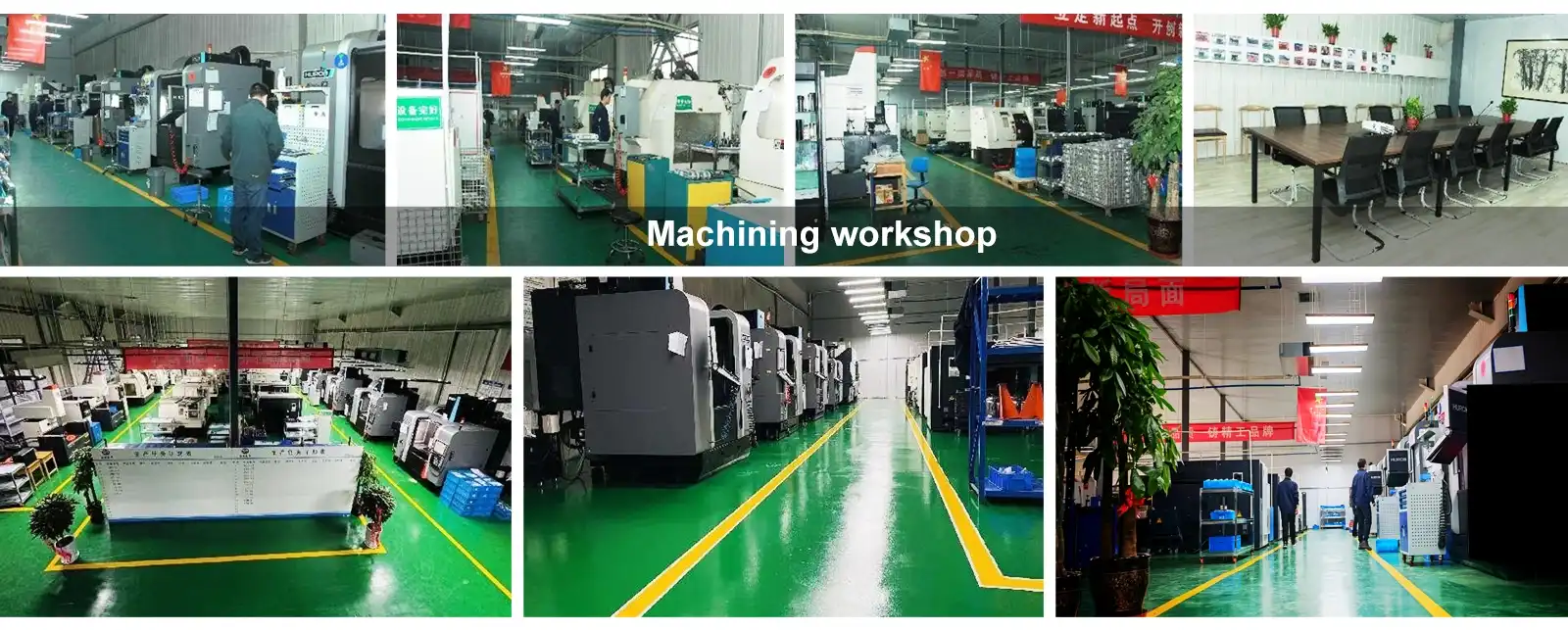
Equipment and Technology Integration
Green sand casting companies today use high-tech tools to make sure consistent quality and high output efficiency. Automated casting lines can make hundreds of molds an hour, and high-tech sand preparation systems keep the right amount of wetness and clay spread. Automated pattern handling systems cut down on human work and make sure that the same dimensions are used for all production runs.
Core making tools makes it possible to make parts with complicated inside shapes that could not be made by shaping the outside only. Most of the time, these cores are made from the same green sand mixture, but they may have extra binders added to make them stronger. Adding automatic filling systems makes sure that the temperature and flow rates of the metal stay the same, which are important for getting uniform casting quality.
Key Technical Considerations in Green Sand Casting
Technical knowledge is important for getting the best results from green sand casting in a wide range of industry settings. Metals like iron, steel, aluminum, and copper are chosen based on how well they work with other materials. Each metal has its own melting point, fluidity, and shrinkage traits that need to be taken into account. To make sure the mold is strong enough and that gases can pass through, the sand mixture's makeup must be changed based on the casting metal.
Design decisions have a direct effect on both how well finished parts work and how often they break. Differences in wall thickness can lead to uneven cooling and stress inside the mold, and draft angles that are too low can hurt the mold while the pattern is being removed. Because sand casting is naturally variable, tolerance levels must take that into account. These levels usually range from ±0.5mm to ±3mm, based on the size and complexity of the casting.

Material Selection and Compatibility
Because they are very fluid and don't melt at very high temperatures, aluminum alloys are perfect for shapes with complicated shapes and thin walls. The natural resistance to corrosion of the material makes it useful for use in marine settings and chemical handling equipment. But because metal conducts heat well, it needs to be carefully gated so that thin parts don't solidify too quickly.
Gray iron is great for making machine tool bases and engine blocks because it is easy to shape and reduces vibrations. The flake structure of the graphite improves heat conductivity and acts as a natural lubricant during cutting. Gray iron isn't as strong or resistant to impact as ductile iron, which makes it ideal for high-stress parts like crankshafts and differential housings.
Quality Control and Defect Prevention
Common casting flaws like porosity, inclusions, and differences in size need strict quality control measures and careful source selection. Inclusions are usually caused by contaminated metal or bad mold preparation, while porosity is usually caused by trapped gases or not enough degassing during melting. Mold erosion can add bits to the hot metal stream, which can lead to sand inclusions.
Precision in the design, uniformity in the sand mixture, and control of temperature during cooling all affect how accurately the dimensions are measured. Allowances for shrinkage must be built into the pattern design based on the alloy makeup and casting shape. When the form of the casting limits natural shrinking, hot tears and cracks may appear. To control cooling rates, risers and chills must be placed strategically.

Procurement Insights: Selecting Green Sand Casting Services
For effective sourcing, procurement professionals must evaluate green sand casting providers based on a wide range of factors, such as their licenses, production capabilities, and quality control systems. Standardized quality management systems are shown by ISO 9001 certification, while agreement in the car sector is shown by IATF 16949 certification. These licenses give people confidence in regular processes and efforts to keep getting better.
An evaluation of production potential should look at things like the amount of tools available, how it moves materials, and the level of technical know-how. Suppliers with automatic casting lines usually have better consistency and can make more at once than those who do things by hand. Having the ability to make patterns and machine parts in-house can cut down on wait times and make it easier to coordinate the whole production process.
Pricing Models and Cost Analysis
When looking at various sources for long-term partnerships, it's important to be clear about prices. The prices of raw materials, the costs of tools, the rates of labor, and the distribution of extra costs are all cost factors. Volume savings should be set up to encourage people to place bigger orders while keeping prices low for prototypes and small production runs. Knowing how the seller sets their prices helps you negotiate and plan your budget better.
Green sand casting still has low tooling costs compared to permanent mold processes, but design complexity and material choice have a big effect on the initial investment. Wooden patterns are the cheapest, but they don't last very long. Aluminum patterns, on the other hand, last longer and stay the same size better. The total cost of ownership should include schedules for pattern replacement and upkeep over the lifetime of the product.
Lead Time Management and Capacity Planning
Parts of the lead time are making the design, getting the mold ready, melting and filling, cooling, finishing, and inspecting for quality. Production processes usually last between 2 and 6 weeks, but this depends on how complicated the casting is and how busy the seller is. Customers who need their orders quickly may have to pay more, but knowing what the normal capacity limits are can help you escape having to pay extra for speedy service.
Supplier capacity scalability is very important when production levels change with the seasons or when a new product comes out. Suppliers with various production lines and flexible control of their workers can better adapt to changing demand trends. In return for commitments to a certain amount of work, long-term capacity deals may offer better scheduling and price.
Conclusion
Green sand casting is still an important way to make things because it strikes a good balance between cost-effectiveness, design freedom, and production capacity in a wide range of industry settings. Because it can work with different metal alloys, complicated shapes, and large production volumes, this method is essential in the automobile, building, aircraft, and general industry sectors. Procurement experts can make choices that are best for both cost and quality when they understand the technical issues, comparative advantages, and evaluation standards for suppliers. The process keeps getting better by being automated and having better quality control. It is still useful in modern industrial settings and can be used for both small prototypes and large amounts of produced goods.
Partner with Rongbao Enterprise for Superior Sand Casting Solutions
Rongbao Enterprise stands as your trusted sand casting manufacturer, delivering exceptional quality and reliability across automotive, construction, and industrial equipment sectors. Our comprehensive manufacturing capabilities encompass the complete production chain from pattern development through precision machining, ensuring seamless project execution and optimal cost management. With ISO 9001, ISO 14001, and ISO 45001 certifications, we maintain stringent quality standards while supporting both prototype development and high-volume production requirements.
Our experienced engineering team collaborates closely with procurement professionals to optimize designs for manufacturability, reduce costs, and accelerate time-to-market. Contact steve.zhou@263.net or zhouyi@rongbaocasting.com to discuss your specific requirements and discover how our proven expertise can enhance your supply chain efficiency.
FAQ
①What is the typical lead time for green sand casting projects?
Depending on how complicated the casting is, what the pattern needs, and how much time the source has available, lead times are usually between 2 and 6 weeks. Simple parts with existing patterns can be finished in two to three weeks, but it can take six to eight weeks to finish complicated parts that need new patterns to be made. Rush orders are possible, but they will cost more and may cut delivery times by 30 to 40 percent, based on how busy the seller is and how many orders they already have.
②How does green sand casting compare to die casting in terms of cost?
Green sand casting usually has lower start-up costs for tools, which makes it more cost-effective for small to medium production runs. Die casting costs a lot up front to buy the steel forms, but it costs less per piece when you make a lot of them. Depending on the difficulty of the part and the amount of material needed, the break-even point is usually between 10,000 and 50,000 pieces.
③What materials can be processed using green sand casting?
A lot of different metals can be used in this process, such as aluminum alloys, gray iron, ductile iron, bronze, brass, and different types of steel. The choice of material is based on the needs of the product, such as the need for strength, resistance to corrosion, ease of machining, and working temperature. To get the best results, each material needs its own specific heating steps and sand mixture changes.
④What dimensional tolerances can be achieved with green sand casting?
Dimensional errors usually fall between ±0.5mm and ±3mm, but this can change based on the size of the casting, how complicated the shape is, and the supplier's skills. To get better tolerances on critical measurements, more machining processes may need to be done. Pattern accuracy and the uniformity of the sand mixture have a big effect on the end accuracy of the dimensions.
⑤Can green sand casting accommodate both small and large production volumes?
The process can be easily scaled up from a few samples to thousands of parts without having to make big changes to the tools. For low-volume production, manual work works well, while automatic shaping lines make high-volume production more efficient. Suppliers can change how they make things based on how much is needed and when it needs to be delivered.
References
- Campbell, John. "Complete Casting Handbook: Metal Casting Processes, Techniques and Design." Butterworth-Heinemann, 2015.
- Brown, John R. "Foseco Ferrous Foundryman's Handbook." Butterworth-Heinemann, 2000.
- American Foundry Society. "Casting Design and Performance Guidelines." AFS Publications, 2019.
- Beeley, Peter R. "Foundry Technology." Butterworth-Heinemann, 2001.
- Heine, Richard W. "Principles of Metal Casting." McGraw-Hill Education, 1999.
- ASM International. "Casting Volume of ASM Handbook." ASM International Materials Park, 2017.
Learn about our latest products and discounts through SMS or email