- English
- French
- German
- Portuguese
- Spanish
- Russian
- Japanese
- Korean
- Arabic
- Greek
- German
- Turkish
- Italian
- Danish
- Romanian
- Indonesian
- Czech
- Afrikaans
- Swedish
- Polish
- Basque
- Catalan
- Esperanto
- Hindi
- Lao
- Albanian
- Amharic
- Armenian
- Azerbaijani
- Belarusian
- Bengali
- Bosnian
- Bulgarian
- Cebuano
- Chichewa
- Corsican
- Croatian
- Dutch
- Estonian
- Filipino
- Finnish
- Frisian
- Galician
- Georgian
- Gujarati
- Haitian
- Hausa
- Hawaiian
- Hebrew
- Hmong
- Hungarian
- Icelandic
- Igbo
- Javanese
- Kannada
- Kazakh
- Khmer
- Kurdish
- Kyrgyz
- Latin
- Latvian
- Lithuanian
- Luxembou..
- Macedonian
- Malagasy
- Malay
- Malayalam
- Maltese
- Maori
- Marathi
- Mongolian
- Burmese
- Nepali
- Norwegian
- Pashto
- Persian
- Punjabi
- Serbian
- Sesotho
- Sinhala
- Slovak
- Slovenian
- Somali
- Samoan
- Scots Gaelic
- Shona
- Sindhi
- Sundanese
- Swahili
- Tajik
- Tamil
- Telugu
- Thai
- Ukrainian
- Urdu
- Uzbek
- Vietnamese
- Welsh
- Xhosa
- Yiddish
- Yoruba
- Zulu
What is an explosion proof pull box?
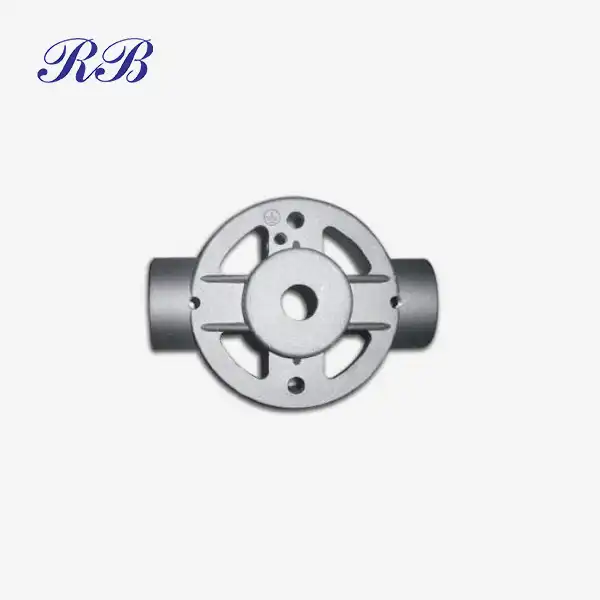
An explosion proof pull box is a critical component in electrical systems operating in hazardous environments, designed to prevent the ignition of flammable gases, vapors, dusts, or fibers. These enclosures serve as protective junctions for electrical conductors, allowing for safe cable pulling, splicing, and routing while containing potential ignition sources. Unlike standard electrical boxes, explosion-proof pull boxes are engineered to withstand internal explosions and prevent the propagation of flames or sparks to the surrounding atmosphere, making them indispensable in industries where safety is paramount.

Design Features of Explosion Proof Pull Boxes
The functionality of an explosion proof pull box is rooted in rigorous design standards that prioritize hazard containment and structural integrity. At the core of its design is the "flameproof" concept, which ensures that any explosion occurring inside the box is contained within its housing, and the external surface temperature remains low enough to avoid igniting flammable substances in the environment.
Feature①:Robust Enclosure
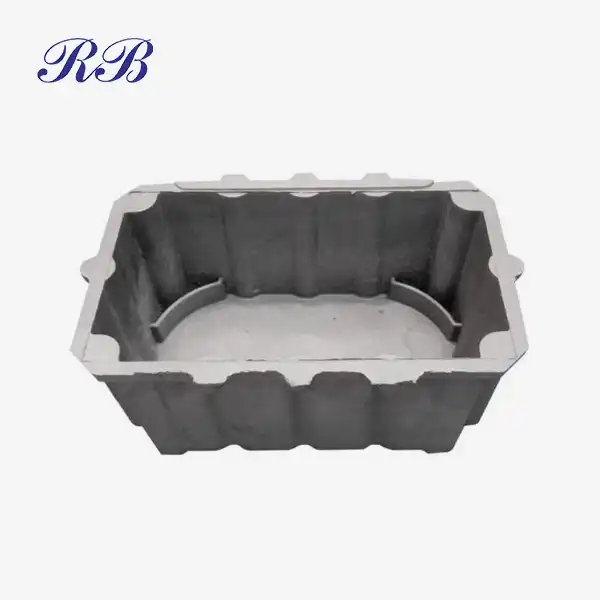
One of the primary features is the robust enclosure, typically constructed from high-strength materials such as cast aluminum, carbon steel, or stainless steel. These materials are chosen for their ability to withstand the pressure generated by an internal explosion—often tested to resist pressures up to 10 bar or more—without rupturing. The thickness of the housing is carefully calculated based on the intended hazard level, with thicker walls required for environments classified as more dangerous (e.g., Class I, Division 1).
Feature②:Flame Path
Another critical design element is the flame path, a precision-machined interface between the box body and its cover (or between components like conduit entries). This flame path consists of a narrow gap or labyrinth that cools and quenches flames if they escape from the interior. The dimensions of the flame path, including length and clearance, are strictly regulated by standards such as NFPA 70 (NEC) and IEC 60079. For example, in Class I, Division 1 environments, the maximum allowable clearance for a flame path might be as small as 0.025 mm for certain gas groups, ensuring that flames cannot propagate outward.
Feature③:Sealing Mechanisms and Internal Components
Sealing mechanisms also play a vital role. Explosion proof pull boxes are equipped with gaskets made from materials like neoprene or silicone, which maintain a tight seal to prevent the ingress of flammable substances into the enclosure. Conduit entries are fitted with explosion proof bushings or fittings, which not only secure cables but also maintain the flameproof integrity of the system by preventing gaps where gases could enter or exit.
Internal components are equally important. These boxes often include mounting brackets, cable clamps, and grounding terminals to ensure secure and organized cable management. Grounding is mandatory to prevent static electricity buildup, which could act as an ignition source. The internal layout is designed to minimize friction and abrasion during cable pulling, reducing the risk of sparks caused by mechanical stress on conductors.

Hazardous Environments and Regulatory Standards
Explosion proof pull boxes are deployed in environments where the presence of flammable substances creates a constant risk of ignition. These environments are categorized by global regulatory bodies to ensure that electrical equipment, including pull boxes, meets stringent safety criteria tailored to specific hazards. Understanding these classifications is key to selecting the right pull box for a given application.
Class I environments, as defined by the NEC (NFPA 70), involve flammable gases, vapors, or liquids. Within this class, Division 1 designates areas where these substances are continuously present or likely to be present under normal operating conditions; examples include petroleum refineries, chemical processing plants, and natural gas pipelines. Division 2, in contrast, refers to areas where flammable substances are present only under abnormal conditions, such as leaks or equipment failures. Explosion proof pull boxes used in Class I, Division 1 must adhere to the strictest standards, as they face the highest risk of exposure to ignitable concentrations of gases like methane, propane, or hydrogen.
Class II environments involve combustible dusts, such as those found in grain elevators, flour mills, or pharmaceutical manufacturing facilities. Division 1 here indicates frequent or continuous presence of dust clouds, while Division 2 refers to infrequent presence. Pull boxes in these settings must prevent dust ingress and withstand potential dust explosions, which can be equally destructive due to the high energy released when dust particles ignite.
Class III environments focus on ignitable fibers or flyings, such as textile mills or woodworking facilities. Though less common, these environments still require protective enclosures to prevent ignition of airborne fibers.
International standards mirror these classifications. The ATEX directive in the EU uses zones instead of divisions: Zone 0 (continuous presence of gas), Zone 1 (likely presence), and Zone 2 (rare presence) for gases; Zones 20, 21, and 22 for dusts. Similarly, IECEx standards align with these zone-based classifications, ensuring global consistency in safety requirements.
Manufacturers must also consider material compatibility. For instance, stainless steel pull boxes are preferred in corrosive environments (e.g., chemical plants) to resist degradation, while aluminum may be used in less harsh settings to reduce weight. The choice of materials directly impacts the box's longevity and ability to maintain its explosion proof properties over time.
Selection, Installation Best Practices
Choosing the right explosion proof pull box, installing it correctly, and maintaining it properly are critical steps in ensuring its effectiveness in hazardous environments. Even the most well-designed box can fail if misapplied, underscoring the importance of following best practices throughout its lifecycle.
Selection begins with matching the pull box to the specific hazard classification of the environment. This involves verifying that the box's certification (e.g., UL, ATEX) covers the relevant class, division, and gas or dust group. For example, a box certified for Class I, Division 2 may not be suitable for Class I, Division 1, as the latter requires a higher level of explosion resistance. Additionally, the temperature rating must align with the flammable substances present; using a T3-rated box in an environment with hydrogen (which requires T5 or T6) could lead to ignition if the box's surface temperature exceeds 200°C.
Size and configuration are also key considerations. The pull box must accommodate the number and size of cables being routed, with sufficient space for splicing and pulling without damaging conductors. Overcrowding can lead to insulation damage, increasing the risk of short circuits and sparks. Conduit entry sizes should match the cable diameters, and unused entries must be sealed with approved blanking plugs to maintain the explosion proof seal.
Installation requires strict adherence to manufacturer guidelines and local codes. The box must be mounted securely to a stable surface—vibration from nearby equipment can loosen connections or damage the flame path over time. All threaded connections, including the cover and conduit entries, must be tightened to the specified torque; insufficient torque can create gaps in the flame path, compromising its ability to quench flames. Grounding is another critical step: the pull box must be bonded to the facility's grounding system to dissipate static electricity and prevent voltage buildup.
During installation, care must be taken to avoid damaging the flame path. Scratches, dents, or corrosion on the machined surfaces can widen the gap, allowing flames to escape. Technicians should use non-sparking tools (e.g., brass or bronze) when working on the box to prevent accidental ignition, especially in Division 1 environments where flammable substances may be present.
About Rongbao Enterprise
Rongbao Enterprise is committed to staying at the forefront of explosion-proof technology, continually improving our products to meet the evolving needs of our customers. Our explosion proof pull boxes are certified to ISO9001:2015, ISO14001, and ISO45001 standards, ensuring the highest quality and reliability.
For more information about our explosion-proof pull boxes or to discuss your specific requirements, please contact us at zhouyi@rongbaocasting.com or steve.zhou@263.net.
References
1. National Fire Protection Association (NFPA). (2020). NFPA 70: National Electrical Code. Quincy, MA: NFPA.
2. Underwriters Laboratories (UL). (2021). UL 1203: Standard for Explosion-Protected Electrical Equipment for Use in Class I, II, and III, Division 1 Hazardous (Classified) Locations. Northbrook, IL: UL.
3. International Electrotechnical Commission (IEC). (2014). IEC 60079-1: Explosive atmospheres - Part 1: Equipment protection by flameproof enclosures "d". Geneva: IEC.
4. European Committee for Standardization (CEN). (2014). EN 13463-1: Non-electrical equipment for potentially explosive atmospheres - Part 1: Basic method and requirements. Brussels: CEN.
5. Eaton. (2022). Explosion Proof Enclosures: Design, Selection, and Installation Guide. Cleveland, OH: Eaton.
6. Appleton Electric. (2020). Explosion Proof Pull Boxes: Technical Specifications and Application Notes. Rosemont, IL: Emerson.
_1751078338779.webp)
Learn about our latest products and discounts through SMS or email