- English
- French
- German
- Portuguese
- Spanish
- Russian
- Japanese
- Korean
- Arabic
- Greek
- German
- Turkish
- Italian
- Danish
- Romanian
- Indonesian
- Czech
- Afrikaans
- Swedish
- Polish
- Basque
- Catalan
- Esperanto
- Hindi
- Lao
- Albanian
- Amharic
- Armenian
- Azerbaijani
- Belarusian
- Bengali
- Bosnian
- Bulgarian
- Cebuano
- Chichewa
- Corsican
- Croatian
- Dutch
- Estonian
- Filipino
- Finnish
- Frisian
- Galician
- Georgian
- Gujarati
- Haitian
- Hausa
- Hawaiian
- Hebrew
- Hmong
- Hungarian
- Icelandic
- Igbo
- Javanese
- Kannada
- Kazakh
- Khmer
- Kurdish
- Kyrgyz
- Latin
- Latvian
- Lithuanian
- Luxembou..
- Macedonian
- Malagasy
- Malay
- Malayalam
- Maltese
- Maori
- Marathi
- Mongolian
- Burmese
- Nepali
- Norwegian
- Pashto
- Persian
- Punjabi
- Serbian
- Sesotho
- Sinhala
- Slovak
- Slovenian
- Somali
- Samoan
- Scots Gaelic
- Shona
- Sindhi
- Sundanese
- Swahili
- Tajik
- Tamil
- Telugu
- Thai
- Ukrainian
- Urdu
- Uzbek
- Vietnamese
- Welsh
- Xhosa
- Yiddish
- Yoruba
- Zulu
What are the mechanical machining operations?
Mechanical machining operations refer to a set of manufacturing processes that shape, refine, or finish workpieces by removing excess material using mechanical forces, typically through the interaction of cutting tools with the workpiece. These operations are fundamental in transforming raw materials, including castings, forgings, and stock metals, into precision components with defined dimensions, surface finishes, and geometric accuracy. In the casting industry, machining plays a critical role in overcoming the inherent limitations of casting processes, such as minor dimensional variations, surface irregularities, or residual defects from mold release or cooling.
The core objectives of mechanical machining in casting applications include:
- Correcting dimensional deviations: Castings often have tolerances ranging from ±0.5mm to ±2mm, depending on the casting method (e.g., sand casting vs. die casting). Machining reduces these to tight tolerances (as low as ±0.001mm for high-precision parts like engine cylinder bores).
- Improving surface quality: Cast surfaces may exhibit roughness (Ra 12.5–25μm) due to mold textures; machining processes like grinding can achieve Ra 0.025–0.1μm, critical for sealing or bearing surfaces.
- Creating complex features: Casting struggles with intricate details (e.g., threaded holes, keyways, or sharp corners), which are added or refined via machining.
- Removing residual material: Trimming flash, gates, or risers left from casting to ensure part functionality and safety.
These operations rely on controlled material removal, distinguishing them from forming or additive processes. The choice of operation depends on the workpiece material (e.g., cast iron, aluminum alloy, or ductile iron), desired geometry, and performance requirements, all central to maintaining quality in casting workflows.
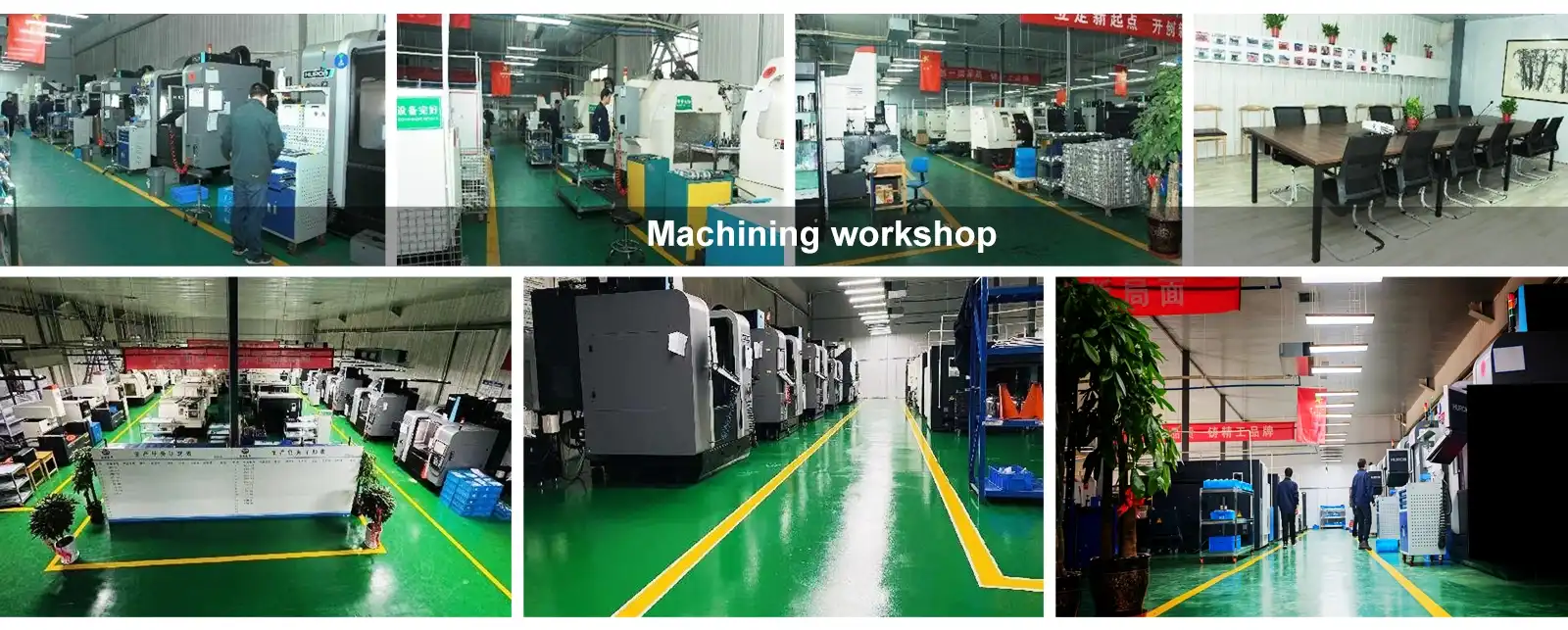
Key Types of Mechanical Machining Operations
Mechanical machining operations are categorized based on tool motion, workpiece movement, and the nature of material removal. Below are the most prevalent types in the casting industry:
1. Turning
Turning is a rotational machining process where a single-point cutting tool moves linearly against a rotating workpiece, removing material to create cylindrical surfaces, tapers, or grooves, which is widely used for finishing cast cylindrical parts such as shafts, sleeves, or valve bodies.
Equipment: Lathes (manual or CNC). CNC lathes, equipped with computerized controls, excel in batch processing of cast parts, ensuring consistency across hundreds of units.
Applications in casting: Refining the outer diameter of cast iron crankshafts or creating threads on aluminum alloy cast pipe fittings. Castings with uneven walls (common in sand casting) benefit from turning's ability to balance material removal for uniform thickness.
2. Milling
Milling uses a multi-toothed rotating cutter to remove material from a stationary or moving workpiece, producing flat, curved, or complex 3D surfaces. It is versatile for shaping cast components with irregular geometries, such as engine blocks or gear housings.
Equipment: Milling machines (vertical, horizontal, or CNC machining centers). 5-axis CNC mills are particularly valuable for the casting industry, as they can machine multiple surfaces of a complex cast part (e.g., a turbine housing) in a single setup, reducing errors from repositioning.
Applications in casting: Removing flash from die-cast zinc components, creating mounting slots in cast steel brackets, or finishing the mating surfaces of cast aluminum cylinder heads for proper gasket sealing.
3. Drilling and Boring
Drilling creates cylindrical holes using a rotating drill bit, while boring enlarges or refines existing holes to improve roundness and dimensional accuracy—critical for cast parts requiring precise fits (e.g., bearing bores).
Equipment: Drill presses, CNC machining centers with boring heads. For large castings (e.g., industrial pump housings), horizontal boring mills handle deep, large-diameter holes with high precision.
Applications in casting: Drilling oil passages in cast iron engine blocks or boring the main bearing bores of cast crankcases to ensure alignment with rotating components.
4. Grinding
Grinding uses an abrasive wheel to remove small amounts of material, achieving extremely tight tolerances and smooth surfaces. It is often the final step in casting finishing, especially for parts subject to wear or high precision.
Equipment: Surface grinders (for flat surfaces), cylindrical grinders (for shafts), and centerless grinders (for high-volume parts like cast steel rollers).
Applications in casting: Finishing the raceways of cast-iron bearing rings (Ra 0.05μm) or smoothing the sealing faces of cast stainless-steel valves to prevent leakage.
5. Sawing and Cutting
Sawing and cutting remove excess material (e.g., gates, risers) from castings, preparing them for further machining. Abrasive saws or band saws are common, with CNC-controlled versions ensuring clean, repeatable cuts.
Applications in casting: Trimming risers from sand-cast ductile iron manifolds or cutting cast aluminum ingots into billets for secondary processing.

Applications in the Casting Industry and Technological Trends
In the casting industry, mechanical machining is integral to bridging the gap between the "near-net shape" of castings and the "net shape" required for end-use. Cast materials, such as gray iron (high machinability), ductile iron (toughness), and aluminum alloys (lightweight), each demand tailored machining strategies. For example, gray iron's graphite flakes act as natural lubricants, reducing tool wear during turning, while aluminum alloys require high-speed milling to avoid heat-induced deformation.
Key applications include:
- Automotive sector: Machining cast engine blocks (milling deck surfaces, boring cylinder bores) and transmission housings (drilling bolt holes, turning mating flanges).
- Aerospace: Finishing cast titanium components (grinding to tight tolerances) for aircraft engines.
- Industrial machinery: Refining cast steel gear blanks (hobbing, a specialized milling process) to create precise tooth profiles.
Technological Trends Enhancing Machining in Casting
Advancements in machining technologies are aligning with the casting industry's demand for efficiency, precision, and sustainability:
- CNC Automation: Integrated CNC systems with AI-driven tool path optimization reduce setup times by 30–50% for batch casting production, minimizing human error.
- Inline Metrology: Real-time 3D scanning (e.g., using laser profilometers) during machining checks dimensions instantly, reducing scrap rates from casting variations.
- Coolant Recycling: Closed-loop systems for cutting fluids lower environmental impact, critical for casting facilities handling large volumes of machined parts.
- High-Speed Machining (HSM): HSM with carbide tools increases material removal rates by up to 40% for aluminum castings, boosting throughput without compromising surface finish.

Mechanical Machining Service Solution
Seeking a reliable partner for mechanical machining and precision components? Rongbao Enterprise is your go-to choice. We have been a specialised manufacturer of aluminium alloy casting and precision processing since 2003.
Our product range includes medical rehabilitation robots and titanium alloy machined parts, which are in high demand globally. We have built long-term cooperative relationships with many well-known domestic and international enterprises, and 70% of our casting, machining, and electronic assembly products are exported to countries like the United States, Europe, Australia, the United Kingdom, Canada, and Japan.
Don't miss out on the opportunity to work with us. Contact us at steve.zhou@263.net or zhouyi@rongbaocasting.com for a free sample, and let's create a bright future together.
References
1. ASM International. (2020). Machining Processes for Cast Metals. Materials Park, OH: ASM Handbook Series.
2. American Foundry Society. (2018). Casting Design and Manufacturing Handbook. Schaumburg, IL: AFS Press.
3. Journal of Manufacturing Science and Engineering. (2022). "Precision Machining of Cast Aluminum Alloys: Tolerance Control Strategies." Vol. 144, Issue 3.
4. Smith, J. et al. (2021). CNC Machining for Cast Iron Components. London: Elsevier Science.
Learn about our latest products and discounts through SMS or email