- English
- French
- German
- Portuguese
- Spanish
- Russian
- Japanese
- Korean
- Arabic
- Greek
- German
- Turkish
- Italian
- Danish
- Romanian
- Indonesian
- Czech
- Afrikaans
- Swedish
- Polish
- Basque
- Catalan
- Esperanto
- Hindi
- Lao
- Albanian
- Amharic
- Armenian
- Azerbaijani
- Belarusian
- Bengali
- Bosnian
- Bulgarian
- Cebuano
- Chichewa
- Corsican
- Croatian
- Dutch
- Estonian
- Filipino
- Finnish
- Frisian
- Galician
- Georgian
- Gujarati
- Haitian
- Hausa
- Hawaiian
- Hebrew
- Hmong
- Hungarian
- Icelandic
- Igbo
- Javanese
- Kannada
- Kazakh
- Khmer
- Kurdish
- Kyrgyz
- Latin
- Latvian
- Lithuanian
- Luxembou..
- Macedonian
- Malagasy
- Malay
- Malayalam
- Maltese
- Maori
- Marathi
- Mongolian
- Burmese
- Nepali
- Norwegian
- Pashto
- Persian
- Punjabi
- Serbian
- Sesotho
- Sinhala
- Slovak
- Slovenian
- Somali
- Samoan
- Scots Gaelic
- Shona
- Sindhi
- Sundanese
- Swahili
- Tajik
- Tamil
- Telugu
- Thai
- Ukrainian
- Urdu
- Uzbek
- Vietnamese
- Welsh
- Xhosa
- Yiddish
- Yoruba
- Zulu
Understanding Custom Casting Brackets: Materials, Processes, and Specs
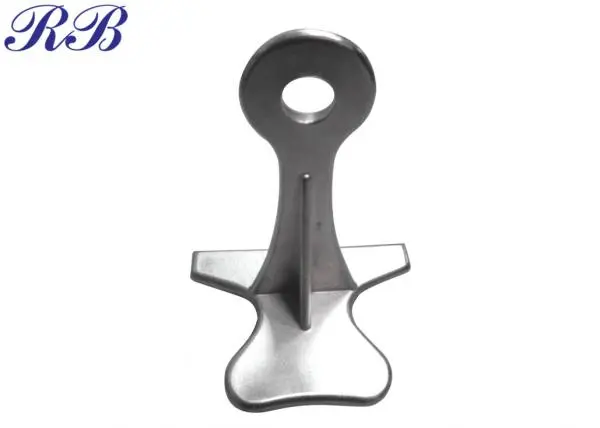
Custom casting brackets are essential precision structural components widely used in marine equipment, automotive assemblies and industrial machinery. These custom manufactured mounting parts deliver stable support, accurate connection and long term durability for complex mechanical systems. Adopting professional precision casting technology and standardized post processing procedures, qualified structural parts can adapt to harsh working environments and meet strict industrial operation standards. This article systematically introduces the definition, core advantages, manufacturing specs and application scenarios of these components, providing reliable reference for engineers and procurement personnel.
Basic Definition and Core Value of Custom Casting Brackets
To fully recognize the practical value of precision cast mounting parts, it is necessary to clarify their basic definition, working principle and application scope first. These customized structural parts differ greatly from ordinary standard brackets in manufacturing logic and performance, solving many pain points of traditional mechanical connection components.
What Are Custom Casting Brackets
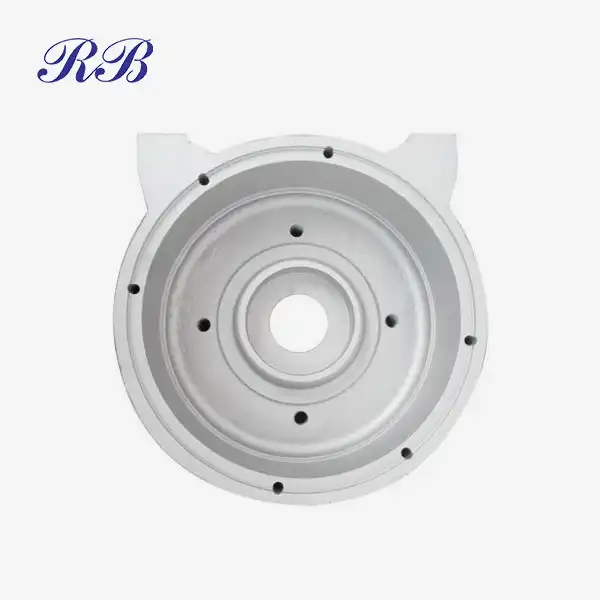
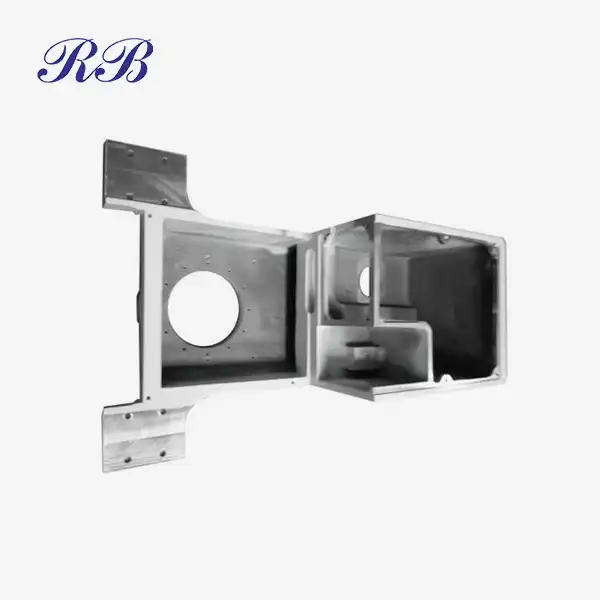
Custom casting brackets are personalized structural mounting parts produced through professional precision casting processes. Different from unified standard brackets on the market, these components are customized according to equipment parameters, installation space and load bearing requirements of different industrial projects. Manufacturers pour molten metal into customized precision molds to form integrated structures, which can realize complex geometric shapes that are difficult to complete by pure mechanical processing. Each finished unit is designed for specific equipment connection scenarios, with targeted dimensional parameters and structural layouts.
Core Functional Value for Industrial Applications
In industrial operation, custom casting brackets mainly undertake load dispersion, equipment fixing and system positioning functions. They can maintain stable structural rigidity under long term mechanical vibration, dynamic load and environmental corrosion. The integrated casting structure avoids assembly gaps and loose parts of spliced brackets, effectively improving the overall stability of mechanical equipment. Meanwhile, the one piece forming feature optimizes the weight distribution of components, reducing unnecessary material waste while ensuring structural strength.
Industry Pain Points Solved by Custom Casting Brackets
Traditional bracket manufacturing and standard finished products have obvious limitations in high precision and special scenario applications. Ordinary mechanical cutting processing has large material loss, long production cycle and low efficiency for complex shaped brackets. Off the shelf standard brackets often cannot match special installation sizes and load requirements, forcing enterprises to carry out secondary modification, which increases labor costs and affects installation accuracy. Relying on standardized production and customized design, custom casting brackets perfectly solve the problems of single specification, poor adaptability and low comprehensive benefit of traditional brackets.
After understanding the basic value and industry advantages of these customized structural parts, professional manufacturing materials and standardized processing techniques are the core guarantees for their stable performance. The following details the mainstream materials, production processes and quality control standards of the products.
Professional Materials, Processes and Production Specifications
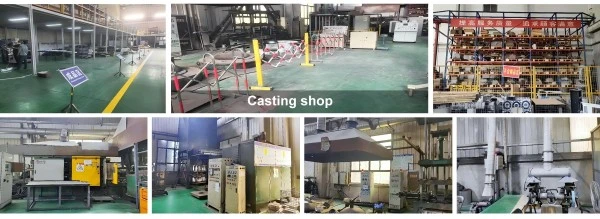
The excellent performance of precision cast mounting components comes from scientific material selection and standardized full process manufacturing. Every link from raw material confirmation to post processing and surface treatment strictly follows international quality standards, ensuring the accuracy, durability and stability of finished components.
Mainstream Material Selection and Performance Advantages
Stainless steel 304 is the most widely used raw material for high quality custom casting brackets. This austenitic stainless steel has outstanding corrosion resistance, oxidation resistance and mechanical stability. It can resist erosion of salt water, humid air and weak chemical media, and is very suitable for marine equipment, outdoor machinery and chemical industry supporting scenarios. In addition, the material has good casting performance and ductility, which can meet the forming requirements of complex bracket structures. It also maintains stable dimensional accuracy in long term use, not easy to deform or rust.
Full Set Precision Manufacturing Process
The production of custom casting brackets adopts integrated precision casting technology, matched with mature post processing procedures. First, according to customer drawings and 3D models, professional molds are customized to ensure the consistency of product structure. Molten stainless steel is poured into the mold for one piece forming, realizing near net shape production and reducing subsequent processing volume. After casting forming, all components will undergo CNC finishing to calibrate key dimensions, mounting holes and matching surfaces, ensuring assembly accuracy. Finally, shot blasting surface treatment is carried out to remove casting scale, smooth surface burrs and form a uniform surface texture.
Unified Production and Quality Specifications
Regular manufacturers implement standardized production specifications for custom casting brackets, with a single product weight of 0.8kg for conventional models and a maximum annual production capacity of 5000 pieces. The whole production system complies with ISO9001:2015 quality management system, ISO14001 environmental management system and ISO45001 occupational health and safety system certification. All finished products pass strict dimensional inspection, material composition testing and surface quality detection before delivery, and can pass international mainstream supplier audits, meeting the quality requirements of global high end equipment manufacturing.
With reliable materials and standardized processes, these precision cast parts have achieved outstanding application advantages in multiple industrial fields. The following summarizes their core application scenarios and practical use values.

Application Scenarios and Core Competitive Advantages
Precision cast mounting components have strong scenario adaptability, covering automobile, marine, industrial machinery and building structure fields. Compared with traditional bracket products, they have obvious advantages in design flexibility, cost control and service life.
Typical Industrial Application Scenarios
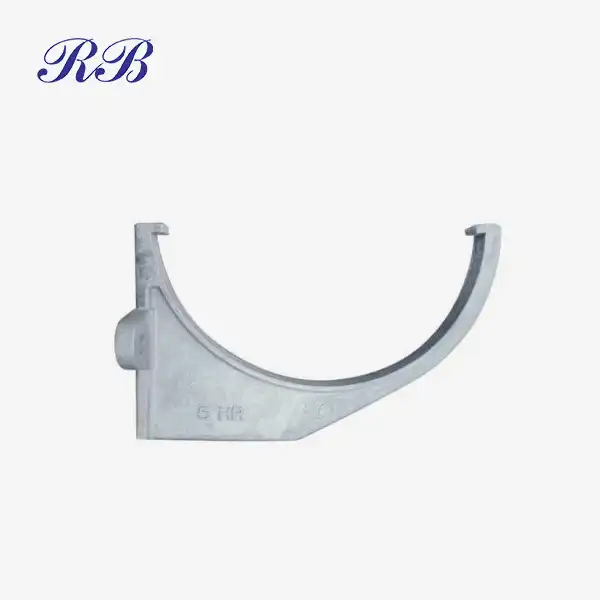
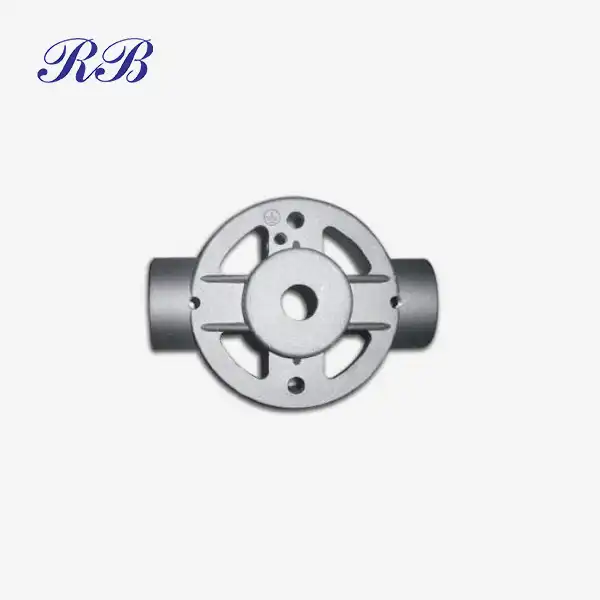
In the automotive industry, custom casting brackets are used for engine fixing, suspension support and body structural connection, adapting to dynamic load and temperature change working conditions. In marine engineering, stainless steel casting parts resist salt water corrosion and marine biological adhesion, providing stable mounting support for ship equipment. In industrial machinery, they are applied to heavy equipment fixing and vibration damping connection, optimizing equipment operation stability. In architectural structure fields, these components can meet both structural connection strength and architectural aesthetic requirements.
Unique Product and Manufacturing Advantages
Custom casting brackets have flexible design space, and can integrate reinforcing ribs, mounting holes and limiting structures in one piece according to user needs. This integrated design simplifies on site assembly steps and improves overall system reliability. In terms of cost, near net shape casting reduces material waste and processing procedures, and mass production forms scale benefits to reduce unit cost. In terms of quality, standardized process control ensures consistent mechanical properties and dimensional accuracy of each batch of products, avoiding performance differences caused by manual processing errors.
Flexible Customization and Delivery Capacity
Professional manufacturers provide complete OEM and ODM customization services for custom casting brackets. Users can put forward personalized requirements based on drawings, 3D models or actual equipment conditions. The engineering team will provide DFM manufacturability optimization suggestions to improve product performance and reduce production costs. The minimum order quantity is 100 pieces, which supports both prototype trial production and large batch formal production. The whole production cycle is stable at 20 to 30 working days, including 15 to 25 days of mold opening and 7 to 20 days of batch production, with efficient and controllable delivery cycle.

Conclusion
Custom casting brackets are high precision and high durability customized structural components tailored for modern industrial equipment connection needs. Supported by stainless steel 304 high performance materials and precision casting integrated manufacturing technology, these products perfectly solve the pain points of poor adaptability, low precision and high cost of traditional standard brackets. With flexible customization capabilities, stable quality control and efficient delivery system, they are widely used in automobile, marine, industrial machinery and many other fields. With the continuous upgrading of industrial manufacturing standards, customized casting parts will become more intelligent and refined, providing more reliable structural support for high end industrial equipment manufacturing.
FAQs
Q1: What materials can be used to produce custom casting brackets?
A1: The mainstream conventional material is 304 stainless steel, which is suitable for most corrosion resistant and high strength working scenarios. We also support customized production of other materials including aluminum alloy, carbon steel and other stainless steel grades, matching different load bearing, environmental resistance and cost budget requirements for custom casting brackets.
Q2: What information is required to get an accurate quotation for custom casting brackets?
A2: To provide accurate quotation and production scheme, we need customers to provide detailed technical drawings or 3D models, clear dimensional tolerance standards, material requirements, order quantity, surface treatment standards and special performance requirements for custom casting brackets. Photos of existing products can also be used as a reference for scheme design.
Q3: Can the design of custom casting brackets be optimized during production?
A3: Yes. Our professional engineering team provides free design for manufacturability optimization services. We can adjust the structural details, wall thickness and process scheme of custom casting brackets on the premise of ensuring functional requirements, so as to improve product stability, reduce production costs and shorten the production cycle. Design modification is more convenient in the mold opening stage.
Q4: What is the conventional delivery cycle for custom casting bracket orders?
A4: For new orders requiring mold opening, the total cycle is 20 to 30 working days, including 15 to 25 days of mold manufacturing and 7 to 20 days of batch production for custom casting brackets. For repeat orders with existing molds, the delivery cycle will be greatly shortened, which can meet the urgent delivery needs of customers.
Partner with Rongbao Enterprise for Superior Casting Bracket Solutions
Rongbao Enterprise is a professional manufacturer of custom casting brackets based in Xi’an, China, with 20 years of precision casting manufacturing experience. The company is a national high tech enterprise with 14 utility model patents, and has passed ISO9001:2015, ISO14001 and ISO45001 full system certification. We have complete in house production equipment including precision casting workshops, CNC machining centers and shot blasting treatment equipment, realizing one stop service from mold development, production and processing to surface treatment and finished product delivery.
Our products are exported to Europe, America, Japan and other international high end markets, with an export ratio of 70%. We have passed strict supplier audits such as ABB SSBM, and have rich experience in serving global industrial equipment manufacturers. We support full OEM and ODM customization, provide free DFM design optimization and pre shipment full inspection services, and adopt standardized wooden box packaging to ensure safe transportation of products.
If you have customized production and procurement needs of precision cast mounting parts, please contact our professional technical team via steve.zhou@263.net and zhouyi@rongbaocasting.com. We will tailor the most suitable production scheme and quotation according to your project requirements. Visit rongbaocasting.com to learn more about our complete precision casting manufacturing capabilities.
References
1. Campbell, J. Complete Casting Handbook: Metal Casting Processes, Metallurgy, Techniques and Design. Oxford: Butterworth Heinemann, 2015.
2. ASM International. ASM Handbook Volume 15: Casting. Materials Park, OH: ASM International, 2008.
3. Stefanescu, D.M. Science and Engineering of Casting Solidification. New York: Springer, 2009.
4. Heine, R.W., Loper, C.R., Rosenthal, P.C. Principles of Metal Casting. New York: McGraw Hill, 1967.
5. Beeley, P. Foundry Technology. Oxford: Butterworth Heinemann, 2001.
6. Brown, J.R. Foseco Ferrous Foundryman's Handbook. Oxford: Butterworth Heinemann, 2000.
Learn about our latest products and discounts through SMS or email