- English
- French
- German
- Portuguese
- Spanish
- Russian
- Japanese
- Korean
- Arabic
- Greek
- German
- Turkish
- Italian
- Danish
- Romanian
- Indonesian
- Czech
- Afrikaans
- Swedish
- Polish
- Basque
- Catalan
- Esperanto
- Hindi
- Lao
- Albanian
- Amharic
- Armenian
- Azerbaijani
- Belarusian
- Bengali
- Bosnian
- Bulgarian
- Cebuano
- Chichewa
- Corsican
- Croatian
- Dutch
- Estonian
- Filipino
- Finnish
- Frisian
- Galician
- Georgian
- Gujarati
- Haitian
- Hausa
- Hawaiian
- Hebrew
- Hmong
- Hungarian
- Icelandic
- Igbo
- Javanese
- Kannada
- Kazakh
- Khmer
- Kurdish
- Kyrgyz
- Latin
- Latvian
- Lithuanian
- Luxembou..
- Macedonian
- Malagasy
- Malay
- Malayalam
- Maltese
- Maori
- Marathi
- Mongolian
- Burmese
- Nepali
- Norwegian
- Pashto
- Persian
- Punjabi
- Serbian
- Sesotho
- Sinhala
- Slovak
- Slovenian
- Somali
- Samoan
- Scots Gaelic
- Shona
- Sindhi
- Sundanese
- Swahili
- Tajik
- Tamil
- Telugu
- Thai
- Ukrainian
- Urdu
- Uzbek
- Vietnamese
- Welsh
- Xhosa
- Yiddish
- Yoruba
- Zulu
Rectangular Hopper Volume Calculator
To find the volume of a rectangular hopper, you need to increase the base area by the height and take into account the angle of the slope of the release section. To find V, you need to multiply (L × W × H) by (L × W × h/3), where L is the length, W is the width, H is the straight-wall height, and h is the sloped bottom height. This figure is necessary to find out how much space can be stored, how fast materials can move, and how efficiently operations can run in industry settings that need precise bulk material handling solutions.
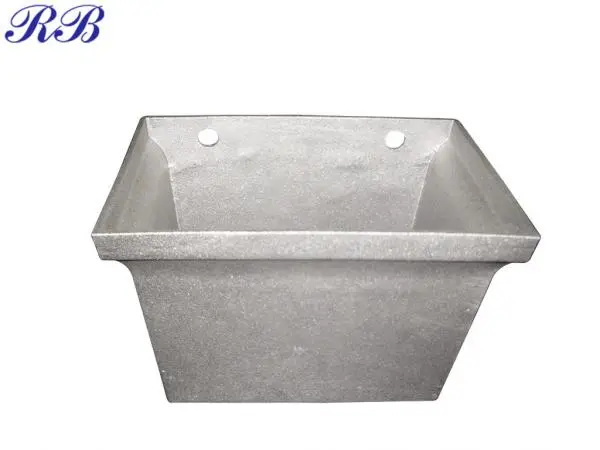
Understanding Rectangular Hoppers and Their Volume Calculation
To get the most out of their storage and release systems, industrial material handling systems depend on accurate volume estimates. To figure out how much a hopper can hold, engineers and procurement managers need accurate methods. This is because hopper capacity has a direct effect on running costs and productivity.
Fundamental Geometry and Flow Characteristics
Rectangular hopper systems are different from circular or conical ones because of their unique geometric traits. The rectangular cross-section makes the flow patterns predictable and the material spread even across the outlet hole. This shape has specific benefits in situations where controlled material flow rates are needed.
The way flow moves through rectangular hoppers depends on a number of important factors, such as the angle of the walls, the properties of the material, and the size of the outlet hole. When materials move evenly through the hopper, this is called mass flow. On the other hand, funnel flow makes a center discharge path with still areas along the walls. Engineers can make systems that keep flow rates consistent and reduce material separation by understanding these trends.
Step-by-Step Volume Calculation Method
To get an accurate volume estimate, you need to measure key measurements in a planned way. The main measures of the pyramidal discharge section are its total length, width, straight-wall height, and slope angles. Modern hopper designs often have more than one zone with different shapes, so estimates need to be done section by segment.
Finding the rectangular prism volume of the straight-wall piece is the first step in the calculation process. For the pyramidal discharge section, you need to figure out the volume of a truncated pyramid by measuring the size of both the top hole and the discharge outlet. In more complex estimates, changes may be made to account for wall thickness and internal features like flow aids or agitators.
In the car industry, for example, a parts washing system needs a hopper that is 1200mm long, 800mm wide, 1000mm tall on the straight walls, and 400mm tall on the pyramidal sections, with a 200mm × 300mm opening for the release. The calculation of the total volume gives us about 1.09 cubic meters, which is enough space for a normal work shift while still allowing for the best flow qualities.
Rectangular Hopper Design Principles and Material Considerations
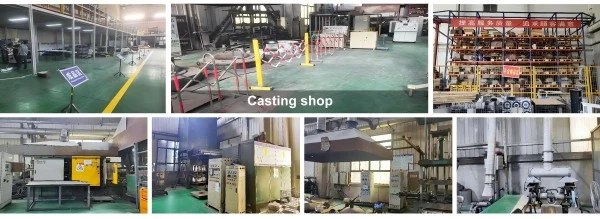
A good hopper design combines many technical needs, such as maintaining the structure's integrity, making sure the materials work well together, and making sure the system works efficiently. Manufacturing skills at places like Rongbao Enterprise use these ideas to create unique solutions for a wide range of business needs.
Structural Design and Stress Distribution
The design of the rectangular hoppers' wall has to be able to handle both steady loads and moving forces during filling and emptying. Because the shape is rectangular, there are specific stress collection points at the sides and where two walls meet. Engineers deal with these problems by using methods for strengthening, such as corner angles, structural ribs, and planned changes in wall thickness.
The choice of material has a big effect on the design factors and the long-term performance. It is common to use A356 aluminum metal in precision casting because it has a high strength-to-weight ratio and doesn't rust. This material works especially well for things like car component handling systems that need to be lightweight without sacrificing toughness.
Customization and Manufacturing Considerations
Modern ways of making things allow for a lot of modification to meet the needs of particular applications. CNC machines can make parts with very tight limits on dimensions and complicated internal shapes. Surface processes, such as shot blasting, make it easier for materials to move and make them less likely to rust.
The way something is made affects both the cost at first and how well it works in the long run. Casting methods make it cheap to make shapes with many sides, and they keep the precise measurements needed for material flow. Quality certifications like ISO9001:2015, ISO14001, and ISO45001 make sure that all businesses follow the same rules for making and following the law.

Comparing Rectangular Hoppers with Other Hopper Types
Understanding the performance features of different designs is necessary to choose the best hopper setup. This study helps people who work in procurement make smart choices based on the needs of their unique operations.
Flow Efficiency and Maintenance Requirements
Rectangular hopper designs offer clear benefits in some situations but also present unique problems. The flat walls make it easier to clean and give upkeep workers better access to the area. But areas around corners may wear out faster and need to be checked more often.
Most of the time, cylindrical hoppers make it easier for materials that stick together to flow and distribute stress more evenly. When a full release is needed with little leftover material, conical shapes work best. Which of these designs to use depends on the properties of the material, the amount of discharge needed, and the ease of upkeep.
Automation Integration and System Compatibility
Standardized interface designs and reliable flow features are good for automated material handling systems. Rectangular hoppers work well with automatic handling equipment, vibratory feeds, and conveyor systems. The flat bottom shape makes it easier to place devices that measure flow and control discharge.
When designing manual systems, you need to focus on making them easy to reach, letting you see what's going on, and making sure they're simple to maintain. The rectangular shape makes it easy to see the amounts of materials and the flow conditions, which makes hand operation and troubleshooting much easier.
Procurement and Supplier Guidance for Rectangular Hoppers
When making strategic buying choices, you have to look at a lot of things, like technical specs, the supplier's abilities, and your long-term support needs. Understanding these factors is important for building strong relationships and getting the most out of your tools.
Specification Development and Supplier Evaluation
To make detailed specifications, you need to know what the program needs, how it will be used, and what kind of speed you expect. Design factors and source selection criteria are based on volume needs, material compatibility, and integration needs. When room is limited or there are specific needs, the ability to customize becomes very important.
When judging a supplier, you should look at their professional skills, quality processes, and customer service. Delivery times and prices for big orders are affected by how much a factory can make. For volume needs, production centers that can make 5,000 pieces at a time and have well-established quality processes are reliable.

Global Sourcing and Quality Considerations
International buying gives you more source choices, but you need to be very careful to make sure that the quality standards and contact options are right for you. Suppliers who have foreign certifications and sale experience show that they are committed to high standards around the world. Where you live affects how much it costs to ship and when it gets delivered, especially for custom tools.
Quality assurance programs should check the steps used to make things, the approvals of the materials used, and the checking methods. Effective quality control is helped by suppliers who provide a lot of paperwork, like material certificates and measurement reports. Using protective methods like wooden box packing for transportation makes sure that equipment gets to its destination in perfect shape.
Conclusion
Rectangular hopper volume calculations provide essential information for optimizing industrial material handling systems. By knowing the basic rules of geometry, important design factors, and operating needs, you can make smart purchasing choices that balance performance, cost, and dependability. For long-term success in tough industrial settings, you need strong relationships with suppliers, thorough repair programs, and the right way to come up with specifications. When you combine advanced manufacturing skills with tried-and-true design principles, you get solutions that meet the changing needs of the industry while keeping costs low and operations running smoothly.
Partner with Rongbao Enterprise for Premium Rectangular Hopper Solutions
Rongbao Enterprise combines 20 years of manufacturing expertise with advanced casting capabilities to deliver exceptional rectangular hopper solutions for diverse industrial applications. Our comprehensive manufacturing services include design optimization, precision casting using A356 aluminum alloy, CNC machining, and professional surface treatments. With ISO9001:2015, ISO14001, and ISO45001 certifications, we ensure consistent quality and regulatory compliance for every project. Our experienced engineering team provides customized solutions that meet specific volume requirements and operational demands. Contact steve.zhou@263.net or zhouyi@rongbaocasting.com to discuss your rectangular hopper supplier needs and discover how our proven manufacturing capabilities can optimize your material handling systems.
FAQ
What factors affect rectangular hopper volume calculations?
Key factors include overall dimensions, wall thickness, discharge opening size, and internal structures. Slope angles significantly impact volume calculations, particularly in the pyramidal discharge section. Material properties affect design parameters but not volume calculations directly.
How do I choose between rectangular and cylindrical hopper designs?
Consider material flow characteristics, maintenance requirements, and system integration needs. Rectangular designs excel in applications requiring easy cleaning access and conveyor integration. Cylindrical hoppers provide superior flow characteristics for difficult materials.
What maintenance schedule should I follow for rectangular hoppers?
Inspection frequency depends on material abrasiveness and operational intensity. Monthly visual inspections identify obvious issues, while quarterly detailed inspections assess wear patterns and structural integrity. Annual comprehensive evaluations should include dimensional verification and surface condition assessment.
References
- Industrial Material Handling Engineering Handbook, 4th Edition, Society of Manufacturing Engineers, 2018.
- Hopper Design Guidelines for Bulk Solids Flow, Powder Technology Journal, Volume 45, 2019.
- American Society of Mechanical Engineers Standard B30.17: Overhead and Gantry Cranes (Top Running Bridge, Multiple Girder), 2020.
- Bulk Material Handling Equipment Design Manual, Conveyor Equipment Manufacturers Association, 2021.
- Metal Casting Process Engineering and Technology, American Foundry Society Technical Publication, 2020.
- Industrial Equipment Procurement Best Practices Guide, Manufacturing Institute Research Publication, 2022.
Learn about our latest products and discounts through SMS or email