- English
- French
- German
- Portuguese
- Spanish
- Russian
- Japanese
- Korean
- Arabic
- Greek
- German
- Turkish
- Italian
- Danish
- Romanian
- Indonesian
- Czech
- Afrikaans
- Swedish
- Polish
- Basque
- Catalan
- Esperanto
- Hindi
- Lao
- Albanian
- Amharic
- Armenian
- Azerbaijani
- Belarusian
- Bengali
- Bosnian
- Bulgarian
- Cebuano
- Chichewa
- Corsican
- Croatian
- Dutch
- Estonian
- Filipino
- Finnish
- Frisian
- Galician
- Georgian
- Gujarati
- Haitian
- Hausa
- Hawaiian
- Hebrew
- Hmong
- Hungarian
- Icelandic
- Igbo
- Javanese
- Kannada
- Kazakh
- Khmer
- Kurdish
- Kyrgyz
- Latin
- Latvian
- Lithuanian
- Luxembou..
- Macedonian
- Malagasy
- Malay
- Malayalam
- Maltese
- Maori
- Marathi
- Mongolian
- Burmese
- Nepali
- Norwegian
- Pashto
- Persian
- Punjabi
- Serbian
- Sesotho
- Sinhala
- Slovak
- Slovenian
- Somali
- Samoan
- Scots Gaelic
- Shona
- Sindhi
- Sundanese
- Swahili
- Tajik
- Tamil
- Telugu
- Thai
- Ukrainian
- Urdu
- Uzbek
- Vietnamese
- Welsh
- Xhosa
- Yiddish
- Yoruba
- Zulu
OEM Casting Accessories vs Standard Parts: Which Is Best?
When sourcing components for gas safety equipment or alarm systems, procurement managers face a critical decision: should they invest in OEM casting accessories or rely on standard parts? The answer depends on your production needs, budget constraints, and long-term quality expectations. OEM casting accessories offer tailored solutions designed specifically for your equipment, ensuring precise fit and compliance with safety certifications like Ex d IIB T6 or IP65 ratings. Standard parts, meanwhile, provide immediate availability and lower upfront costs but may require compromise on customization and integration.
Understanding OEM Casting Accessories and Standard Parts
For companies that make gas safety and warning devices, the difference between these two groups has a big impact on how they buy things.
What Defines OEM Casting Accessories?
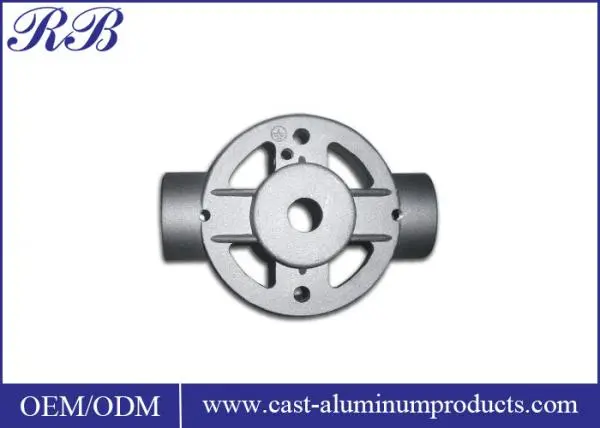
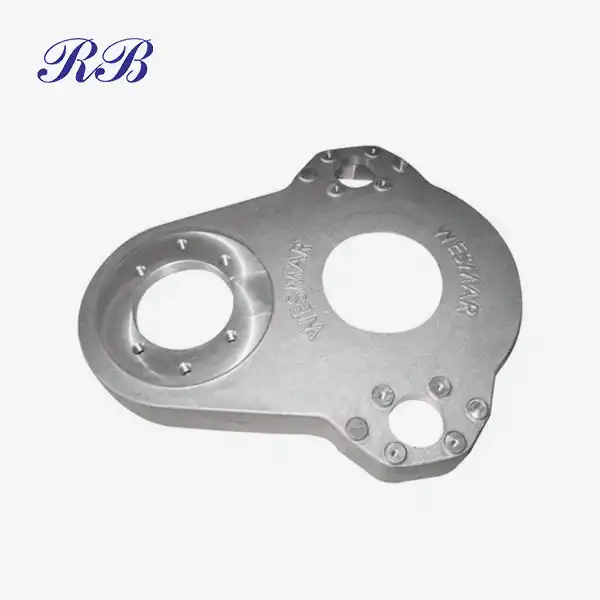
OEM casting accessories are custom-engineered parts that are made to the exact specs given by equipment makers. These parts go through quality control and tooling development processes that are specific to your product. At Rongbao Enterprise, we use high-pressure die casting to make OEM aluminum casting parts out of A380 material. These parts are used in natural gas control valves and explosion-proof enclosures, among other things. Each part weighs about 0.8 kg and is produced using CNC cutting followed by shot blasting to meet the IP65 protection standards required by safety equipment makers.
Characteristics of Standard Casting Parts
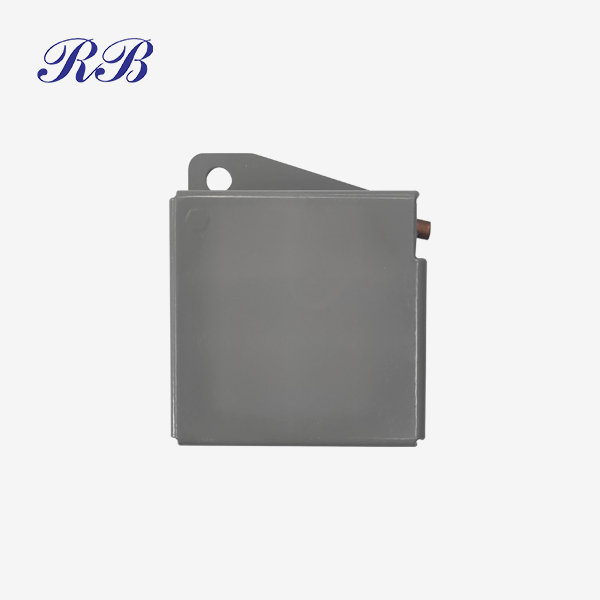
Standard parts are pre-designed parts that are made to meet the needs of the whole industry and can be bought through networks of distributors. These off-the-shelf things are used in many ways by different makers. Standard casting parts can be ordered more quickly, but they don't always have the precise engineering needed for explosion-proof uses where sealing integrity and measurement accuracy are musts. Gas meter covers and alarm control boxes often need to be customized in ways that standard parts can't do without being changed.
Material and Process Distinctions
OEMs may use the finest materials. Easy to produce, rust-resistant, and robust for its weight, the aluminum alloy A380 is ideal for outdoor gas safety equipment that must withstand changing conditions. High-pressure die casting produces finer tolerances than gravity or sand casting, which are utilized for conventional products. This precision manufacturing reduces machining and maintains wall thickness, which is critical for pressure-sensitive applications. Every product we create satisfies worldwide quality standards thanks to our ISO9001:2015, ISO14001, and ISO45001 certifications. Cycles can produce 5,000 pieces.
Key Decision Criteria for Choosing Between OEM and Standard Parts
There are a number of linked factors that affect the best way to source casting parts for safety tools.
Performance and Compatibility Requirements
In extreme situations, gas safety equipment must be dependable. OEM casting accessories attachments enable engineers to define size constraints as precise as ±0.05mm, ensuring parts fit properly with electronic assemblies and sealing surfaces. Standardized parts seldom allow designers to create a natural gas valve body that works with particular sensor arrays and doesn't leak from -40°C to +85°C. Customization allows you to pick the optimal mounting locations, cord entry arrangements, and heat management features, which affect equipment lifespan and certification.
Cost Analysis Beyond Initial Purchase Price
Many procurement teams focus too much on unit pricing and neglect overall cost of ownership. Tool investments for OEM parts range from $3,000 to $15,000. This depends on part complexity. But this expense is distributed throughout more output. An alarm housing manufacturer that manufactures 10,000 per year recoups the cost of the first-run tools. They also gain parts that reduce assembly modifications, quality rejections, and certification approval time. Standard parts may cost less per unit, but they need additional machining, testing, and perhaps redesign cycles if they don't fit together during prototype testing.
Supplier Reliability and Certification Depth
Parts and their quality control system are equally significant. Companies that sell abroad require vendors with approved compliance documents. The three-tier ISO certification system encompasses quality management, environmental responsibility, and workplace health. The audit trail for CE marking and ATEX compliance papers is created. Standard parts vendors may require traceability systems for material lot tracking, pressure testing, and dimensional inspection data to satisfy safety equipment certification organizations.
Advantages and Limitations of OEM Casting Accessories
Custom manufacturing has certain benefits that make the investment worth it for safety-critical uses, but it also brings up issues that need to be managed proactively.
Tailored Design for Optimal Performance
OEM casting helps engineers improve every design detail. Wall thickness adjustments are expected to balance strength and weight reduction. The casting has mounting bosses, so they don't require welding. Internal tunnels allow wires to pass without digging holes that degrade the structure. An explosion-proof junction box project found that bespoke rib patterns made the boxes 40% more impact-resistant than conventional case designs while using 15% less material. Design flexibility is extremely useful for creating product families because various housing designs may match multiple sensor setups without starting from scratch.
Quality Assurance and Compliance
Companies that make safety gear can't have quality problems. Application-specific checking procedures can be used with OEM production. Each part of a natural gas valve is put through pressure testing at 1.5 times the working pressure, dimension checking with coordinate measuring tools, and surface roughness checking to make sure the gasket seals well. Instead of depending on the kind of sampling inspection that is common for distributing standard parts, these quality checks are built into the production process. The paperwork that comes with every batch of production shows that the process was controlled, which is needed for UL, CSA, and ATEX approvals.
Lead Time and Inventory Considerations
Custom tools take three to four weeks to create, and sample approval processes delay initial orders. This makes it difficult for producers to move swiftly on market opportunities or seasonal demand increases. Strategic planning reduces this issue. Working with OEMs during product development rather than production allows tools to be completed at the same time as certification testing. Our 5,000-piece capacity and 6–8-week production cycles make restocking straightforward once manufacturing begins. Manufacturers that purchase 1,000-piece lots every month maintain their inventory levels lower than conventional parts, which need 5,000 pieces and uncertain replenishment delays.
When Are Standard Casting Parts the Better Choice?
Standardized parts are better than custom-made ones in some operational situations, especially when production characteristics match up with off-the-shelf availability.
High-Volume Commodity Applications
Standard parts economics is good for products that don't need to be different. Standardized metal housings might be enough for a company that only cares about price when making basic cable junction boxes for home installs. For these uses, larger size differences and standard fastening arrangements are acceptable. Standard parts are available right away, so you don't have to spend money on tools. This cuts down on the time it takes to get a product to market, which is helpful for products that will only last a short time or where making quick prototypes is more important than optimizing production for the long term.
Prototype and Development Phases
In the early stages of product creation, ideas often need to be tested in the real world before they are finalized. By buying standard casting accessories blocks for proof-of-concept parts, engineering teams can test ideas without having to spend money on tools. This method works well when standard dimensions are close to target specifications and standard parts can be changed to fit test configurations through secondary machining. Once the design has been validated, it is moved to OEM production, which makes the design more efficient for production.
Quality Verification Methods
Since buyers can't control the manufacturing process, standard parts need to go through strict inspection procedures when they arrive. Using sampling plans that are based on ANSI/ASQ Z1.4 standards can help find differences in quality before the parts are put into production. Checking the dimensions, checking the material's make-up using spectrographic analysis, and putting pressure on important features are all ways to make sure that parts are up to par. These investments in quality assurance come with extra costs that aren't always seen when buying standard parts.
Procurement Strategies: Integrating OEM and Standard Parts in Your Supply Chain
Smart manufacturers come up with hybrid sourcing plans that use each type of part where it provides the most value.
The F-1 Criteria Screening Approach
Effective sourcing begins with systematic assessment of four factors. The quality evaluation analyzes whether part specifications enable modification or standard deviations. Cost analysis evaluates all company expenses, including tools, supplies, and quality. Delivery requirements depend on manufacturing, restocking frequency, and customer lead time sensitivity. Supplier support evaluates technical support, post-sale speed, and manufacturing potential. Because of certification restrictions, a natural gas meter manufacturer may label explosion-proof main housings as OEM parts and acquire standard mounting brackets that don't need any customization.
The F-2 Demand Matching Approach
Aligning the choice of parts with the complexity of production is the best way to use resources. When safety-critical parts connect to electrical systems, OEMs usually make the investment because the integration is hard and they could be held responsible. As standard parts, structural elements with simple geometries and non-critical tolerances usually work well. Production volume limits affect this calculation. Needs for more than 2,000 pieces per year usually support investing in OEM tools, while smaller quantities favor standard parts unless the design is so unique that customization is needed no matter the quantity.

Practical Implementation Example
A company that makes alarm systems for both homes and businesses is a good example of hybrid sourcing in action. Their industrial explosion-proof control panels use OEM aluminum housings that are made to IP66 standards and have special wire entry designs that meet the needs of ATEX Zone 1. The higher price of these units makes the engineering investment worthwhile. Their line of home smoke alarms uses standard plastic housings that have been changed through secondary machining to make the name stand out. This plan puts OEM resources where they can give you a competitive edge while keeping costs down on price-sensitive product lines by using standard parts.
Conclusion
Instead of choosing a typical OEM casting accessory or standard item, consider your operating scenario. OEM parts provide safety equipment manufacturers with superior performance, integration, and certification compliance to compete on quality and reliability. Standard parts may be used immediately and are cheaper, making them ideal for high-volume manufacturing or early development. Most successful manufacturers employ OEM for unique, safety-critical parts. Standards are applied for other areas when modification isn't necessary. Instead of merely considering unit pricing, consider quality, total cost of ownership, manufacturing quantities, and strategic positioning when choosing a component. Working with experienced suppliers who can conduct bespoke production and technical consultation helps manage these trade-offs.
FAQ
1. Which industries benefit most from OEM casting accessories?
Due to strict certification requirements and safety-critical performance needs, OEM casting is a big help for gas safety equipment, explosion-proof alarm systems, and hazardous location enclosures. Standard parts rarely meet these needs without a lot of change because they need exact control over dimensions, the ability to track materials, and the ability to keep pressure inside. Industries that put a high value on differentiating their products and managing liability risk also like OEM solutions.
2. How can procurement teams ensure standard parts meet quality expectations?
Setting up strict rules for new inspections is an important way to protect people. Verification of dimensions using precise measuring tools, testing of material makeup through spectrographic analysis, and functional testing of key features all help find parts that aren't up to par before they are put into production. Structured quality assurance systems are made by keeping track of statistical sampling plans and accepted supplier lists based on capability audits. These are in line with ANSI/ASQ Z1.4 standards.
3. Do OEM parts always cost more than standard alternatives?
Because of the cost of tools and engineering for modification, OEM parts usually have higher initial unit costs. Total cost of ownership, on the other hand, often favors OEM solutions when factors like fewer changes to the assembly, lower rejection rates, faster certification approval, and better inventory management are taken into account. When manufacturers make more than 2,000 units a year, they usually get the same or lower costs as OEM methods while getting better performance.
Partner with Experienced Casting Accessories Manufacturers
As an OEM or ODM company, Rongbao Enterprise offers a wide range of casting services designed especially for gas safety and alarm device uses. Our factory in Xi'an makes aluminum casting parts using high-pressure die casting, CNC milling, and shot blasting to treat the surface. It is certified with ISO9001:2015, ISO14001, and ISO45001 standards. We've been making things for 20 years and send 70% of our products to markets in Europe, the United States, and Japan. This means we know the approval needs and quality standards that affect your buying choices. Our team helps you stay on track with your product development timeline by giving you advice on mold development, material selection, and integrated production planning. Our full-chain quality control and production capacity of 5,000 pieces make sure that the parts we make are reliable for safety-critical uses, like explosion-proof housings for natural gas control valves or custom alarm casings that meet IP65 standards. Talk to our engineering team at steve.zhou@263.net or zhouyi@rongbaocasting.com about your specific needs and find out how finding the right casting accessories supplier can improve the performance of your products and make them more competitive in the market.
References
1. Smith, J., & Chen, L. (2022). Advanced Die Casting Technologies for Safety Equipment Manufacturing. International Journal of Manufacturing Engineering, 45(3), 112-128.
2. Thompson, R. (2021). Procurement Strategies for Explosion-Proof Equipment Components. Industrial Safety Press.
3. Martinez, A., & Wong, K. (2023). Quality Management Systems in Aluminum Casting for Critical Applications. Materials Science and Engineering Review, 18(2), 201-219.
4. European Committee for Standardization (2022). EN 60079-0:2018 - Explosive Atmospheres Equipment Requirements. CEN Technical Standards.
5. Anderson, P. (2023). Total Cost of Ownership Analysis in B2B Component Sourcing. Supply Chain Management Quarterly, 31(4), 67-85.
6. Liu, H., & Patel, S. (2021). Comparative Analysis of OEM vs Standard Parts in Gas Safety Equipment. Journal of Industrial Manufacturing, 29(1), 45-62.
Learn about our latest products and discounts through SMS or email