- English
- French
- German
- Portuguese
- Spanish
- Russian
- Japanese
- Korean
- Arabic
- Greek
- German
- Turkish
- Italian
- Danish
- Romanian
- Indonesian
- Czech
- Afrikaans
- Swedish
- Polish
- Basque
- Catalan
- Esperanto
- Hindi
- Lao
- Albanian
- Amharic
- Armenian
- Azerbaijani
- Belarusian
- Bengali
- Bosnian
- Bulgarian
- Cebuano
- Chichewa
- Corsican
- Croatian
- Dutch
- Estonian
- Filipino
- Finnish
- Frisian
- Galician
- Georgian
- Gujarati
- Haitian
- Hausa
- Hawaiian
- Hebrew
- Hmong
- Hungarian
- Icelandic
- Igbo
- Javanese
- Kannada
- Kazakh
- Khmer
- Kurdish
- Kyrgyz
- Latin
- Latvian
- Lithuanian
- Luxembou..
- Macedonian
- Malagasy
- Malay
- Malayalam
- Maltese
- Maori
- Marathi
- Mongolian
- Burmese
- Nepali
- Norwegian
- Pashto
- Persian
- Punjabi
- Serbian
- Sesotho
- Sinhala
- Slovak
- Slovenian
- Somali
- Samoan
- Scots Gaelic
- Shona
- Sindhi
- Sundanese
- Swahili
- Tajik
- Tamil
- Telugu
- Thai
- Ukrainian
- Urdu
- Uzbek
- Vietnamese
- Welsh
- Xhosa
- Yiddish
- Yoruba
- Zulu
Motor End Cover Castings for Precision B2B Sourcing and Sealing Performance
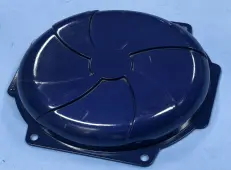
When we talk about electric motor reliability, the conversation often starts with windings or bearings, yet the casting motor end cover deserves equal attention. This component acts as the protective barrier enclosing a motor's internal mechanism, maintaining proper alignment of rotating shafts while providing crucial sealing against contaminants. Manufactured through high-pressure casting processes using materials like ADC12 aluminum alloy, these covers safeguard motor integrity while contributing to thermal management and structural stability. For procurement professionals managing high-volume production lines, sourcing precision end covers that deliver consistent batch quality becomes a strategic priority directly impacting operational continuity and total cost of ownership.
Motor End Cover Castings: Materials, Types, and Design
The Essential Role of End Covers in Motor Performance
Casting motor end covers are more than just caps that protect the ends of the motor. These parts decide where the rotor shaft is located in space, and they work with the bearings to keep the exact distance between the rotor and stator units. This management of clearance has a direct effect on how well the motor works, how much it vibrates, and how long it lasts. Casting motor end covers protect sensitive internal parts of industrial motors that work in harsh environments from dust, moisture, and mechanical impact. Their structure also makes it easier for heat to escape.
There are clear benefits to using the casting method to make these covers. Unlike manufactured alternatives, cast end covers can accommodate complex geometries that include built-in mounting bosses, ventilation features, and reinforcement ribs without the need for extra assembly steps. This one-piece design gets rid of any possible weak spots and speeds up the production process.
Material Selection: ADC12 Aluminum Alloy and Beyond
The choice of material has a big impact on how well a casting motor end cover works in terms of temperature, force, and surroundings. The ADC12 aluminum alloy has become the standard for high-pressure die casting because it has the best mix of properties. Because it is very fluid when it is being cast, ADC12 fills in intricate mold details and keeps its shape after it hardens. Its ability to conduct heat helps get rid of motor heat, and the fact that it is lightweight means that the motor has less mass without losing its structural integrity.
Cast iron is still useful for heavy-duty tasks that need to last as long as possible under a lot of mechanical stress. Its better vibration damping properties help motors that are placed in places with a lot of vibration. Steel casts are used in specific situations where high strength-to-weight ratios or resistance to harmful chemicals are needed. Each material has its own cost implications. For medium- to large-scale production runs, aluminum is usually the best value option because it requires less machining and uses less energy during casting.
Casting Process Variations and Their Applications
Standardized casting motor end covers are mostly made with high-pressure die casting, especially for parts that weigh between 0.3 and 15 kilograms. Under pressures higher than 10,000 psi, this process pushes liquid metal into steel molds. The parts that come out of this process have tight tolerances and smooth surfaces. The method is great for making a lot of things at once because it can keep the dimensions of batches of thousands or tens of thousands of units the same. This is very important for motor assembly lines that have to meet tight deadlines.
Low-pressure and gravity casting are good for making larger casting motor end covers or custom parts in smaller quantities. Using only gravitational force, gravity casting pours liquid metal into permanent molds. This makes fill patterns that are smoother and reduces porosity in thicker parts. Controlled pressure is used during mold filling in low-pressure casting, which combines the accuracy of high-pressure methods with the adaptability of gravity methods. Even though it needs more work to get to the right size for assembly, sand casting is still a cheap way to make prototypes and small batches.
Comparing Motor End Cover Castings: Choosing the Right Solution for Your Application
Aluminum Versus Cast Iron: Performance Trade-Offs
When choosing between aluminum and cast iron casting motor end covers, there are more performance factors to consider than just the original buy price. Casts made of aluminum weigh about one-third as much as casts made of iron. This lowers the weight of the motor and the cost of shipping. When you consider that thousands of motors are made every year, this weight advantage adds up to a lot. Aluminum is about four times more thermally conductive than cast iron. This means that heat moves faster from inside the motor to the outside world, which is useful for continuous-duty uses.
Cast iron counters are more rigid and keep their shape better over a wide range of temperatures. Motors that go through a lot of thermal expansion and contraction can benefit from iron's lower coefficient of thermal expansion, which keeps bearing fits tighter across a wider range of operating temperatures. Also, iron casts are better at absorbing sound, which lowers motor noise in places that can't handle it. The difference in cost between cast iron and aluminum usually favors aluminum, but this advantage fades when grinding time is taken into account. Aluminum's lighter structure cuts faster and lasts longer, reducing the need for replacement tools.
Production Method Analysis for Volume and Precision
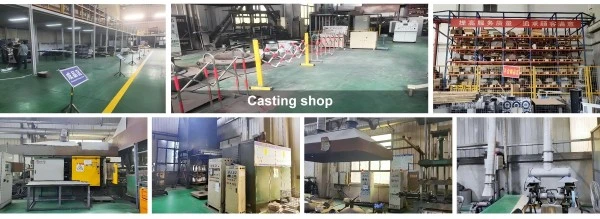
High-pressure die casting is the most efficient way to make standard casting motor end cover designs. Depending on the complexity of the part, it cycles every 30 to 90 seconds. The cost of tools is higher than with other ways, but the cost per unit drops greatly above 5,000 pieces. The process gets dimensional tolerances of within ±0.15mm on important bearing boss dimensions, which means that secondary machining on surfaces that don't fit together is often not needed. Die-casting finishes have surfaces that are close to 1.6 micrometers rough, which means they can be painted or anodized without any extra work.
Because it doesn't require as many molds as die casting, sand casting is a cheaper way to make smaller quantities of casting motor end covers. Most tolerances are between ±0.5mm and ±1.0mm, which means that bearing journals and mounting faces need to be CNC machined. Lead times for the first sand casting samples are faster, which lets designers make changes to the design more quickly during the development phase. Our experience with making batches of 1,000 pieces shows that die casting becomes cost-competitive around 2,000 units when tooling is spread out over multiple production runs. This is especially true when quality is consistent and checking standards are lowered.
Casting Versus Machined Alternatives
Fully finished end caps cut from billet stock offer the highest level of accuracy in size and material integrity, making them ideal for high-performance motors that need to be customized. This method gets rid of worries about casting motor end cover porosity and lets all features have tight tolerances without the need for selective machining. The process is too expensive for most business uses, and between 60 and 70% of the material is wasted. Cycle times are measured in hours instead of minutes. Fabricated sheet metal covers are lighter and cheaper for low-power motors, but they don't have the rigidity and bearing support needed for industrial uses above fractional horsepower ratings.
Casting is the best way for industrial motor makers to get the best of both worlds: it allows for almost net-shape production, good material qualities, and reasonable prices. Targeted CNC finishing lets parts like our 0.6 kg ADC12 casting motor end covers achieve bearing bore tolerances of IT7 grade while leaving non-critical areas in their as-cast state. This approach for selective machining takes advantage of 80% of the cost savings that come from casting while still meeting the functional needs of the unit.
Procurement Strategies for Motor End Cover Castings: Ensuring Quality and Efficiency
Critical Supplier Evaluation Criteria
To find a good casting motor end cover supplier, you need to look at more than just the price quotes they give you. ISO 9001:2015 approval sets minimum standards for quality management and shows clearly written steps for controlling processes and always making them better. Environmental management certification through ISO 14001 and workplace health standards through ISO 45001 show that a business is mature and following the rules, which affects the security of the supply chain. These certifications became more important as global procurement teams look more closely at the sustainability and working conditions of their suppliers.
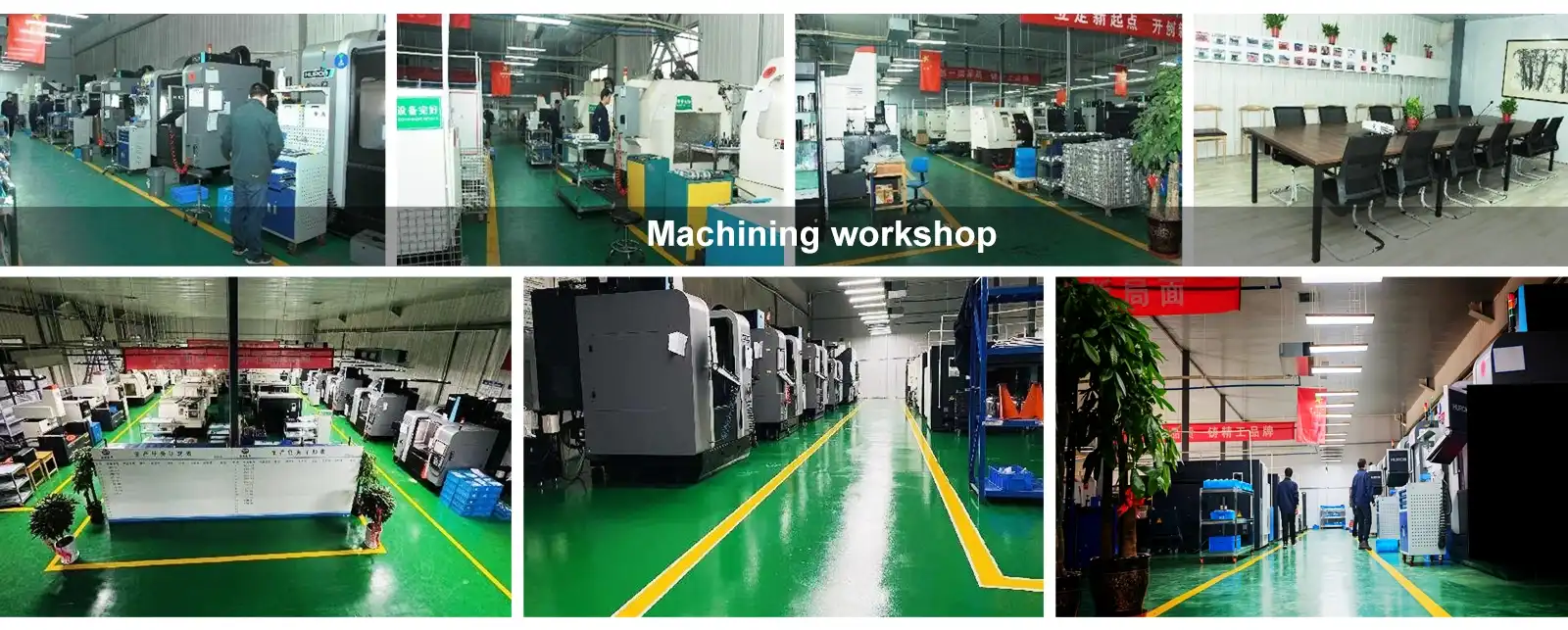
Verifying the production ability stops cases where supplier limitations make it hard to meet supply dates. Motor companies that are growing need partners that can help them increase production without lowering quality. We can keep up with normal production configurations for casting motor end covers that make 1,000 pieces, and we're flexible enough to grow by adding more shifts or investing in new tools for long-term relationships. Site visits show how equipment works, how controls are set up for processes, and how materials are moved in ways that audits alone can't fully evaluate. Talking to engineering staff shows technical knowledge and the ability to solve problems, which are very important when making a new product.
Understanding Pricing Structures and Lead Time Optimization
Casting motor end cover prices include the cost of materials, the wear and tear on tools, processing time, and finishing steps. The price of ADC12 aluminum changes with the metal markets around the world, but it usually costs between $2,300 and $2,800 per metric ton. At a weight of 0.6 kg per component, raw material makes up about 20 to 25 percent of the total piece price in mass production. High-pressure die casting molds have tooling costs that run from $15,000 to $50,000, based on how complicated they are and how much they will be used. These costs are spread out over 50,000 to 200,000 cycles before they need to be fixed up.
Lead times are broken up into different stages: designing and making tools (6–8 weeks for new projects), testing and getting approvals (3–4 weeks), and then production runs (2–3 weeks for 1,000-piece batches). When they can, procurement managers try to cut down on casting motor end cover project timelines by doing things at the same time. For example, they might start making tools while finalizing design details, or they might do PPAP validation during initial production runs instead of treating them as separate steps. Rush fees for faster production or tooling usually cost an extra 15 to 30 percent, but they can save money by keeping the production line from being held up.
Key Questions for Supplier Qualification
A good supplier evaluation looks at more than just marketing papers to find out what the seller can really do regarding the casting motor end cover. What factors are being watched during the casting process? This is how you can find out about quality stability. How are changes in density and size tracked from one production batch to the next? Responses that show the difference between random selection and 100% inspection show the level of quality development. Studies that show Cpk values above 1.33 for key dimensions are concrete proof that the process is stable.
When people ask about the flexibility of custom orders, they find out how responsive they are to changes in design or specifications that have to be made during the product development process. Can the supplier make material substitutions if problems in the supply chain make it impossible to get the alloys that are wanted? What is the minimum order quantity for casting motor end covers that are made to order versus items that are in a catalog? Understanding these limits keeps buyer needs and supplier abilities from not matching up. When you ask about post-delivery support, like warranty terms, failure analysis help, and efforts for ongoing growth, it shows whether the connection is a transactional one or a partnership one.
Conclusion
Casting motor end cover castings are important parts whose performance, dependability, and lifecycle costs are directly affected by how precisely they are made. The selection process weighs the qualities of the material, the ways it can be made, and the abilities of the seller against the needs of the application and the limits of the purchase process. High-pressure die casting with ADC12 aluminum alloy produces the best medium-weight parts in large quantities, balancing cost-effectiveness with accurate measurements. A good procurement strategy looks at more than just price when choosing a provider. It looks at things like quality processes, professional skills, and a focus on partnerships. As automation, new materials, and improvements in sustainability make manufacturing technology better, forward-thinking procurement teams build relationships with suppliers that show they are committed to continuous improvement and can adapt to changing industry needs.
FAQs
How do I choose between sand casting and die casting for motor end covers?
The main thing that drives this decision is the need for volume. When you make more than 2,000 to 5,000 units a year, die casting becomes more cost-effective for the casting motor end cover because the cost of the tools is spread out over time. This gives you better surface finish and consistency in size. For prototyping, low-volume production, or very big parts that can't be made with die casting tools, sand casting is a good option. Think about how quickly you need the prototypes—sand casting takes weeks less time, but you have to pay for the tools up front before the first items ship with die casting.
What certifications should I require from motor component casting suppliers?
ISO 9001:2015 sets minimum standards for quality management for suppliers of casting motor end covers to the industrial sector. Certifications like ISO 14001 for environmental management and ISO 45001 for occupational health show that an organization is operationally mature and follows the rules, which is important for managing risks in the supply chain. Industry-specific certifications, such as IATF 16949, are useful for automotive applications. However, general industrial motors might not need quality systems that are at the automotive level. Ask for real certificates instead of promises, and make sure that the approval covers casting processes in particular.
What maintenance practices extend motor end cover lifespan?
Periodic torque verification stops fasteners from coming loose from thermal cycling on the casting motor end cover. For important applications, checks should be done once a year. Cleaning the outside gets rid of corrosive deposits before they get through the protection layers. Inspection of the gasket as part of regular maintenance finds early seepage that happens before it gets into the motor's internals and causes a lot of damage. Monitoring vibrations finds out how fast bearings are wearing out, so they can be replaced before they fail and damage the end cover bearing bores. All of these preventative steps make parts last longer and reduce the chance of unexpected downtime.
Partner with Rongbao Enterprise for Reliable Casting Motor End Cover Solutions
Rongbao Enterprise makes high-quality casting motor end cover solutions by combining high-pressure die casting, CNC milling, and surface finishing into a single production process. Our ADC12 aluminum castings are consistently accurate in size even during high-volume production runs. They are backed by ISO 9001:2015, ISO 14001, and ISO 45001 standards that guarantee quality and operating excellence. We have worked with motor manufacturers around the world for 20 years, and 70% of our production is sent to North America, Europe, and Japan. This means we know how to meet the strict needs of industrial motor uses.
Our production center in Xi'an can handle large batches of work quickly and can also make changes based on your special casting motor end cover designs. From the first prototype to mass production, our engineering team works with motor manufacturers who need a reliable supplier that is dedicated to accuracy, on-time delivery, and constant improvement. Get in touch with our technical experts at steve.zhou@263.net or zhouyi@rongbaocasting.com to talk about your specific needs and find out how our full-process manufacturing can help you reach your goals for motor production.
References
Anderson, T., & Mitchell, R. (2021). Aluminum Die Casting: Principles and Applications in Electric Motor Manufacturing. Industrial Press.
Chen, W., & Liu, X. (2020). Quality Control in High-Volume Aluminum Casting for Automotive and Industrial Applications. Journal of Manufacturing Processes, 58, 1247-1261.
Foster, J. S. (2022). Material Selection for Electric Motor Components: Engineering Trade-offs and Performance Optimization. Technical Publishing.
International Organization for Standardization. (2015). ISO 9001:2015 Quality Management Systems—Requirements. Geneva: ISO.
Kumar, P., & Zhao, H. (2023). Advances in Die Casting Technology: Automation, Simulation, and Sustainability. International Journal of Metalcasting, 17(2), 891-908.
Thompson, D. L. (2019). Motor Design and Manufacturing: Component Integration for Reliability and Efficiency. McGraw-Hill Professional.
Learn about our latest products and discounts through SMS or email