- English
- French
- German
- Portuguese
- Spanish
- Russian
- Japanese
- Korean
- Arabic
- Greek
- German
- Turkish
- Italian
- Danish
- Romanian
- Indonesian
- Czech
- Afrikaans
- Swedish
- Polish
- Basque
- Catalan
- Esperanto
- Hindi
- Lao
- Albanian
- Amharic
- Armenian
- Azerbaijani
- Belarusian
- Bengali
- Bosnian
- Bulgarian
- Cebuano
- Chichewa
- Corsican
- Croatian
- Dutch
- Estonian
- Filipino
- Finnish
- Frisian
- Galician
- Georgian
- Gujarati
- Haitian
- Hausa
- Hawaiian
- Hebrew
- Hmong
- Hungarian
- Icelandic
- Igbo
- Javanese
- Kannada
- Kazakh
- Khmer
- Kurdish
- Kyrgyz
- Latin
- Latvian
- Lithuanian
- Luxembou..
- Macedonian
- Malagasy
- Malay
- Malayalam
- Maltese
- Maori
- Marathi
- Mongolian
- Burmese
- Nepali
- Norwegian
- Pashto
- Persian
- Punjabi
- Serbian
- Sesotho
- Sinhala
- Slovak
- Slovenian
- Somali
- Samoan
- Scots Gaelic
- Shona
- Sindhi
- Sundanese
- Swahili
- Tajik
- Tamil
- Telugu
- Thai
- Ukrainian
- Urdu
- Uzbek
- Vietnamese
- Welsh
- Xhosa
- Yiddish
- Yoruba
- Zulu
Is sand casting a permanent mold?
A common question among industry professionals, students, and enthusiasts alike is whether sand casting relies on a permanent mold. To answer this question thoroughly, it is necessary to first examine the fundamental characteristics, including their material composition, service life, and molding principles.
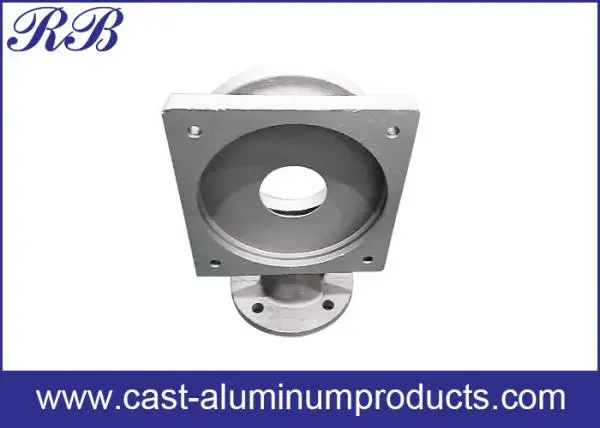
Material Composition of Sand Casting Molds
The primary material used in sand casting molds is molding sand, a mixture of three key components: aggregate, binder, and additives. Th e aggregate, typically silica sand (SiO₂), forms the bulk of the mold and provides structural support. Silica sand is preferred for its high melting point (around 1713°C), which allows it to withstand the high temperatures of molten metals such as iron, steel, and aluminum without melting or deforming.
The binder is critical for holding the sand particles together to form a stable cavity that matches the shape of the desired casting. Common binders include clay (e.g., bentonite), organic resins (e.g., phenol-formaldehyde), and inorganic binders (e.g., sodium silicate). Clay-based binders are widely used in traditional sand casting due to their low cost and availability, while resin binders are favored for high-precision applications.
Additives are incorporated to improve specific mold properties: for example, Pulverized coal is added to reduce metal-mold reaction and improve the surface finish of castings, while wood flour enhances mold collapsibility (the ability to break down easily after casting, facilitating part removal). This sand-based composition is fundamentally different from the materials used in permanent molds, and it directly influences the mold's reusability.
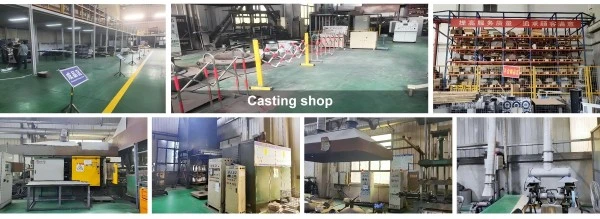
Service Life of Sand Casting Molds
A defining feature of sand casting molds is their disposable nature. Once molten metal is poured into the mold cavity, it cools and solidifies to form the casting. During this process, several factors contribute to the mold’s degradation:
- Thermal shock: The sudden exposure to high-temperature molten metal causes the sand particles and binder to expand and contract rapidly. This thermal stress leads to cracks and fragmentation in the mold structure.
- Binder degradation: Organic binders (e.g., resins) burn off or decompose under high heat, losing their ability to hold sand particles together. Inorganic binders may undergo chemical changes that reduce their adhesive strength.
- Mechanical damage: After the casting solidifies, the mold must be broken apart (a process called "shakeout") to remove the part. This manual or mechanical disruption completely destroys the mold’s shape and integrity, making it impossible to reuse for subsequent castings.
Even in cases where small sections of the mold remain intact after shakeout, the dimensional accuracy and surface quality of these sections are compromised. Reusing such sections would result in castings with defects like dimensional errors, surface roughness, or internal flaws. For this reason, sand casting molds are designed for single-use only, with no practical path to permanent reuse.
Molding Principle of Sand Casting
The molding process for sand casting further reinforces its non-permanent nature. The process typically involves the following steps:
- A pattern (a replica of the desired casting, usually made of wood, metal, or plastic) is placed in a sand flask.
- Molding sand is packed around the pattern, either manually or using machines (e.g., jolt-squeeze machines), to form a compact mold half.
- The pattern is removed, leaving a cavity in the sand. Two or more mold halves are then assembled, and a gating system (channels for molten metal flow) and risers (reservoirs to supply additional metal as it shrinks) are added.
- Molten metal is poured into the gating system, filling the cavity.
- After solidification, the mold is broken apart to extract the casting, and the sand is either discarded or recycled (as "reclaimed sand") for use in new mold production.
Notably, even when reclaimed sand is used, it must be reblended with fresh binder and additives to restore its molding properties. The reclaimed sand is not a "reused mold" but rather a raw material for creating an entirely new mold. This process of rebuilding the mold for each casting is a core principle of sand casting and stands in contrast to the reusable design of permanent molds.
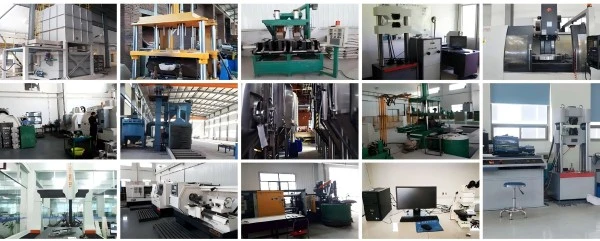
Mold Lifespan: Disposable vs. Reusable
The most fundamental difference between sand casting and permanent mold casting lies in mold lifespan:
- Sand casting: As detailed earlier, sand molds are destroyed during the shakeout process and can only be used once. Even with sand reclamation, the mold itself is not reused—only the sand aggregate is repurposed to build a new mold.
- Permanent mold casting: Permanent molds have a lifespan of hundreds to thousands of cycles. For example, an iron mold used for aluminum casting can typically produce 10,000–50,000 parts before showing signs of wear (e.g., cavity erosion, dimensional distortion). With regular maintenance (e.g., recoating, minor repairs), some high-quality steel molds can last over 100,000 cycles.
This difference is not a matter of degree but of kind: sand casting molds are inherently disposable, while permanent molds are designed for repeated use. There is no scenario in which a sand casting mold can be reused in its original form to produce another casting, making it impossible for sand casting to use a permanent mold.
Sand Casting Supplier: Rongbao Enterprise
Founded in 2003, Rongbao Enterprise has established itself as a leader in aluminum alloy casting and precision processing. With advanced production methods including high-pressure die casting, low-pressure die casting, and gravity casting, coupled with precision machining services, Rongbao delivers integrated component supply solutions for equipment manufacturers across various industries.
Our commitment to quality is evident in our certifications:
- ISO 9001:2016 Quality Management System
- ISO 14001 Environmental Management System
- ISO 45001 Occupational Health and Safety Management System
With 70% of our products exported to the United States, Europe, Japan, and other regions, Rongbao has built strong global partnerships while continuously advancing our manufacturing capabilities.
Whether you're in the automotive, aerospace, medical, or electrical and electronic industries, Rongbao Enterprise has the expertise to meet your casting needs.
Ready to experience the Rongbao difference? For free samples or to discuss your custom sand casting requirements, contact us now. Reach out to Steve Zhou at steve.zhou@263.net or Zhou Yi at zhouyi@rongbaocasting.com.
References
- Kalpakjian, S., & Schmid, S. R. (2019). Manufacturing Processes for Engineering Materials (7th ed.). Pearson Education. (Chapter 5: Casting Processes)
- Campbell, J. (2015). Castings (5th ed.). Butterworth-Heinemann. (Chapter 3: Sand Casting and Chapter 6: Permanent Mold Casting)
- American Foundry Society (AFS). (2018). AFS Metal Casting Handbook: Volume 1 – Processes. American Foundry Society. (Section 2.2: Sand Molding and Section 4.1: Permanent Mold Casting)
- ASTM International. (2020). ASTM A918/A918M – Standard Specification for Aluminum-Alloy Permanent Mold Castings. ASTM International. DOI: 10.1520/A0918_A0918M-20
- Bralla, J. G. (2007). Design for Manufacturability Handbook (3rd ed.). McGraw-Hill. (Chapter 10: Casting Design)
_1750923522843.webp)
Learn about our latest products and discounts through SMS or email