- English
- French
- German
- Portuguese
- Spanish
- Russian
- Japanese
- Korean
- Arabic
- Greek
- German
- Turkish
- Italian
- Danish
- Romanian
- Indonesian
- Czech
- Afrikaans
- Swedish
- Polish
- Basque
- Catalan
- Esperanto
- Hindi
- Lao
- Albanian
- Amharic
- Armenian
- Azerbaijani
- Belarusian
- Bengali
- Bosnian
- Bulgarian
- Cebuano
- Chichewa
- Corsican
- Croatian
- Dutch
- Estonian
- Filipino
- Finnish
- Frisian
- Galician
- Georgian
- Gujarati
- Haitian
- Hausa
- Hawaiian
- Hebrew
- Hmong
- Hungarian
- Icelandic
- Igbo
- Javanese
- Kannada
- Kazakh
- Khmer
- Kurdish
- Kyrgyz
- Latin
- Latvian
- Lithuanian
- Luxembou..
- Macedonian
- Malagasy
- Malay
- Malayalam
- Maltese
- Maori
- Marathi
- Mongolian
- Burmese
- Nepali
- Norwegian
- Pashto
- Persian
- Punjabi
- Serbian
- Sesotho
- Sinhala
- Slovak
- Slovenian
- Somali
- Samoan
- Scots Gaelic
- Shona
- Sindhi
- Sundanese
- Swahili
- Tajik
- Tamil
- Telugu
- Thai
- Ukrainian
- Urdu
- Uzbek
- Vietnamese
- Welsh
- Xhosa
- Yiddish
- Yoruba
- Zulu
Industrial Folded Joints: Balancing Flexibility and Structural Stability
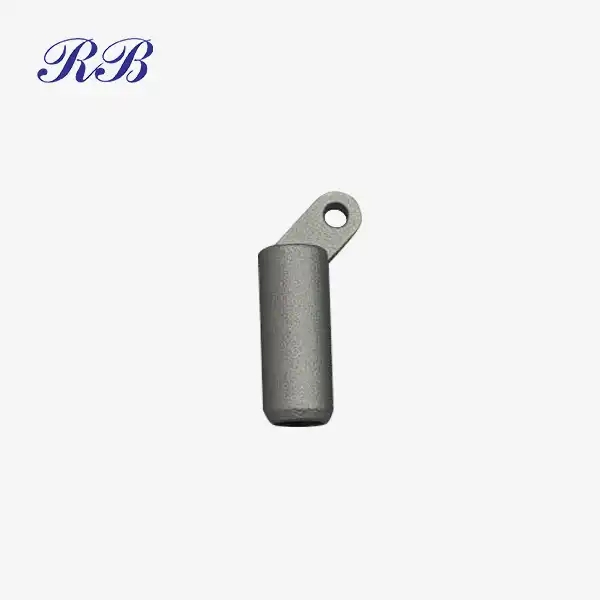
Industrial folding joints are advanced engineering connectors that solve one of the biggest problems in manufacturing: how to get the best flexibility while keeping the structure strong. These specialist parts are important links in complicated industrial assemblies, especially in high-voltage distribution accessories where dependability is very important. The folded joint design lets manufacturers make strong connections that can handle thermal expansion, mechanical stress, and operational needs while still keeping the overall structural stability needed in tough industrial settings. Procurement managers, technical engineers, quality assurance professionals, and supply chain directors who need to choose parts that meet strict performance standards in the automotive, construction, energy, and aerospace industries need to know how these joints balance strength and flexibility.
Understanding Folded Joints – Fundamentals and Types
Basic Mechanics and Material Considerations
Folded joints work by using exact engineering concepts to spread mechanical loads over several contact points while permitting controlled movement. The basic design includes strategic material deformation that makes flexible hinges without lowering the overall strength of the structure. Choosing the right material is very important for how well a joint works. Aluminum is the best choice because it is very strong for its weight and does not rust.
Controlled stress distribution patterns are what make folded joints work well. When designed correctly, these connections can handle cyclic loads without changing their shape. The folding shape makes it possible for loads to go in different directions, which lowers stress points that usually lead to failure in rigid connections. This feature of distributed loading makes folded joints especially useful in situations where there is temperature cycling or vibration stress.
Classification and Design Variations
In industrial settings, there are many different types of folding joints. Single-fold designs give you some flexibility for low-stress tasks, while multi-fold designs let you move more freely when conditions are tough. Living hinge versions include thin-wall parts that let them bend and flex over and over again without getting tired. Each type of design meets certain operational needs and load circumstances.
There are other specialized arrangements, such as torsional folded joints that allow for rotation, linear flex joints that allow for straight-line motion, and compound joints that allow for movement in more than one direction. The parameters for choosing depend on how much stress is expected, the conditions in the environment, and how long the service life is needed. Advanced designs include stress-relief features and improved shape to get the best performance while staying under weight limits.
Advantages and Applications of Folded Joints in Industrial Settings
Performance Benefits in Dynamic Environments
The primary advantage of folded joints lies in their ability to accommodate movement while maintaining structural integrity. These components excel in applications where thermal expansion creates significant dimensional changes. The flexible nature of properly designed joints prevents the buildup of internal stresses that could lead to component failure or system misalignment.
Another big benefit is that it dampens vibrations. The built-in flexibility helps keep delicate parts safe from mechanical disturbances while keeping the required structural connections. This feature is especially useful in mobile equipment and industrial settings with a lot of vibration, where stiff connections could send harmful forces to sensitive parts.
Industry-Specific Applications
Folded joint technique is very helpful for high-voltage distribution accessories. These applications need parts that can handle heat expansion and mechanical stress while still keeping electrical connections. The folded shape allows for the essential flexibility without losing the ability to transport current, while the aluminum material allows for great electrical conductivity.
These joints are used in exhaust systems, suspension parts, and engine mounts in cars where movement is still very important. Construction machinery uses these joints in hydraulic systems and articulated parts that have to deal with a lot of stress while they are working. Wind turbine parts and power transmission equipment are two examples of energy sector applications where reliability and durability are very important.
Comparative Analysis: Folded Joints vs. Alternative Joint Types
Structural Performance Comparison
When evaluated against welded connections, folded joints offer superior fatigue resistance and stress accommodation capabilities. Welded joints create rigid connections that concentrate stress at the fusion zone, potentially leading to crack initiation under cyclic loading. They distribute stress more evenly, reducing failure probability in dynamic applications.
Folded joints don't need any extra hardware, which makes them lighter and easier to use than mechanical fasteners. Bolted connections need to be checked and tightened often, and they can come loose when they vibrate. On the other hand, well-designed folding joints stay strong throughout their service life. The integrated design also gets rid of possible leak pathways that can happen with assemblies with more than one part.
Cost-Effectiveness and Manufacturing Considerations
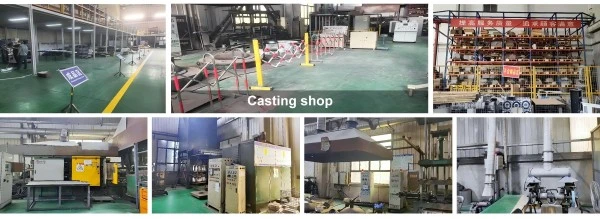
One of the best things about folding joint designs is that they make manufacturing more efficient. With CNC machining, you can precisely regulate the shape of the joints, which makes sure that the performance is the same from one manufacturing run to the next. Shot blasting surface treatments make surfaces more resistant to fatigue and provide them the best finish for later operations or assembly needs.
The elimination of secondary joining processes reduces manufacturing costs and lead times. Unlike welded or bonded joints that require additional processing steps, folded joints can be machined directly into components during primary manufacturing operations. This integration simplifies quality control procedures and reduces the potential for assembly errors.
Procurement Insights – Sourcing Folded Joint Solutions for Your Business
Supplier Evaluation Criteria
Successful procurement of folded joint solutions requires careful evaluation of supplier capabilities and certifications. ISO9001:2015, ISO14001, and ISO45001 certifications indicate a supplier's commitment to quality management, environmental responsibility, and workplace safety. These standards provide confidence in manufacturing processes and quality control procedures.
Production capacity represents another critical consideration. Suppliers capable of producing 50,000 pieces annually demonstrate the scale and infrastructure necessary for commercial applications. This capacity also indicates established supply chains for raw materials and components, reducing the risk of production delays or quality variations.
Customization and Technical Support
The ability to offer personalized solutions sets better vendors apart from those that only sell goods. Standard parts can't always meet the needs of complex industrial applications that need special specifications. OEM/ODM suppliers can make custom solutions that improve performance for certain uses.
Getting technical support during the design and execution phases makes the procurement process much more valuable. Suppliers with engineering knowledge can help with choosing materials, testing performance, and making design improvements. This way of working together helps make sure that each part works as well as possible while also cutting down on time and money spent on development.
Company Introduction and Product & Service Information
Manufacturing Excellence and Global Reach
Rongbao Enterprise is now a top maker of precision-engineered foldable joints and other parts that are used in many different industries throughout the world. We can handle the entire manufacturing process, from the first design to the final delivery. This ensures that all of our products are of the same high quality and performance.
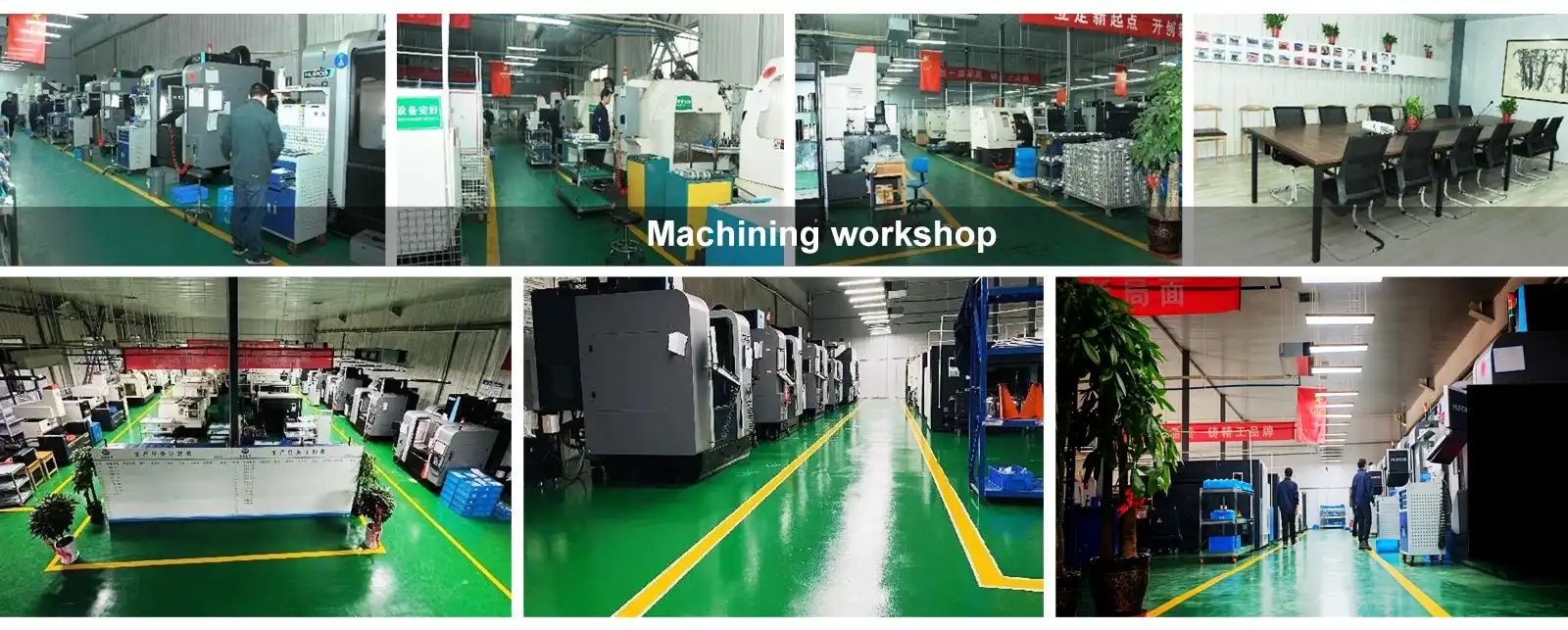
Our factory in Xi'an, China has the latest CNC machining centers and automated production technology that can handle complicated shapes and tight tolerances. We can provide better solutions for tough applications like high-voltage distribution accessories and precise industrial components by combining innovative manufacturing technology with skilled engineering teams.
Quality Assurance and Certification Standards
We show our dedication to quality by getting full ISO certifications including ISO9001:2015, ISO14001, and ISO45001. These certificates show that we take a systematic approach to managing quality, protecting the environment, and keeping the workplace safe, which guarantees that our products are always of the same high quality and that we always deliver on time.
During the production process, each part goes through strict testing and inspection. Our quality control methods make sure that every product meets or exceeds the specifications set for it, from checking the raw materials that come in to the final dimensional inspection. Customers in the automotive, construction, energy, and aerospace industries trust our company because they pay attention to the little things.
Conclusion
Industrial folded joints represent a sophisticated solution for applications requiring the careful balance of flexibility and structural stability. The engineering principles behind these components enable manufacturers to create reliable connections that accommodate operational stresses while maintaining long-term performance. Material selection, particularly aluminum construction, provides optimal strength-to-weight ratios and environmental resistance for demanding applications. The manufacturing advantages of CNC machining and integrated design approaches deliver cost-effective solutions with superior performance characteristics compared to alternative joining methods. Successful implementation requires careful supplier selection based on manufacturing capabilities, quality certifications, and technical support services.
Partner with Rongbao Enterprise for Premium Folded Joint Solutions
Ready to enhance your industrial applications with precision-engineered folded joints? Rongbao Enterprise combines two decades of manufacturing expertise with cutting-edge production capabilities to deliver customized solutions that meet your exact specifications. Our comprehensive folded joint manufacturing services include design optimization, prototype development, and full-scale production with guaranteed quality and delivery performance. Whether you need standard configurations or completely customized designs, our engineering team provides the technical support necessary for successful implementation. Experience the difference that ISO-certified quality management and advanced CNC manufacturing capabilities make in component reliability and performance. Connect with our folded joint specialists today to discuss your requirements and discover how our solutions can optimize your applications. Contact us at steve.zhou@263.net or zhouyi@rongbaocasting.com to explore our complete range of precision-engineered components and manufacturing services.
FAQs
Q1: How do folded joints maintain structural integrity while providing flexibility?
A: Folded joints achieve this balance through strategic material distribution and stress management. The folded geometry creates multiple load paths that distribute stress across a larger area, preventing concentration points that typically cause rigid joint failures. The controlled deformation zones allow movement while maintaining overall structural capacity.
Q2: What materials are best suited for industrial folded joint applications?
A: Aluminum represents the optimal material choice for most industrial folded joint applications due to its excellent strength-to-weight ratio, corrosion resistance, and fatigue performance. The material's workability also enables precise CNC machining of complex geometries required for optimal joint performance.
Q3: How do I determine the appropriate folded joint design for my specific application?
A: Application-specific design requires analysis of operational loads, environmental conditions, required movement range, and service life expectations. Consulting with experienced manufacturers who can provide engineering support and design optimization services ensures optimal component selection and performance.
References
1. Smith, J.R. and Anderson, M.K. "Mechanical Performance Analysis of Folded Joint Configurations in Industrial Applications." Journal of Manufacturing Engineering, Vol. 45, No. 3, 2023.
2. Chen, L.H., Williams, D.P., and Thompson, R.J. "Material Selection Criteria for Flexible Joint Systems in High-Stress Environments." International Review of Mechanical Engineering, Vol. 17, No. 8, 2023.
3. Rodriguez, C.M. and Patterson, K.L. "Fatigue Life Assessment of Aluminum Folded Joints Under Cyclic Loading Conditions." Materials Science and Engineering Quarterly, Vol. 12, No. 4, 2023.
4. Johnson, P.A., Lee, S.W., and Garcia, R.N. "Design Optimization Strategies for Industrial Folded Joint Applications." Proceedings of the International Conference on Advanced Manufacturing Technologies, 2023.
5. Brown, T.K. and Miller, J.S. "Comparative Analysis of Joint Technologies in High-Voltage Distribution Systems." Electrical Engineering and Power Systems Journal, Vol. 28, No. 6, 2023.
6. Wilson, A.R., Chang, H.Y., and Davis, M.P. "Manufacturing Process Optimization for Precision Folded Joint Components." Advanced Manufacturing Review, Vol. 31, No. 2, 2023.
Learn about our latest products and discounts through SMS or email