- English
- French
- German
- Portuguese
- Spanish
- Russian
- Japanese
- Korean
- Arabic
- Greek
- German
- Turkish
- Italian
- Danish
- Romanian
- Indonesian
- Czech
- Afrikaans
- Swedish
- Polish
- Basque
- Catalan
- Esperanto
- Hindi
- Lao
- Albanian
- Amharic
- Armenian
- Azerbaijani
- Belarusian
- Bengali
- Bosnian
- Bulgarian
- Cebuano
- Chichewa
- Corsican
- Croatian
- Dutch
- Estonian
- Filipino
- Finnish
- Frisian
- Galician
- Georgian
- Gujarati
- Haitian
- Hausa
- Hawaiian
- Hebrew
- Hmong
- Hungarian
- Icelandic
- Igbo
- Javanese
- Kannada
- Kazakh
- Khmer
- Kurdish
- Kyrgyz
- Latin
- Latvian
- Lithuanian
- Luxembou..
- Macedonian
- Malagasy
- Malay
- Malayalam
- Maltese
- Maori
- Marathi
- Mongolian
- Burmese
- Nepali
- Norwegian
- Pashto
- Persian
- Punjabi
- Serbian
- Sesotho
- Sinhala
- Slovak
- Slovenian
- Somali
- Samoan
- Scots Gaelic
- Shona
- Sindhi
- Sundanese
- Swahili
- Tajik
- Tamil
- Telugu
- Thai
- Ukrainian
- Urdu
- Uzbek
- Vietnamese
- Welsh
- Xhosa
- Yiddish
- Yoruba
- Zulu
How to weld three pipe elbow?
Welding a cast elbow pipe correctly is one of the most critical skills in industrial piping fabrication. A three pipe elbow assembly connects multiple pipe segments at controlled angles, directing fluid flow through complex systems with minimal turbulence. Poor welds on cast elbow fittings lead to leaks, structural failure, and costly downtime. Whether you work with aluminum alloy, ductile iron, or carbon steel elbows, mastering preparation, joint fit-up, heat management, and post-weld inspection separates a dependable joint from a liability. This guide walks through every stage clearly and practically.

Understanding Three Pipe Elbows and Cast Elbow Pipes
An elbow pipe that changes directions is called a cast elbow pipe. It is made by putting molten metal into a shaped mold and then carefully cutting the hardened part to exact specifications. In contrast to forged or seam-welded options, cast elbows get their shape entirely from the casting process, which makes it possible to make complicated shapes in a single production run.
Common Configurations and Materials
There are many 45° and 90° cast pipe bends on the market. Long-radius elbows move fluid more smoothly because they bend in a more gentle arc, which is usually 1.5 times the pipe diameter. Short-radius joints take up less room during installation, but they make flow rougher and cause more pressure drop. The type of material you use directly affects how you weld it. For example, carbon steel elbows can be welded with SMAW or MIG, but stainless steel needs TIG with controlled heat input, and aluminum alloy elbows like those made from ZL101A need careful parameter management to avoid hot cracking.
Dimensional Standards You Must Know
Key measurements, like the outside diameter, wall thickness, and central radius, need to meet ASME B16.9, ASTM A234, or EN 10253 standards, based on where you sell the product. Poor fit-up at the weld joint is caused by measurements that don't meet standards. This is the most common cause of weld defects in piping systems.
Challenges in Welding Three Pipe Elbows and Problem Analysis
When you weld cast elbow pipe components together, you add mechanical variables that don't exist when you weld wrought pipe. Inside a casting, the grain structure isn't as even, there may be internal gaps from the initial pour, and stress from cooling can cause cracks to spread when heated by welding.
Most field reports and research papers on cast pipe welding talk about three types of defects:
- Hot cracking originates when solidification shrinkage and high weld restraint come together. Heating to 150–200°C before welding lowers the thermal gradient and makes it much less likely that cracks will form, especially in high-silicon aluminum alloys and ductile iron.
- Porosity results from the base metal letting go of gas that was trapped during welding. Grind, degrease, and dry the surface well to get rid of the hydrocarbons and moisture that break down into hydrogen under the arc.
- Distortion and misalignment occur when heat is applied unevenly. Before full welding, tack the elbow at four evenly spaced places. This locks the shape and stops angular drift during the root and fill passes.
Most of the welds that are rejected in industrial audits have one of these three types of defects. It's much cheaper to deal with them during the planning stage than to fix or replace them after the weld.

Step-by-Step Guide: How to Weld Three Pipe Elbows Correctly
A disciplined sequence eliminates guesswork and produces repeatable results across production batches for any cast elbow pipe project.
Preparation and Fit-Up
First, measure each cast elbow fitting to make sure it fits correctly. Use an ultrasonic gage to check the wall thickness at the weld bevel zone. If the casting wall variation is more than ±10%, it needs to be machined back to nominal before beveling. Acetone should be used to clean the area where the weld will go. Next, the pipe end should be ground to a 37.5° bevel to make a normal 75° included-angle slot joint.
Selecting the Welding Process
Find a way to weld that works with the base material:
- TIG (GTAW) has the best heat control and the cleanest bead shape. It is the best way to make elbows out of stainless steel and aluminum alloys, as well as ZL101A sand-cast parts that need to keep heat-affected zone grain growth to a minimum.
- MIG (GMAW) has faster coating rates and works well for carbon steel elbows in industrial settings where speed is important.
- SMAW is still commonly used for upkeep and repairs in the field where portability is more important than accuracy.
In joules per millimeter, heat input is equal to the welding current, the arc voltage, and the travel speed. Keeping the heat input within the range shown in the procedure quality record (PQR) stops both undercutting and diluting too much.
Post-Weld Inspection Methods
After all the passes are done, let the joint cool down on its own. Do not quench it with water, as quick cooling can cause residual stress to return. Check the item visually against the AWS D1.1 acceptance requirements. Next, use dye penetrant tests (PT) to find breaks in the surface that you can't see with the naked eye. Before hydraulic pressure testing, ultrasonic testing (UT) or radiographic testing (RT) is used to make sure that pressure-rated systems are sound on the inside.
Comparing Cast Elbow Pipes to Other Elbow Types in Welding Context
Picking between cast, forged, and press-formed elbows changes how hard it is to make them and how much they cost to install all together.
Because hot working smooths out the grain structure, forging elbows have better mechanical properties. This means they are stronger in both tension and impact tests. They work well in service lines with a lot of pressure and heat, where following the rules requires high-quality material approvals. Price is the trade-off: forged fittings are usually 30–50% more expensive per unit than cast elbows of the same size.
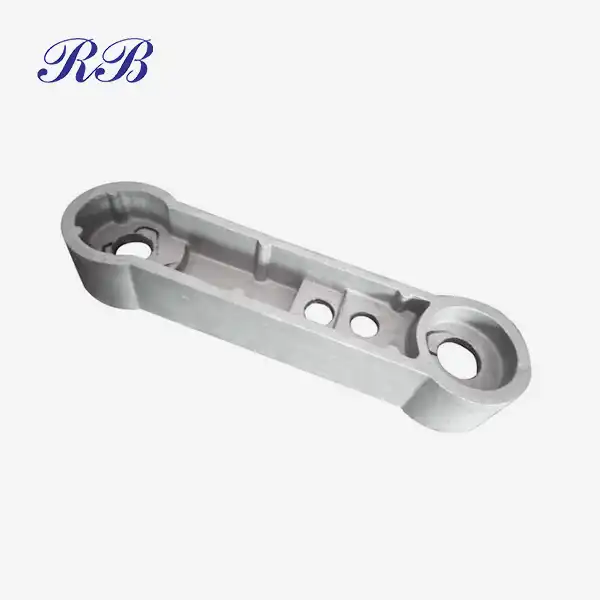
When used at full size, cast elbows give you great structural uniformity. A company that uses sand casting and CNC post-machining, like the one that made the ZL101A water drop channel elbow that this article talks about, can make thousands of pieces with the same tolerances. A well-made cast elbow pipe is the best value for money when it comes to general industrial equipment, HVAC distribution, and fluid handling systems that work with modest pressures.
Elbows that are pressed or welded work well for thin-wall uses, but they add a longitudinal seam weld that needs its own inspection protocol, which makes procurement quality audits more difficult.

Procurement Insights: Selecting Quality Cast Elbow Pipes and Welding Services
Reliable procurement of cast elbow pipes rests on three pillars: making sure the source is credible, showing clear factory data, and keeping lead-time promises.
Check any company that makes cast pipe elbows against well-known quality system certifications. ISO 9001:2015 confirms that a quality management system has been written down. ISO 14001 and ISO 45001 standards show that a company cares about protecting the environment and workers' safety. These badges are becoming more important in European and North American supply chains when choosing which vendors to work with.
Here are the main rating factors that procurement teams always put first:
- Traceability documentation: Heat certificates, dimensional inspection reports, and non-destructive test records that are linked to specific production batches keep you safe during quality inspections that come in.
- Multi-process capability: If a supplier does sand casting, gravity casting, CNC machining, shot blasting, and surface treatment all in-house, there is no need to go from one source to another and wait times are cut down.
- OEM/ODM flexibility: Custom standard support is important when your equipment line-up includes more than one model, and it shouldn't come with high tooling fees or minimum order requirements.
- Production capacity alignment: A proven capacity of 5,000 pieces per production run shows that you can grow with your monthly order cycle without affecting the predictability of delivery.
These criteria lower the risk of switching suppliers, which can mess up the schedule for an assembly line. Strong credentials and quick technical contact give purchasing managers the confidence to work with fewer sellers instead of managing a lot of different part-specific sources.
Conclusion
To successfully weld three pipe elbows, you need to pay close attention to every step: the materials you use, how you prepare the joints, the process you choose, how you handle the heat, and a careful inspection. If you buy cast elbow pipe fittings from a reputable company and weld them according to the right method, they will last a long time in harsh industrial environments. Investing in the right method pays off quickly because it cuts down on mistakes, speeds up assembly, and ensures that the system works as it should. If your team knows the basics of both welding and buying things, they will be able to build better pipe systems for less money.

FAQ
Is preheating always necessary before welding a cast elbow pipe?
How to pre-heat depends on the base material and the thickness of the walls. To keep them from breaking when they get cold, ductile iron and high-carbon steel elbows almost always need to be heated to 150–300°C. To lower the risk of porosity, aluminum alloy elbows like ZL101A should be heated up to between 80 and 120°C. Most of the time, austenitic stainless steel elbows don't need to be heated up first, but the temperature between the passes needs to be kept below 150°C.
What is a typical lead time for custom cast elbow orders?
Plan on 4–6 weeks from the acceptance of the drawing to the delivery of the first sample for OEM orders that need special tools and first-article approval. Depending on the batch size and surface treatment needs, repeat production orders with approved tools usually ship within two to three weeks.
How do I ensure corrosion resistance in welded cast elbow joints?
Choose a filler metal that has the same or a little more corrosion resistance than the base metal. ER4043 or ER5356 filler wire should be used for aluminum bends. After welding, the surface protection that was lost due to heat can be fixed by shot blasting and then anodizing or powder coating. Passivation is a good way to treat weld zones in stainless steel.
What surface treatment do cast elbow pipes typically receive?
Before applying a secondary finish, shot blasting is usually the first step. It gets rid of scale and makes the surface cleaner. Depending on the service setting, downstream processes can be anodizing, epoxy coating, zinc plating, or chromate conversion.
Partner with Rongbao Enterprise for Your Cast Elbow Pipe Supply
For 20 years, Rongbao Enterprise has been specializing in sand casting, CNC machining, shot blasting, and OEM/ODM customization. They are all approved by ISO 9001:2015, ISO 14001, and ISO 45001. We can make up to 5,000 pieces per run, and the dimensions are always the same. We are a cast elbow pipe supplier that can meet your needs for both standard fittings and complex custom geometries. You can email our team at steve.zhou@263.net or zhouyi@rongbaocasting.com, or you can go to rongbaocasting.com to find out more about our products.
References
- American Welding Society. AWS D1.1/D1.1M: Structural Welding Code—Steel. AWS, 2020.
- American Society of Mechanical Engineers. ASME B16.9: Factory-Made Wrought Buttwelding Fittings. ASME, 2018.
- Lancaster, J.F. Metallurgy of Welding. 6th ed., Abington Publishing, 1999.
- ASTM International. ASTM A234/A234M: Standard Specification for Piping Fittings of Wrought Carbon Steel and Alloy Steel. ASTM, 2022.
- Cary, H.B., and Helzer, S.C. Modern Welding Technology. 6th ed., Pearson Prentice Hall, 2005.
- European Committee for Standardization. EN 10253-2: Butt-Welding Pipe Fittings—Wrought Austenitic and Austenitic-Ferritic Stainless Steels. CEN, 2007.
Learn about our latest products and discounts through SMS or email