- English
- French
- German
- Portuguese
- Spanish
- Russian
- Japanese
- Korean
- Arabic
- Greek
- German
- Turkish
- Italian
- Danish
- Romanian
- Indonesian
- Czech
- Afrikaans
- Swedish
- Polish
- Basque
- Catalan
- Esperanto
- Hindi
- Lao
- Albanian
- Amharic
- Armenian
- Azerbaijani
- Belarusian
- Bengali
- Bosnian
- Bulgarian
- Cebuano
- Chichewa
- Corsican
- Croatian
- Dutch
- Estonian
- Filipino
- Finnish
- Frisian
- Galician
- Georgian
- Gujarati
- Haitian
- Hausa
- Hawaiian
- Hebrew
- Hmong
- Hungarian
- Icelandic
- Igbo
- Javanese
- Kannada
- Kazakh
- Khmer
- Kurdish
- Kyrgyz
- Latin
- Latvian
- Lithuanian
- Luxembou..
- Macedonian
- Malagasy
- Malay
- Malayalam
- Maltese
- Maori
- Marathi
- Mongolian
- Burmese
- Nepali
- Norwegian
- Pashto
- Persian
- Punjabi
- Serbian
- Sesotho
- Sinhala
- Slovak
- Slovenian
- Somali
- Samoan
- Scots Gaelic
- Shona
- Sindhi
- Sundanese
- Swahili
- Tajik
- Tamil
- Telugu
- Thai
- Ukrainian
- Urdu
- Uzbek
- Vietnamese
- Welsh
- Xhosa
- Yiddish
- Yoruba
- Zulu
How to weld cast aluminum valve body?
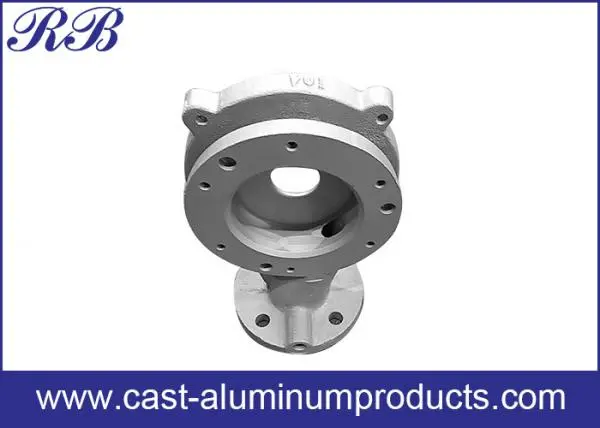
Welding a cast aluminum valve body demands more than basic technique — it requires a thorough understanding of the alloy's behavior under heat, the casting process behind the part, and the application it serves. For fire pipe control valves made through gravity casting with A356 aluminum alloy, special valve body casting geometry and wall characteristics directly influence how the weld responds. Get the preparation wrong, and you risk cracking, porosity, or pressure failure. Get it right, and you extend the valve's service life significantly. This guide walks through every critical stage.
Challenges of Welding Cast Aluminum Valve Bodies
When you weld, cast metal is not lenient. Its thermal conductivity is about four times higher than steel's. This means that heat moves quickly and widely, making big differences in temperature that warp or crack the weld zone.
Why Porosity Is the Primary Enemy
When heat is added again, gas porosity that was trapped during the first casting process becomes a big problem. Aluminum easily takes hydrogen from air and moisture, and this hydrogen grows when it is heated during welding, creating holes below the surface. When hydrostatic pressure testing fire pump valve bodies in particular, these holes become places where they can fail. A356 aluminum alloy is often used to make the bodies of gravity-cast fire pipe control valves. It is one of the easier casting alloys to weld, but the surface must still be carefully prepared before the weld to avoid hydrogen-induced porosity.
Cracking Risks at the Heat-Affected Zone
In cast aluminum, the heat-affected zone (HAZ) weakens quickly if the welding temperatures are not kept in check. Silicon and magnesium are found in A356, which helps it be strong mechanically but also makes it more likely to crack when heated if the filler metal choice is wrong. The American Welding Society's engineering data shows that the filler metal ER4043 works well with the A356 base material, being resistant to cracks and having good flow properties.
Besides the metal itself, flaws in the casting process, such as shrinkage cavities near thick wall transitions, make cracking more likely. When procurement engineers are looking for cast aluminum valve bodies, they have to look at how often defects happen inside the suppliers' products before they even think about welding.
Step-by-Step Welding Process for Cast Aluminum Valve Bodies
Most weld problems can be avoided with a structured method. When making industrial valves, skipping any step, especially cleaning before welding, is the most common reason for having to do more work.
Pre-Weld Surface Preparation
Before welding, get rid of all the oxide layers, oils, and other surface dirt. Aluminum oxide melts at about 2,037°C, which is much higher than the 660°C melting point of aluminum. This means that it can't be burnt off; it has to be removed manually. First, use a stainless steel wire brush made just for aluminum. Then, clean it with acetone or isopropyl alcohol. For parts that were shot-blasted, like gravity-cast A356 valve bodies, make sure that all of the blasting media dust is gone from the inside.
Before starting the weld spark, heat the valve body to 150–200°C. This lowers the temperature difference, makes cold cracking less likely, and evaporates any wetness that is still on the surface. For wall sections thicker than 6mm, preheating is a must.
Choosing the Right Welding Method
For special valve body casting used in fire systems, TIG welding (GTAW) is the best way to join them. It gives the welder exact control over the amount of heat applied, clean welds with little spatter, and the ability to manage how puddles behave on uneven casting surfaces. MIG welding (GMAW) is faster and better for large-scale repair jobs, but skilled operators are needed to keep the arc stable on cast surfaces.
Treatment after the weld is just as important as the weld itself. Allow controlled cooling—do not quench—and check the weld's integrity with dye penetrant testing or ultrasonic inspection before putting the part through hydrostatic pressure testing. This step is required for fire pipe control uses and can't be skipped.
Comparing Special Valve Body Casting and Welding with Standard Methods
There are different kinds of valve bodies, and the way a part was cast has a big effect on how well it can be welded. When compared to high-pressure die casting, gravity casting makes the grain structure thicker and more regular. This is what Rongbao Enterprise does for their A356 fire pipe control valve bodies. It is much harder to weld high-pressure die-cast parts after they have been cast because they tend to hold on to more gas during quick injection filling. Gravity-cast parts have less internal porosity and better physical stability, which means that the way they weld will be easier to predict.
On the other hand, forged valve bodies have great mechanical qualities, but they cost more to make and take longer to make if the geometry is complicated. This is where special valve body casting using gravity methods comes in handy. It offers almost the same density as casting, but with more design options and lower costs per unit when used in large quantities. This difference has real effects on both the quality of the work and the total cost of the parts for buying managers at companies that make fire tools.
Key Design and Manufacturing Considerations for Weldable Cast Aluminum Valve Bodies
The choices made during the casting process affect whether or not a valve body can be successfully bonded during production. Field problems can be avoided when castings aren't made well. Uniform wall thickness stops heat from spreading unevenly when welding. If you have to have wall changes, use steady tapering instead of sharp steps to spread out the stress. As part of the casting design, there should be entry zones for the weld joints so that welders can keep their torch angles consistent and avoid blind-weld positions that raise the risk of defects.
Here are the production conditions that directly affect how well quality-certified cast aluminum valve bodies can be welded:
- Controlled solidification gating guides the flow of metal to keep shrinking holes to a minimum at key weld sites.
- Shot blasting surface finish gets rid of scale and warms up the surface so that it sticks better.
- CNC machining of weld joint faces ensures flat, burr-free mating surfaces that reduce void formation.
- A356 alloy selection gives you the right amount of silicon and magnesium to support the suitability of ER4043 fillers and the reaction to heat treatment after welding.
For fire system parts, these parameters are not options; they are the bare minimum needed to pass hydrostatic certification and national fire equipment standards. When suppliers use these design and process controls together, they make parts that can be welded and put together quickly and without having to be reworked first.
Soft Guide to Procuring Special Valve Body Castings and Welding Services
Getting cast metal valve bodies for fire pump systems is not a simple buy, it requires careful consideration. When choosing a supplier for a special valve body casting, make sure that their quality management system covers the whole production chain, from checking the alloy that goes into the casting to making sure it fits correctly and treating the surface. The ISO 9001:2015 approval proves that the process control is done correctly. If a manufacturer has both ISO 14001 and ISO 45001 certifications, it means that they follow safety and environmental standards that are similar to those needed by export markets.
Make sure the supplier can handle the variety of parts you need. Fire pump systems need pipe fittings, impellers, pump cases, and valve bodies, which are often made at the same time. A factory that can do gravity casting, CNC cutting, and surface treatment all in one place makes it easier to coordinate and cuts down on the length of your supply chain. Find out about the lead times for prototypes, the minimum order quantity (MOQ), and the standards for packaging heavy cast parts. Gravity-cast A356 valve bodies (3.6 kg per unit) are usually shipped in wooden boxes to protect their shape during international shipping.
Conclusion
To successfully weld special valve body casting, you need to be in sync with three areas: the material, the method, and the quality of the casting at the source. It is possible to weld A356 gravity-cast valve bodies made for fire pipe control uses, but only if the casting quality is clean, the surface is ready, and the welding conditions are right for the alloy. When purchasing professionals buy from ISO-certified companies that can cast, machine, and treat the surface, they stop most problems with welding later on before they happen. When quality is built into the casting, it stays in every step of the process afterward.

FAQ
Are all cast aluminum valve bodies weldable?
Not all the same. High-pressure die-cast aluminum parts often have a lot of gas holes inside them, which makes welding harder. Gravity-cast parts made from metals like A356 are made to have lower defect rates and better metallurgical stability, which makes them a lot easier to weld. Before committing to an assembly process that depends on welding, you should always ask your supplier for an internal defect rate specification.
Which welding method works best for repairing casting defects in aluminum valve bodies?
Precision repair work on cast aluminum valve bodies is always done with TIG welding. Controlling the amount of heat applied, keeping the arc clean, and being able to see the weld puddle clearly are all very important when working with uneven casting surfaces or small defect areas. MIG welding is good for repair jobs with a lot of parts and where the operator's skill needs to be checked.
How does post-weld treatment affect valve body performance?
Processing done after welding has a big effect on how well something works mechanically in the long run. Quench cracking can be avoided by controlling the cooling. Before pressure testing, holes in the ground are found with dye penetrant or ultrasonic inspection. For fire system valve bodies, it is necessary to pass hydrostatic pressure tests. Post-weld inspection is the last quality check that protects both the safety of the end user and the manufacturer's certification.
Partner with Rongbao Enterprise for Certified Cast Aluminum Valve Body Solutions
Rongbao Enterprise has ISO 9001:2015, ISO 14001, and ISO 45001 certifications to back up its precision-engineered special valve body casting services. We are a reliable special valve body casting maker for demanding industrial buyers because we have 20 years of experience in gravity casting and CNC cutting, can make 5,000 pieces at a time, and offer full OEM customization for fire pipe control applications. You can email our expert team at steve.zhou@263.net or zhouyi@rongbaocasting.com to get a price, or you can go to rongbaocasting.com.
References
- American Welding Society. Welding Aluminum: Theory and Practice. 4th ed. AWS, 2002.
- Davis, J.R. Aluminum and Aluminum Alloys. ASM International, 1993.
- Aluminum Association. Aluminum Design Manual. Aluminum Association, 2020.
- Kaufman, J.G., and Rooy, E.L. Aluminum Alloy Castings: Properties, Processes, and Applications. ASM International, 2004.
- Cary, H.B., and Helzer, S.C. Modern Welding Technology. 6th ed. Pearson Prentice Hall, 2005.
- ISO. ISO 9001:2015 Quality Management Systems — Requirements. International Organization for Standardization, 2015.
Learn about our latest products and discounts through SMS or email