- English
- French
- German
- Portuguese
- Spanish
- Russian
- Japanese
- Korean
- Arabic
- Greek
- German
- Turkish
- Italian
- Danish
- Romanian
- Indonesian
- Czech
- Afrikaans
- Swedish
- Polish
- Basque
- Catalan
- Esperanto
- Hindi
- Lao
- Albanian
- Amharic
- Armenian
- Azerbaijani
- Belarusian
- Bengali
- Bosnian
- Bulgarian
- Cebuano
- Chichewa
- Corsican
- Croatian
- Dutch
- Estonian
- Filipino
- Finnish
- Frisian
- Galician
- Georgian
- Gujarati
- Haitian
- Hausa
- Hawaiian
- Hebrew
- Hmong
- Hungarian
- Icelandic
- Igbo
- Javanese
- Kannada
- Kazakh
- Khmer
- Kurdish
- Kyrgyz
- Latin
- Latvian
- Lithuanian
- Luxembou..
- Macedonian
- Malagasy
- Malay
- Malayalam
- Maltese
- Maori
- Marathi
- Mongolian
- Burmese
- Nepali
- Norwegian
- Pashto
- Persian
- Punjabi
- Serbian
- Sesotho
- Sinhala
- Slovak
- Slovenian
- Somali
- Samoan
- Scots Gaelic
- Shona
- Sindhi
- Sundanese
- Swahili
- Tajik
- Tamil
- Telugu
- Thai
- Ukrainian
- Urdu
- Uzbek
- Vietnamese
- Welsh
- Xhosa
- Yiddish
- Yoruba
- Zulu
How to Choose a Pull Cord Box Bracket for Heavy-Duty Industrial Environments?
Selecting safety components for industrial applications demands careful attention. The wrong choice can lead to premature failure and compromise worker safety. This is especially true for a seemingly simple part like a pull cord box bracket. In heavy-duty environments, this component faces constant stress. Factors like vibration, impact, moisture, and corrosive agents test their limits every day. A robust bracket ensures the emergency stop or alarm pull cord station remains functional and accessible. This guide will walk you through the critical factors for making the correct selection. We aim to provide you with knowledge that builds confidence in your purchasing decision.
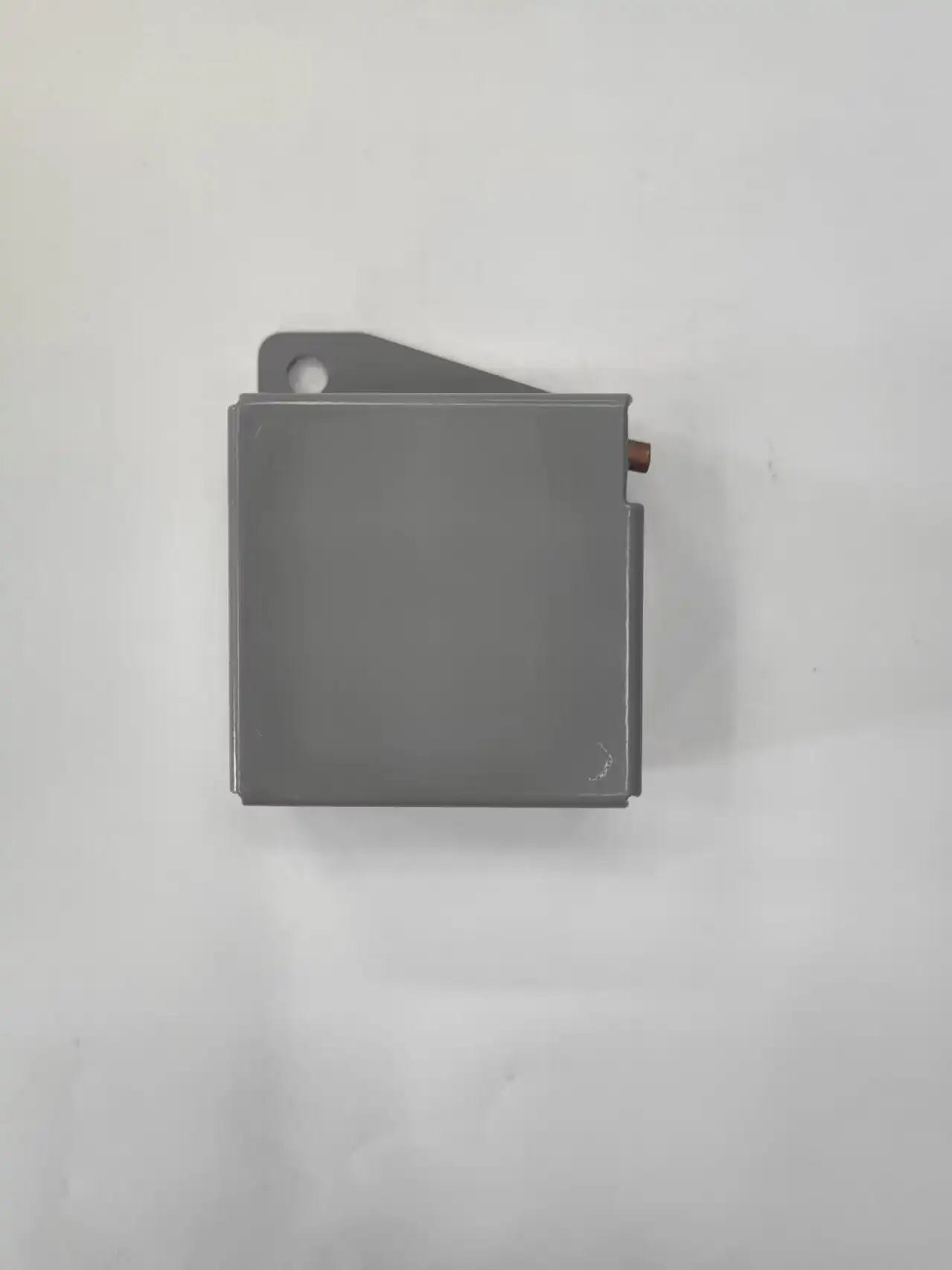
Key Factors in Selecting a Heavy-Duty Pull Cord Box Bracket
Understanding the core selection criteria forms the foundation of a good decision. It's not just about holding a box in place. The bracket must become a reliable extension of the safety system itself.
Material Composition and Structural Integrity
The choice of material directly dictates the bracket's lifespan. For general indoor use, powder-coated steel might suffice. However, heavy-duty settings require more. Environments with high humidity or chemical exposure necessitate stainless steel. Think of food processing plants or wastewater treatment facilities. Salt spray in marine applications accelerates corrosion on lesser materials. Cast iron or ductile iron brackets offer immense strength for high-vibration areas. These include mining operations or near large conveyor drives. The material must resist deformation under load and impact. The structural design also plays a crucial role. Look for reinforced gussets or ribbing at stress points. A well-designed pull cord box bracket distributes force evenly. This prevents fatigue cracks from developing over time.
Environmental and Operational Stressors
Every industrial site presents unique challenges. You must conduct a thorough audit of the installation area. Consider persistent dust in woodworking or cement plants. Fine particulates can jam moving parts and abrade surfaces. A bracket with a sleek, sealed design performs better here. Extreme temperatures pose another common issue. Near furnaces or in cold storage, materials expand and contract. The bracket's metal must maintain its properties across this range. Continuous vibration loosens fasteners and weakens joints. Anti-vibration mounts or locking hardware become essential features. Never underestimate the potential for physical impact. Forklifts, cargo, or machinery can accidentally collide with the station. A sturdy bracket assembly can absorb a shock without failing. This protects the more expensive pull cord mechanism inside.
Installation, Compatibility, and Long-Term Maintenance
Even the best bracket is ineffective if installed poorly. Planning for installation and future upkeep saves significant time and cost.
Mounting Surface and Compatibility Concerns
The mounting surface dictates the bracket style. Common surfaces include flat machinery frames, round posts, or uneven structural beams. Universal mounting kits offer some flexibility, but dedicated brackets often provide superior stability. Ensure the fastener holes align with your intended surface. Verify the bracket is compatible with your specific pull cord box model. Dimensions and attachment points vary between manufacturers. A mismatch can lead to insecure fitting or installation impossibility. Consider cable entry and exit points as well. The bracket should guide and protect the cable, not pinch or strain it. In corrosive environments, specify stainless steel fasteners. Using mismatched metals can cause galvanic corrosion, weakening the entire setup.
Ensuring Ease of Access and Serviceability
Emergency devices require regular inspection and testing. The bracket should facilitate this, not hinder it. Can maintenance personnel easily access the box for functional checks? Some brackets allow for tool-less opening or a simple hinge mechanism. Others might require the entire unit to be unmounted. The latter increases downtime and discourages frequent testing. Also, consider future needs. The bracket should allow for relatively straightforward replacement of the pull cord box if needed. A design that complicates simple service adds hidden long-term costs. A good industrial pull cord bracket balances rugged protection with practical accessibility.

Special Considerations for Specific Industrial Applications
Beyond general heavy-duty needs, some sectors impose extra requirements. Your selection process must account for these specialized conditions.
Hazardous and Corrosive Atmospheres
Oil refineries, chemical plants, and pharmaceutical facilities often have classified hazardous areas. Here, standard components are unacceptable. Pull cord box brackets, like the devices they hold, may need specific certifications. These include explosion-proof or flame-proof ratings. The goal is to prevent the bracket from becoming an ignition source. Corrosion resistance moves from a benefit to an absolute mandate. Electropolished stainless steel or specially coated alloys become necessary. The bracket must withstand not just ambient fumes but also frequent washdowns with aggressive cleaning agents. In these settings, failure is not an option.
High-Impact and Abrasive Environments
Mining, quarrying, and heavy bulk material handling are punishing. Equipment faces impact from falling rock and constant abrasion from ore or coal dust. A bracket here needs exceptional toughness. Heavy-gauge steel or manganese steel casting provides this resilience. Designs often feature minimal protrusions to prevent snagging. Abrasive dust acts like sandpaper, wearing down coatings and metal. A sacrificial wear plate or a hardened surface treatment extends service life. The bracket essentially acts as a shield for the vital safety component it carries.
Pull Cord Box Bracket Supplier: Rongbao Enterprise
Choosing the right component partner is the final, critical step in this process. You need a supplier who understands the rigors of industrial applications and can translate that into reliable products. Rongbao Enterprise stands as a specialized manufacturer with deep expertise in this field. Our production is backed by a stringent quality management system, certified to ISO 9001:2015, ISO 14001, and ISO 45001 standards. This commitment ensures every pull cord box bracket we produce meets consistent, high-quality benchmarks.
We recognize that one size does not fit all in industrial safety. Therefore, we offer extensive OEM and ODM services, providing fully customized solutions tailored to your specific box model and environmental challenges. With a substantial production capacity, we reliably support both prototype development and large-volume orders. Our products, originating from our facilities in Xi'an, China, are securely packaged for global transportation. We invite you to move from hesitation to trust. Let our expertise guide you to the optimal solution for your heavy-duty safety needs. For technical specifications, quotations, or to discuss a custom project, please reach out to our engineering and sales teams.
Ready to secure your safety systems with durable, reliable brackets?
Contact Rongbao Enterprise today for a consultation. Send your detailed requirements or drawings to steve.zhou@263.net or zhouyi@rongbaocasting.com to discuss your project.
FAQs
Q1: Can I use a standard mild steel bracket outdoors if I paint it?
A: Painting offers limited protection. Over time, scratches, chips, and natural wear expose the base metal. Moisture then gets underneath the paint, leading to rust that spreads unseen. For permanent outdoor or damp indoor use, selecting an inherently corrosion-resistant material like hot-dip galvanized or stainless steel is a far more reliable and long-term economical choice.
Q2: How important is supplier certification for such a simple part?
A: Extremely important. Certifications like ISO 9001 demonstrate that the supplier has a controlled manufacturing process. This ensures consistent quality, material traceability, and dimensional accuracy. For safety-critical components, this traceability and proven quality management are invaluable. It reduces the risk of receiving a substandard batch that could fail prematurely.
Q3: What if my pull cord box is a less common model?
A: Many reputable suppliers offer customization or OEM services. They can manufacture a pull cord box bracket to your exact specifications and dimensions. Providing them with the box model or detailed drawings allows them to produce a perfect fit. This is often more cost-effective than trying to adapt an off-the-shelf bracket that doesn't secure the box properly.
Q4: Are there weight or load ratings for these brackets?
A: While not always advertised like lifting equipment, a quality bracket is engineered for the application. Reputable manufacturers design their brackets to support the weight of the specified box and withstand the dynamic forces of the pull cord being activated. For extreme scenarios, discussing the specific operational forces with the supplier is advised to ensure the selected bracket has an adequate safety factor.
References
1. Occupational Safety and Health Administration (OSHA). "Machine Guarding." Provides context on safety standards requiring emergency stop devices.
2. International Organization for Standardization (ISO). "ISO 13850:2015 Safety of machinery,Emergency stop function, Principles for design." Discusses principles for emergency stop devices, relevant to their mounting and accessibility.
3. National Association of Corrosion Engineers (NACE) International. Resources on material selection for corrosive environments.
4. Engineering ToolBox. "Materials and Corrosion." Technical data on material properties in industrial settings.
5. Safety+Health Magazine. "The importance of emergency stop devices." Articles and case studies on safety system maintenance and reliability.
_1751074553490.webp)
Learn about our latest products and discounts through SMS or email