- English
- French
- German
- Portuguese
- Spanish
- Russian
- Japanese
- Korean
- Arabic
- Greek
- German
- Turkish
- Italian
- Danish
- Romanian
- Indonesian
- Czech
- Afrikaans
- Swedish
- Polish
- Basque
- Catalan
- Esperanto
- Hindi
- Lao
- Albanian
- Amharic
- Armenian
- Azerbaijani
- Belarusian
- Bengali
- Bosnian
- Bulgarian
- Cebuano
- Chichewa
- Corsican
- Croatian
- Dutch
- Estonian
- Filipino
- Finnish
- Frisian
- Galician
- Georgian
- Gujarati
- Haitian
- Hausa
- Hawaiian
- Hebrew
- Hmong
- Hungarian
- Icelandic
- Igbo
- Javanese
- Kannada
- Kazakh
- Khmer
- Kurdish
- Kyrgyz
- Latin
- Latvian
- Lithuanian
- Luxembou..
- Macedonian
- Malagasy
- Malay
- Malayalam
- Maltese
- Maori
- Marathi
- Mongolian
- Burmese
- Nepali
- Norwegian
- Pashto
- Persian
- Punjabi
- Serbian
- Sesotho
- Sinhala
- Slovak
- Slovenian
- Somali
- Samoan
- Scots Gaelic
- Shona
- Sindhi
- Sundanese
- Swahili
- Tajik
- Tamil
- Telugu
- Thai
- Ukrainian
- Urdu
- Uzbek
- Vietnamese
- Welsh
- Xhosa
- Yiddish
- Yoruba
- Zulu
How many times can you use a sand casting mold?
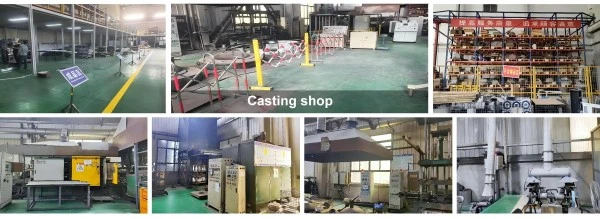
When planning your next production run, knowing how long molds last will have a direct effect on your budget and delivery times. In sand casting, the answer is different depending on the type of mold and the materials used. Traditional sand molds are disposable, which means they are thrown away after the finished part is taken out of them. But new methods that use resin-bonded sand or shell molding systems can make molds last for a few cycles, usually two to five times, before they start to break down and affect the quality of the casting. Because of this, sand casting is a good choice for both making prototypes and making medium- to large-scale products in the automotive, construction equipment, and industrial machinery industries.
Understanding Sand Casting Mold Durability
Sand casting molds are made of foundry sand that has been mixed with chemical binders, clay, or resin to make it stick together. The mold can handle a single pour or several rounds, depending on the makeup. Greensand molds, which are made of silica sand, water, and clay, are still the most popular disposable choice. Once the molten metal hardens, the mold needs to be broken apart to get rid of the casting. The sand can then be used to make new molds, but not the mold structure itself.
Factors Influencing Mold Longevity
How long a sand mold keeps its shape and dimensions is dependent on a number of factors. Size of the sand grains, strength of the glue, and amount of water all play important parts. Coarser grains let more gas escape, but they may make the surface less smooth. The quality of the binder decides how well the mold can handle thermal stress when molten metal runs into the hollow. For steel, the temperature can reach over 1,400°F, and for aluminum, it can reach over 1,200°F.
Mold complexity is also important. Complex shapes with thin walls or deep undercuts have more stress concentrations, which speeds up wear. Handling techniques used during pattern removal, metal pouring, and cooling can cause cracks or erosion that make it impossible to reuse. When purchasing managers look at different suppliers, they should find out about the steps they take to recondition the sand and the quality control measures they use to make sure that the mold is the same from batch to batch.
Types of Sand Molds and Their Reusability
When making a lot of things, greensand molds are the best choice because the materials are cheaper and the sand mixture can be used again and again. But the mold itself can only be used once. Resin-bonded systems, in which chemical agents harden the sand into a structure, are more stable in terms of size and can be used more than once. Shell molding, which involves putting hot metal designs covered in resin-covered sand, makes thin, strong molds that can hold two or three pours before they start to crack and lose their accuracy.
Technical engineers and quality assurance teams can better match mold selection to part specifications when they know these differences. Resin-bonded molds are more expensive at first, but they are better for precision parts that need to fit together tightly, like aerospace fittings or hydraulic valve bodies. On the other hand, greensand is often used for one-time uses in big industrial castings like pump housings or engine blocks because it is cheap.

How Many Times Can You Typically Use a Sand Casting Mold?
The simple answer is that most sand casting molds are only meant to be used once. Permanent mold casting and die casting use steel or iron molds that can be used thousands of times. Sand molds, on the other hand, have to be destroyed in order to get the solid metal part out. The breaking down process itself causes the metal to expand at very high temperatures, and then it contracts when it cools down, which holds the casting in place in the sand.
Limited Reuse with Advanced Techniques
Molds can last for a few cycles with resin-bonded and shell molding systems when used in a controlled way. If the casting weight stays about the same and the pouring temps stay in the right ranges, a shell mold might last for two to four pours. When resin sands are treated with phenolic or furan binders, they keep their structure better than regular greensand, which means that molten metal flow doesn't wear them down as much.
However, thermal cycling over and over again makes even the strongest binders less strong. Along areas of high stress, tiny cracks appear and sand grains start to break down, releasing fines that contaminate the mold surface. By the third or fourth cycle, it's likely that the dimensions will change and the surface will have flaws. This means that further reuse is not an option for apps that care about quality.
Comparing Single-Use and Limited-Reuse Economics
People who work in procurement often compare the costs of tools to the prices charged per unit. Greensand molds that are only used once require less money up front, which makes them perfect for small batches or custom projects where design changes are common. For middle runs (10 to 100 units), limited-reuse resin molds lower the cost of each part because the original mold cost can be spread out over several castings.
This balance can be seen in the real world. A Tier-1 automotive supplier that makes prototype transmission housings might choose shell molding to make five test units from a single mold, which shortens the time it takes to develop new products. On the other hand, a company that makes construction equipment and casts thousands of excavator buckets every year chooses greensand because it is cheaper and the molds last longer.
Common Issues and Solutions Related to Sand Mold Reuse
Repeated use introduces certain failure modes that lower the quality of the casting. Sand erosion happens when molten metal takes away the surface of a mold, changing the size of the hole. Temperature changes put stress on the binder matrix, which makes ways for metal to get through. This is called thermal cracking. These flaws show up as rough surfaces, wrong measurements, or inclusions in the final casting. These problems annoy quality engineers and cause more rejections.

Degradation Symptoms to Monitor
Roughness on the sand casting's surface, which means sand grains have moved around, is an early sign of mold breakdown. When hollow features move by a thousandth of an inch, this is called dimensional drift. It means that the binder is breaking down or the structure is moving. As sand breaks down, it releases water or volatiles during pouring, which makes gas-related flaws like porosity or blowholes more common.
Teams in charge of quality control should set up inspection procedures that check these indicators after each cycle. Coordinate measuring machines (CMMs) are used for dimensional checks that find geometric errors before they get too big. Visual checks show problems on the surface, while non-destructive testing (NDT) methods, such as X-ray or ultrasound scanning, find holes inside the material.
Strategies to Extend Mold Life
The best way to keep mold usable is to make sure that the sand conditioning is done right. Reclaiming systems get rid of fines and used binder residues, making the sand grains even again. Adding new sand in controlled amounts keeps the properties the same. Protective coatings, like ceramic washes or refractory paints, keep the mold surface safe from thermal shock and metal penetration, which adds one or two rounds to its life.
Tough controls over the process are also important. Thermal stress can be lowered by keeping falling temperatures within small windows. Cracking can be avoided by giving the mold enough time to cool down before taking it apart. For these methods to work, foundries need to be very organized. This means that the knowledge of the supplier is very important when looking for casting services. During supplier evaluations, purchasing managers should ask for proof of sand testing results and mold longevity data.
Conclusion
How long a sand casting mold lasts depends on the type of mold, the material used, and how it is made. Greensand molds have only one turn, but newer resin-bonded and shell molding systems can be used more than once if everything is done right. Knowing these limits and what causes mold to break down helps you make better purchasing choices that balance price, quality, and delivery times. When sand casting is useful and fixed mold methods are not, comparing them makes things clear. Working with skilled suppliers who manage the quality of the sand, take safety precautions, and follow strict testing procedures will help you get the most out of your casting investment and make sure that the parts always work well.
FAQ
Can sand casting molds be reused multiple times?
The old-fashioned greensand molds can only be used once and then thrown away. Resin-bonded and shell molds can only be used two to five times before thermal stress and erosion make them less accurate in terms of size, but this is still better than permanent mold methods.
What causes sand casting molds to fail during reuse attempts?
The binder matrix cracks when the temperature changes, and the surfaces of sand grains wear away when molten metal flows. These types of decline cause changes in dimensions, rough casting surfaces, and more holes, which makes it impossible to reuse.
How does mold reuse affect casting costs?
When a mold is only used once, its starting costs are spread out over several parts. This lowers the price per unit for middle runs. But quality risks from worn-out molds can make rejection rates and rework costs go up, cancelling out any savings that were made if they are not carefully managed.
What inspection methods ensure mold quality across cycles?
Dimensional checks with CMMs find differences in shape, while eye exams find problems on the surface. NDT methods, such as X-ray or ultrasonic testing, find flaws inside molds, which helps quality teams throw away molds before they make bad castings.
Partner with a Trusted Sand Casting Manufacturer
For metal casting to be reliable and cost-effective, you need a provider who knows about mold longevity, process control, and your unique production needs. Rongbao Enterprise offers quality products that are ISO-certified and go through the whole manufacturing process, from making patterns to precise machining. They have years of experience working with the automotive, construction, and industrial equipment markets around the world. Our quick turnaround times and environmentally friendly sand reconditioning methods make your production processes run more smoothly while keeping the exact measurements your technical teams need. Steve Zhou can be reached at steve.zhou@263.net or zhouyi@rongbaocasting.com to talk about your project needs and get a detailed quote. Go to rongbaocasting.com to learn more about what we can do and how our partnership as a sand casting supplier can help you save time and money when you buy things.
References
- Campbell, John. Complete Casting Handbook: Metal Casting Processes, Metallurgy, Techniques and Design. Butterworth-Heinemann, 2015.
- Brown, John R. Foseco Ferrous Foundryman's Handbook. Butterworth-Heinemann, 2000.
- Beeley, Peter R. Foundry Technology. Butterworth-Heinemann, 2001.
- American Foundry Society. Sand Casting Processes and Materials: A Technical Overview. AFS Publications, 2018.
- Jain, P.L. Principles of Foundry Technology. Tata McGraw-Hill Education, 2003.
- Stefanescu, Doru M. Science and Engineering of Casting Solidification. Springer, 2015.
Learn about our latest products and discounts through SMS or email