The assembly of intricate metal parts has been completely transformed with the advent of high pressure die casting (HPDC), a cutting-edge manufacturing technique.This method involves injecting molten metal into a die cavity under high pressure, resulting in precise, high-quality parts with excellent surface finish.You will learn a lot about HPDC in this detailed guide. We are going to talk about its pressure range, specific pressure numbers, things that affect it, and what the injection cylinder pressure does.
Pressure Range in High Pressure Die Casting
The pressure range in HPDC is a critical factor that significantly influences the quality and characteristics of the final product. Typically, the pressure applied during the casting process can vary from 20 to 200 MPa (megapascals), depending on the specific requirements of the part being produced and the material used.
Low-End Pressure Range: 20-70 MPa
At the lower end of the spectrum, pressures between 20 and 70 MPa are often used for larger castings or when working with more fluid alloys. This range is suitable for parts that don't require extremely fine detail or when the metal's fluidity allows for easier filling of the die cavity.
Mid-Range Pressure: 70-140 MPa
The mid-range pressure, typically between 70 and 140 MPa, is the most commonly used in high pressure die casting (HPDC) operations.This range is ideal for many uses in many different sectors, including consumer electronics, automotive, and aerospace, since it strikes a good compromise between component quality and machine wear.
High-End Pressure Range: 140-200 MPa
For parts requiring exceptional detail, thin walls, or when working with less fluid alloys, pressures ranging from 140 to 200 MPa may be necessary.Parts with better mechanical qualities and surface polish are the consequence of using this high-end pressure range, which guarantees full die filling and helps reduce porosity.

Specific Pressure: The Core Parameter in HPDC
Specific pressure, often referred to as the intensification pressure, is a fundamental parameter in high pressure die casting. It's the pressure applied to the molten metal during the final stage of die filling and solidification.If you want flawless castings, this pressure is essential.
Calculating Specific Pressure
The specific pressure is typically calculated by dividing the force applied by the plunger by the projected area of the casting. It's expressed in units of pressure, usually MPa or psi (pounds per square inch). The formula can be represented as:
Specific Pressure = Force / Projected Area
Understanding and controlling this parameter is essential for optimizing the casting process and ensuring consistent part quality.
Impact on Casting Quality
In high pressure die casting, the specific pressure directly influences several key aspects of the casting:
- Density: Higher specific pressure generally results in denser castings with fewer pores.
- Mechanical Properties: Increased pressure can lead to improved strength and ductility in the final part.
- Surface Finish: Adequate specific pressure ensures better replication of the die surface, resulting in smoother castings.
- Dimensional Accuracy: Proper pressure application helps maintain tight tolerances and reduces part-to-part variation.
Optimizing Specific Pressure
Finding the optimal specific pressure for a given casting involves balancing various factors:
- Part Geometry: Complex shapes with thin walls may require higher specific pressures.
- Alloy Properties: Different metals and alloys have varying requirements for specific pressure.
- Die Design: The gating system and overall die design influence the pressure needed for complete filling.
- Machine Capabilities: The die casting machine's specifications set the upper limit for applicable pressure.
Experienced die casters often use a combination of theoretical calculations, simulation software, and practical experimentation to determine the ideal specific pressure for each unique casting project.
Influencing Factors in High Pressure Die Casting
Many variables affect how well the HPDC process works, and all of them are important in deciding how well the cast part turns out in the end.The key to perfecting the casting process and getting reliable, high-quality outcomes is to have a firm grasp of these elements.
Material Properties
The characteristics of the alloy being cast significantly impact the HPDC process:
- Melting Point: Affects the temperature requirements and solidification time.
- Fluidity: Determines how easily the molten metal fills the die cavity.
- Thermal Conductivity: Influences the cooling rate and solidification pattern.
- Shrinkage: Affects the final dimensions and potential for defects like porosity.
For instance, aluminum alloys, such as A380, are popular in HPDC due to their excellent fluidity and relatively low melting point, making them ideal for producing complex, thin-walled parts.
Die Design and Construction
The design and quality of the die play a pivotal role in the success of the high pressure die casting (HPDC) process:
- Gating System: Proper design ensures optimal metal flow and minimizes turbulence.
- Venting: Adequate venting prevents air entrapment and related defects.
- Cooling Channels: Effective cooling design promotes uniform solidification.
- Surface Finish: The die's surface quality directly affects the cast part's appearance.
Incorporating vacuum assistance or specific coatings onto advanced die designs may improve performance and part quality.
Process Parameters
Various process parameters must be carefully controlled to achieve optimal results:
- Melt Temperature: Must be precisely controlled to ensure proper fluidity without causing excessive die wear.
- Die Temperature: Affects the metal's flow characteristics and solidification pattern.
- Injection Speed: Controls the rate at which the die cavity is filled, impacting defect formation.
- Cycle Time: Balances productivity with part quality and die longevity.
A comprehensive strategy is needed to optimize the process since these elements are often interrelated.
Machine Capabilities
The specifications and condition of the die casting machine significantly influence the casting process:
- Clamping Force: Determines the maximum allowable projected area and specific pressure.
- Shot Capacity: Affects the size of parts that can be produced.
- Injection System: The hydraulic or electric system's performance impacts pressure control and repeatability.
- Control System: Advanced control systems enable finer adjustments and better process monitoring.
The die casting machine must be calibrated and serviced often to ensure constant performance.
Injection Cylinder Pressure: The Driving Force
The injection cylinder pressure is the force behind the entire high pressure die casting process. It's responsible for propelling the molten metal into the die cavity at high speeds and maintaining the specific pressure during solidification.
Components of the Injection System
Understanding the injection system is crucial for grasping the concept of injection cylinder pressure:
- Injection Cylinder: Houses the hydraulic fluid that drives the plunger.
- Plunger: Transmits the force from the hydraulic system to the molten metal.
- Shot Sleeve: Contains the molten metal before injection.
- Hydraulic System: Generates the pressure required for the injection process.
The efficacy and efficiency of the injection process are determined by the interplay between these components.
Pressure Stages in HPDC
The injection process in high pressure die casting typically involves three distinct pressure stages:
- First Stage (Slow Shot): Low pressure is applied to move the plunger forward, pushing air out of the shot sleeve.
- Second Stage (Fast Shot): High pressure is applied to rapidly fill the die cavity with molten metal.
- Third Stage (Intensification): Maximum pressure is applied to compress the metal and ensure complete die filling.
For best results at each step, the pressure in the injection cylinder must be precisely controlled.
Optimizing Injection Cylinder Pressure
Effective management of injection cylinder pressure is crucial for producing high-quality castings:
- Pressure Profiling: Adjusting pressure throughout the injection cycle to optimize metal flow and minimize defects.
- Real-time Monitoring: Using sensors to track pressure variations and make instant adjustments.
- Simulation Tools: Employing software to predict pressure requirements and optimize injection parameters.
- Machine Maintenance: Ensuring hydraulic systems are in top condition to maintain consistent pressure control.
Part quality, scrap rates, and process efficiency may all be fine-tuned by die casters by adjusting the pressure of the injection column.
High pressure die casting is a complicated process that requires an in-depth familiarity with the many variables and their connections.From the broad pressure range to the specific pressure applied during casting, and from the numerous influencing factors to the critical role of injection cylinder pressure, each aspect contributes to the final quality of the cast part.
As technology and industry need for more complex and high-performance components continue to advance, high pressure die casting is at the forefront of this trend.If manufacturers take the time to learn HPDC's fundamental concepts and stay abreast of industry developments, they'll be more equipped to meet the demanding standards of modern consumers and their products.

High Pressure Die Casting Supplier: Rongbao Enterprise
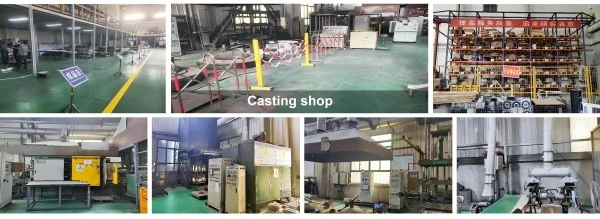
Rongbao Enterprise is well regarded as a top supplier of high-pressure die casting services. With a rich history dating back to 2003, Rongbao has established itself as a specialized manufacturer of aluminum alloy castings and precision-processed components.
Among the many goods in which Rongbao excels are:
- Aluminum gravity casting parts
- Cast instrument boxes
- Casting accessories for natural gas control valves
- Casting motor end covers
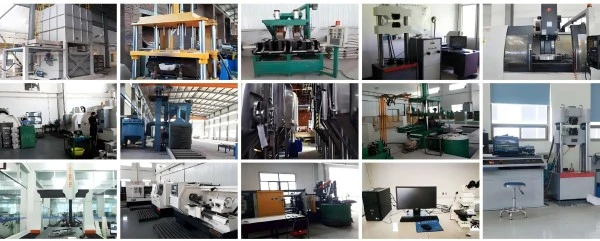
With state-of-the-art facilities and a commitment to quality, Rongbao delivers integrated component supply solutions that cater to the needs of equipment manufacturers across various industries. Their state-of-the-art manufacturing processes guarantee that customers obtain goods of the highest quality that satisfy even the most demanding standards. Among these techniques are precision machining, gravity casting, high-pressure die casting, and low-pressure die casting.
If you're in the market for superior high-pressure die casting services or any of the specialized products offered by Rongbao Enterprise, don't hesitate to reach out. Whatever your requirements may be, their team of specialists is standing by to meet them and see your projects through to completion.
Contact Rongbao Enterprise today:
Email: steve.zhou@263.net or zhouyi@rongbaocasting.com
Experience the difference that comes with partnering with a leader in the high-pressure die casting industry. Allow Rongbao Enterprise to improve your company's production capabilities and propel it ahead.
References
1. Vinarcik, E. J. (2003). High Integrity Die Casting Processes. John Wiley & Sons.
2. Andresen, B. (2005). Die Casting Engineering: A Hydraulic, Thermal, and Mechanical Process. CRC Press.
3. Totten, G. E., & MacKenzie, D. S. (Eds.). (2003). Handbook of Aluminum: Vol. 1: Physical Metallurgy and Processes. CRC Press.
4. Campbell, J. (2015). Complete Casting Handbook: Metal Casting Processes, Metallurgy, Techniques and Design. Butterworth-Heinemann.
5. Street, A. C. (1986). The Diecasting Book. Portcullis Press Ltd.