- English
- French
- German
- Portuguese
- Spanish
- Russian
- Japanese
- Korean
- Arabic
- Greek
- German
- Turkish
- Italian
- Danish
- Romanian
- Indonesian
- Czech
- Afrikaans
- Swedish
- Polish
- Basque
- Catalan
- Esperanto
- Hindi
- Lao
- Albanian
- Amharic
- Armenian
- Azerbaijani
- Belarusian
- Bengali
- Bosnian
- Bulgarian
- Cebuano
- Chichewa
- Corsican
- Croatian
- Dutch
- Estonian
- Filipino
- Finnish
- Frisian
- Galician
- Georgian
- Gujarati
- Haitian
- Hausa
- Hawaiian
- Hebrew
- Hmong
- Hungarian
- Icelandic
- Igbo
- Javanese
- Kannada
- Kazakh
- Khmer
- Kurdish
- Kyrgyz
- Latin
- Latvian
- Lithuanian
- Luxembou..
- Macedonian
- Malagasy
- Malay
- Malayalam
- Maltese
- Maori
- Marathi
- Mongolian
- Burmese
- Nepali
- Norwegian
- Pashto
- Persian
- Punjabi
- Serbian
- Sesotho
- Sinhala
- Slovak
- Slovenian
- Somali
- Samoan
- Scots Gaelic
- Shona
- Sindhi
- Sundanese
- Swahili
- Tajik
- Tamil
- Telugu
- Thai
- Ukrainian
- Urdu
- Uzbek
- Vietnamese
- Welsh
- Xhosa
- Yiddish
- Yoruba
- Zulu
Copper vs. Aluminum Castings with B2B Performance and Cost Comparison
In a lot of B2B supply chains, choose between copper and aluminum castings isn't only a matter of pricing anymore. Engineers, buyers, and project managers need to think about performance, lifetime cost, and dependability while using things in the real world. When a part breaks in a kitchen system, power distribution unit, or industrial equipment, the indirect cost is sometimes much more than the item's initial price.
From the point of view of a business customer, this article contrasts copper versus aluminum castings. It talks about performance, the cost of ownership, and how copper sand casting may help you find a better balance between durability and affordability. The objective is to get you from being interested at first to being sure enough to ask questions, using clear, evidence-based insights and useful advice.
Performance Comparison of Copper and Aluminum Castings in B2B Applications
Mechanical strength and durability under real working conditions
Copper and aluminum are both often used in industrial castings, but they act differently when they are put into machines. Brass made from H60 compositions and other copper alloys generally has stronger tensile strength and better fatigue resistance than most aluminum casting alloys. This implies that a copper casting can usually handle being tightened, vibrating, and going through temperature cycles over and over again without changing shape as much.
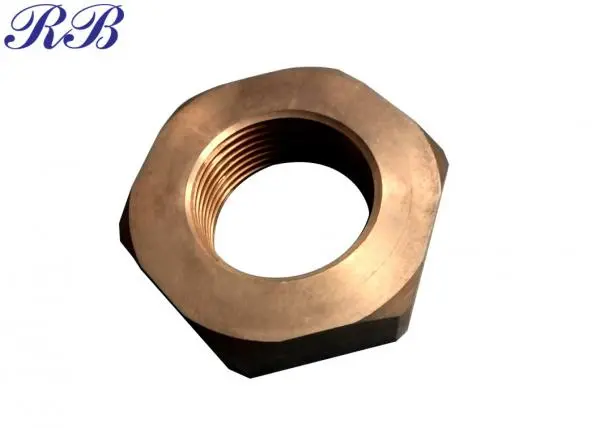
Copper sand casting makes a strong mechanical structure that works well in applications like hexagon nuts for the kitchen, where joints are often put together and taken apart. The sand mold procedure lets you make complicated shapes and solid sections. You may then use CNC machining to make sure that the threads and contact surfaces are correct. Aluminum castings are lighter, but they may wear out threads and galls on the surface more easily when they are exposed to repetitive torque, especially in hot and humid conditions.
Studies in materials engineering regularly demonstrate that several copper alloys maintain their strength throughout an extensive temperature range, whereas certain aluminum alloys exhibit a more rapid loss of stiffness as temperature increases. This variation can influence long-term stability in kitchen systems that use hot liquids, steam, and cleaning cycles, especially when parts are tightened and loosened multiple times during maintenance.
Thermal performance: conductivity and heat resistance
Aluminum is often known for its good thermal conductivity, which is one reason it is used in heat sinks and cookware. However, copper’s thermal conductivity is even higher in many alloy families, and more importantly, its heat resistance and stability in hot and corrosive environments are usually superior.
This is important for B2B projects that involve parts that are close to heating elements, burners, or hot fluids. After being cleaned by shot blasting and machined to its final shape, a copper sand casting may keep its tight dimensional tolerance even after being heated and cooled several times. Aluminum castings are lighter and simpler to work with, but they may expand and contract more in a way that affects sealing surfaces, which might lead to leaks or noise over time.
Many engineering books and standards groups say that copper alloys keep their thermal performance and mechanical integrity while they are under both thermal and mechanical stress. In places where safety and constant functioning are important, such commercial kitchens or food-processing plants, this stability might be more important than the fact that aluminum is less dense.
Corrosion resistance and hygiene in kitchen environments
Kitchens, especially commercial and industrial kitchens, are demanding environments. Components face exposure to moisture, salt, detergents, food acids, and frequent cleaning. Copper-based alloys such as H60 brass usually form a stable surface layer that resists deep attack, while aluminum surfaces may pit or stain depending on the chemistry of cleaners and water.
If you cast a hexagon nut out of copper in a sand mold and then shot blast it, the surface will be smooth and may be refined further if necessary. Copper alloys tend to stay strong over time, even when the surface starts to change color. Aluminum, on the other hand, can corrode in certain spots, which can be a problem if the component needs to preserve a seal or hold a precise clamping force.
Hygiene is another thing to think about. Numerous scientific research have shown that copper alloys stop numerous germs from growing on their surfaces. The main job of a copper sand casting in a kitchen system is mechanical, but this additional advantage can help keep food safe when used with the right cleaning and design.
Cost, Lifecycle, and Supply Chain Impact of Copper vs. Aluminum Castings
Initial material and casting cost
On a pure material basis, aluminum is often less expensive per unit weight than copper. It is lighter, easier to transport, and in many markets, raw aluminum ingot or scrap can be sourced at a lower price. This leads many buyers to assume that aluminum castings will always be the more economical choice.
However, a direct comparison based only on material price per unit weight does not capture the whole picture. Copper sand casting may use heavier sections, but these sections can support higher loads and allow for smaller overall assemblies in some designs. In addition, when the casting integrates multiple functions, such as mechanical fastening and electrical conduction, it can replace several separate aluminum parts and associated hardware.
The sand casting process for copper is well suited to customized orders, making it possible to produce tailored geometries without the tooling costs associated with high-pressure die casting of aluminum. For B2B buyers with customized specifications or mid-volume orders, this flexibility can offset part of the apparent raw material cost difference.
Machining, surface treatment, and assembly cost
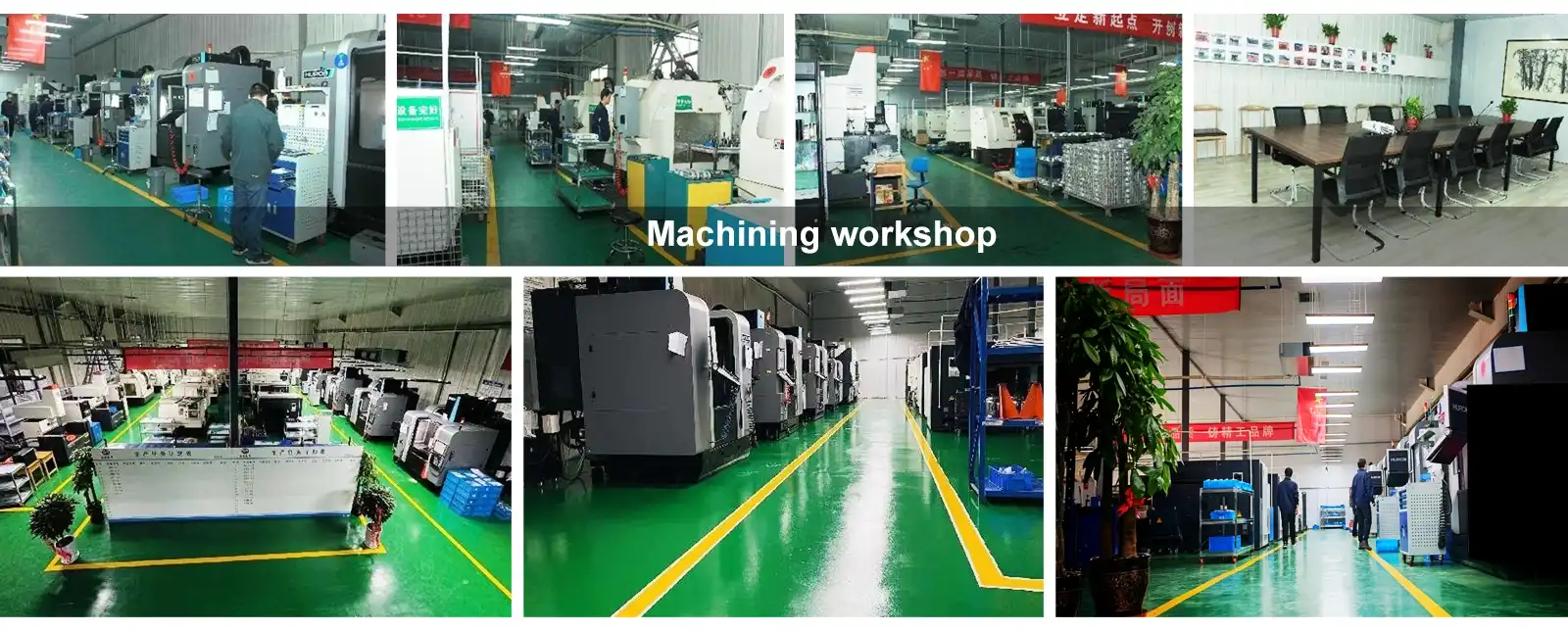
Both copper and aluminum castings require machining. CNC machining is commonly used to achieve the final tolerances, threads, and contact surfaces demanded by industrial customers. Aluminum is easier to machine in many cases, but copper alloys such as H60 machine cleanly when process parameters are optimized.
A copper sand casting that has been shot blasted to clean the surface will present a uniform base for machining. Because copper castings are more rigid under load, machining fixtures can sometimes be simplified, and dimensional control can be more reliable over time. This saves rework and inspection cost, which is an important part of the true cost of a B2B casting supply.
Surface treatments also differ. Aluminum castings often need protective coatings or anodizing to face corrosive kitchen environments, while many copper alloys can perform well with simpler treatments. Every additional process step, whether it is coating, sealing, or specialized packaging, adds lead time and cost to the supply chain.
Lifecycle cost, downtime, and total cost of ownership
For a kitchen equipment manufacturer or industrial system builder, the true cost of a casting is linked to how long it lasts and how often it needs to be replaced. A single copper sand casting installed in a critical joint that remains stable over many service cycles may cost more at the start but less over the life of the system.
Aluminum castings that suffer from wear, deformation, or corrosion can lead to leaks, misalignment, or failures that require emergency maintenance. When maintenance teams must shut down a line or take a piece of equipment out of service, the cost per hour of downtime quickly surpasses the difference in casting price. This is particularly true in commercial kitchens or food production plants, where lost capacity directly affects revenue and brand reputation.
Industry case studies often show that investing in higher-performance alloys and processes leads to a lower total cost of ownership, even in cost-sensitive segments. Copper sand casting, combined with CNC machining and rigorous quality control, provides a path to reliability that is aligned with this long-term view. The ability to order customized specifications also allows engineers to optimize designs for maintainability, making replacements straightforward when they are eventually needed.
Choosing Copper or Aluminum Castings for Your Project – How Copper Sand Casting Supports B2B Reliability?
When copper sand casting is the smarter choice
Copper sand casting becomes an attractive option when applications demand strength, stability, and reliable performance in harsh conditions. In kitchen systems, for example, hexagon nuts and connectors face hot liquids, steam, vibration, and frequent cleaning cycles. A casting made from an H60-based copper alloy, gravity cast in sand, offers a combination of mechanical strength, corrosion resistance, and thermal stability that aluminum often cannot match.
Where a component must carry both structural load and electrical current, copper’s dual-role capability reduces complexity. Instead of designing separate aluminum mechanical supports and copper conductors, a single integrated copper casting can provide both functions. This simplifies inventory management, assembly, and quality control.
B2B buyers that supply equipment to food service, hospitality, or industrial clients often receive strict requirements from end users. These requirements may refer to international standards and certifications. By choosing copper sand casting produced under certified systems, buyers can demonstrate compliance and build trust with their own customers.
Situations where aluminum castings remain competitive
Aluminum castings still have a strong role in many projects. In designs where weight reduction is critical and mechanical loads are moderate, aluminum can be the most practical choice. Examples include housings, covers, and non-critical brackets where failure would not cause safety problems or long downtime.
For very high-volume, standardized parts, pressure die casting in aluminum can deliver low unit costs and short cycle times. When the geometry is simple and the environment is mild, the extra durability of copper may not be needed. In such cases, the lighter weight and lower raw material price of aluminum create a favorable balance for the buyer.
However, even when aluminum is used in the broader assembly, many buyers choose copper sand casting for specific high-stress or high-temperature nodes. This hybrid approach, where copper and aluminum coexist in the same system, is becoming more common in modern equipment design.
Copper Sand Casting Supplier: Rongbao Enterprise
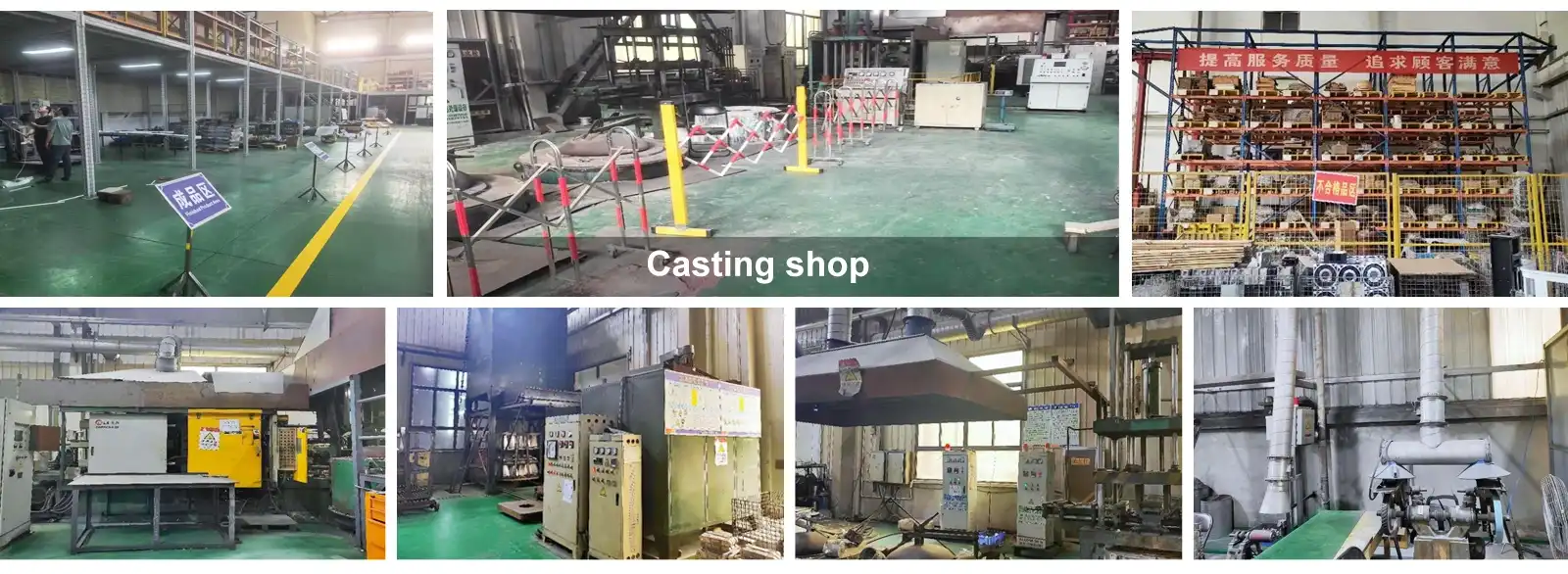
When you balance performance, cost, and risk, copper sand casting stands out for demanding B2B applications, especially in kitchen equipment, fluid systems, and assemblies where mechanical strength and thermal stability cannot be compromised. Rongbao Enterprise integrates gravity casting, copper sand casting, CNC machining, and shot blasting into a single, controlled process flow.
Hexagon nuts and other customized copper components are produced according to your specifications, with support for OEM and ODM projects. Backed by certifications including ISO9001:2015, ISO14001, and ISO45001, Rongbao Enterprise operates from Xi’an, China, and can supply series production quantities while maintaining consistent quality. Whether your project needs a few thousand customized pieces or a steady long-term supply, the production system is built to respond.
Each casting is packed in durable wooden boxes to protect it along the logistics chain. After arrival, your team can move directly to assembly or additional processing, confident that dimensional integrity has been preserved. Mechanical processing with modern CNC equipment ensures the threads, sealing faces, and functional surfaces meet your drawings and tolerances.
If you are evaluating copper sand casting for a new design or looking to replace existing aluminum castings that have shown performance issues, now is an appropriate time to consult with a specialized supplier. You can discuss your application details, such as medium, temperature, cleaning routines, and required load, and receive engineering-driven suggestions for optimizing your casting design.
To request technical support, drawings review, or a formal quotation, contact Rongbao Enterprise by email at steve.zhou@263.net or zhouyi@rongbaocasting.com. By sharing your expected working conditions and specification needs, you can quickly determine whether copper sand casting is the right path for your business and move from exploration to a reliable supply partnership.
FAQs
Q1: How do I decide between copper and aluminum castings for a new kitchen equipment project?
A: Start by listing the real working conditions your part will face. Consider temperature, moisture, cleaning chemicals, mechanical loads, and how often the joint will be assembled or adjusted. If the part must carry significant load, deal with hot or corrosive conditions, or support electrical functions, copper sand casting is usually more reliable over the long term. Aluminum can be suitable for covers or light-duty components where weight saving and lower initial cost are more important than maximum durability.
Q2: Is copper sand casting suitable for customized hexagon nuts and other non-standard fasteners?
A: Yes. Sand casting is ideal for customized geometries and special sizes. For example, hexagon nuts for kitchen systems can be gravity cast in H60-based copper alloys, then CNC machined to achieve precise threads and dimensions. This approach is well suited to projects that require tailored specifications, where standard fasteners do not meet performance or installation needs.
Q3: Will copper sand castings corrode quickly in a kitchen environment?
A: Copper-based alloys are actually very resistant to typical kitchen conditions when properly designed and processed. They develop a stable surface layer that protects the underlying material. With shot blasting and, if necessary, additional finishing, copper sand castings can withstand exposure to moisture, detergents, and food residues for a long service life. Proper cleaning procedures and design that avoid stagnant zones will further improve durability.
Q4: Are copper sand castings more difficult to machine than aluminum?
A: Copper and aluminum behave differently during machining, but copper alloys like H60 can be machined accurately with the right tooling and parameters. CNC machining centers can handle both materials with proper setup. In many B2B projects, the higher stability of copper castings under cutting forces helps maintain tight tolerances and reduces the need for rework.
Q5: How does packaging affect my risk when importing copper castings?
A: Packaging is a key factor in protecting castings during transport. When copper sand castings are packed in strong wooden boxes with appropriate separation, they are protected from impact, moisture, and contamination. This lowers the chance of surface damage that could affect machining or assembly. A reliable supplier that understands export packaging standards will help you avoid transit-related quality problems.
References
1. ASM International, ASM Handbook, Volume 2: Properties and Selection: Nonferrous Alloys and Special-Purpose Materials, ASM International.
2. Copper Development Association (CDA), “Copper Alloys in Industrial Applications” and “Corrosion Resistance of Copper and Its Alloys.”
3. European Copper Institute, “Copper for Busbars, Connectors and Industrial Equipment.”
4. Aluminum Association, “Casting Alloys and Their Applications,”
5. ISO, “ISO9001:2015 Quality management systems,” “ISO14001 Environmental management systems,” and “ISO45001 Occupational health and safety management systems.”
Learn about our latest products and discounts through SMS or email