- English
- French
- German
- Portuguese
- Spanish
- Russian
- Japanese
- Korean
- Arabic
- Greek
- German
- Turkish
- Italian
- Danish
- Romanian
- Indonesian
- Czech
- Afrikaans
- Swedish
- Polish
- Basque
- Catalan
- Esperanto
- Hindi
- Lao
- Albanian
- Amharic
- Armenian
- Azerbaijani
- Belarusian
- Bengali
- Bosnian
- Bulgarian
- Cebuano
- Chichewa
- Corsican
- Croatian
- Dutch
- Estonian
- Filipino
- Finnish
- Frisian
- Galician
- Georgian
- Gujarati
- Haitian
- Hausa
- Hawaiian
- Hebrew
- Hmong
- Hungarian
- Icelandic
- Igbo
- Javanese
- Kannada
- Kazakh
- Khmer
- Kurdish
- Kyrgyz
- Latin
- Latvian
- Lithuanian
- Luxembou..
- Macedonian
- Malagasy
- Malay
- Malayalam
- Maltese
- Maori
- Marathi
- Mongolian
- Burmese
- Nepali
- Norwegian
- Pashto
- Persian
- Punjabi
- Serbian
- Sesotho
- Sinhala
- Slovak
- Slovenian
- Somali
- Samoan
- Scots Gaelic
- Shona
- Sindhi
- Sundanese
- Swahili
- Tajik
- Tamil
- Telugu
- Thai
- Ukrainian
- Urdu
- Uzbek
- Vietnamese
- Welsh
- Xhosa
- Yiddish
- Yoruba
- Zulu
CNC Gear Parts Processing
Meticulous attention is crucial at every stage of production in order to manufacture precision components. When producing gear parts through low-pressure casting methods, the subsequent CNC machining operations determine whether the final product meets dimensional tolerances and functional requirements. This discourse investigates the essential phases of converting raw castings into finished gear components, with particular emphasis on the methods that guarantee dimensional precision and surface integrity.
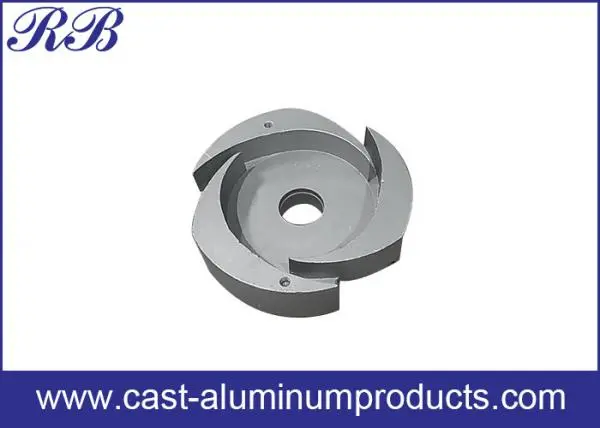
Blank Pretreatment: Laying the Foundation for Machining
The journey from low-pressure casting to finished product begins long before cutting tools contact the workpiece. Raw castings emerge from molds with surface irregularities, residual stresses, and dimensional variations that must be addressed systematically. Heat treatment protocols for A356 aluminum typically involve solution treatment at temperatures near 540°C, followed by quenching and artificial aging. These thermal cycles modify the microstructure, enhancing mechanical properties while stabilizing dimensions. Without this step, machining operations may encounter unpredictable material behavior as internal stresses redistribute during cutting.
Shot blasting follows heat treatment, removing oxide layers and surface contaminants through high-velocity abrasive media impact. For gear components weighing approximately 2 kg, steel shot with diameters between 0.6 and 1.2 mm provides adequate cleaning without excessive material removal. The process duration varies based on casting complexity, but typically ranges from 3 to 8 minutes. Operators must monitor blast intensity carefully; excessive treatment roughens surfaces unnecessarily, while insufficient blasting leaves contaminants that interfere with subsequent measurements and machining.
Inspection protocols at this stage focus on identifying casting defects that may compromise final quality. Dimensional checks using coordinate measuring machines verify that critical features fall within allowable ranges for machining stock. Radiographic or ultrasonic testing detects internal porosity, particularly in sections where pressure distribution during low-pressure casting may have been suboptimal. Components failing these checks require disposition decisions: rework if defects are minor and superficial, or rejection if structural integrity is questionable. One supplier in Xi'an, China reports that approximately 6% of castings require additional evaluation at this stage, with roughly 2% ultimately rejected.
Material certification accompanies each production batch, documenting chemical composition and mechanical properties. A356 alloy specifications require silicon content between 6.5% and 7.5%, with magnesium near 0.35%. These elements influence machinability and final strength. Tensile strength typically reaches 240-280 MPa after proper heat treatment, while elongation ranges from 3% to 6%. Machinists reference these properties when selecting cutting parameters, as variations affect chip formation and tool wear rates.
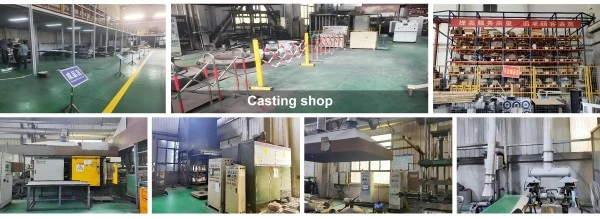
CNC Precision Machining: Core Steps
Computer numerical control systems translate design specifications into precise tool movements, removing material with repeatable accuracy. Programming begins with CAD models converted to toolpaths through CAM software. For low-pressure casting gear parts with complex geometries, five-axis machining centers provide necessary access to multiple surfaces without repositioning workpieces. Fixture design proves critical; inadequate clamping allows vibration and movement, degrading surface finish and dimensional accuracy. Hydraulic fixtures with contact pressures distributed across non-critical surfaces provide stable mounting while avoiding deformation of thin-walled sections.
Roughing operations remove bulk material rapidly, establishing approximate final geometry while leaving machining allowances for finishing. Carbide insert tools with appropriate rake angles and nose radii balance cutting forces and surface quality. For A356 aluminum, cutting speeds between 300 and 600 meters per minute prove effective, with feed rates adjusted based on depth of cut and desired chip thickness. Coolant delivery through spindle and tool holders maintains temperature control, preventing built-up edge formation that degrades surface finish. Chips evacuate continuously through high-pressure air or liquid streams; accumulation interferes with cutting and damages finished surfaces.
Semi-finishing and finishing operations progressively refine surfaces to specified tolerances. Gear tooth profiles require particular attention, as dimensional errors directly affect meshing characteristics and load distribution. Ball nose end mills generate smooth contours in fillet regions, while specialized gear cutters or grinding operations produce tooth flanks meeting ISO tolerance grades. Surface roughness targets typically fall between Ra 0.8 and Ra 3.2 micrometers, depending on functional requirements. Measurement occurs at regular intervals using contact or optical profilometers, with statistical process control charts tracking trends that might indicate tool wear or process drift.
Threading, drilling, and tapping operations create mounting interfaces and fluid passages. Peck drilling breaks chips when producing deep holes, preventing jamming and tool breakage. Thread milling with helical interpolation provides flexibility for various thread forms without dedicated taps, though conventional tapping remains common for standard threads. Coolant selection influences chip evacuation effectiveness; water-soluble emulsions provide good cooling but may cause staining on aluminum if residues aren't removed promptly, while straight cutting oils offer superior lubrication with minimal corrosion concerns.
In-process verification prevents cumulative errors. Probing systems integrated into machining centers measure critical dimensions without removing workpieces from fixtures. Detected deviations trigger automatic offset adjustments, maintaining tolerances despite tool wear or thermal expansion. This feedback mechanism proves essential when producing components in quantities approaching 5000 pieces annually, where manual intervention for eachlow-pressure casting part becomes impractical.
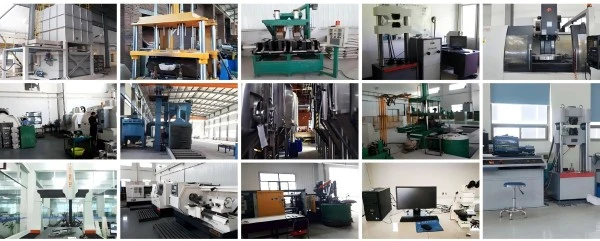
Post-Processing Inspection and Processing: Ensuring Compliance
Completed machining operations deliver low-pressure casting parts that must undergo comprehensive validation before qualification for assembly. Dimensional inspection employs coordinate measuring machines with touch-trigger or scanning probes, capturing geometry at hundreds or thousands of points across critical features. Measurement uncertainty analyses ensure that inspection capability exceeds tolerance requirements by adequate margins; a general guideline suggests measurement uncertainty should not exceed 10% of the tolerance being verified. For gear tooth profiles with tolerances of ±0.02 mm, this requires measurement systems with uncertainties below 2 micrometers.
Visual inspection identifies surface defects that automated measurements might miss. Trained inspectors examine machined surfaces under adequate lighting, noting scratches, dents, or discoloration that could indicate process issues. Burrs remaining after machining require removal through manual deburring or vibratory finishing, as sharp edges pose handling hazards and may interfere with assembly. The extent of deburring must balance edge break requirements with maintaining dimensional integrity; excessive material removal can violate tolerances.
Surface treatment reapplies protective finishes removed during machining. Additional shot blasting or bead blasting creates uniform matte appearances while introducing compressive residual stresses that enhance fatigue resistance. Chemical conversion coatings provide corrosion protection and improve paint adhesion when colored finishes are required. Each surface treatment introduces slight dimensional changes; process specifications must account for coating thicknesses to ensure final dimensions remain within tolerance bands.
Final certification documentation accompanies each low-pressure casting part or production lot. Inspection reports detail measured dimensions compared against drawing requirements, noting conformance or deviations. Material test reports verify alloy composition and mechanical properties. Production records trace each component through manufacturing stages, enabling traceability if field issues emerge. ISO 9001:2015 quality management systems, along with ISO 14001 environmental and ISO 45001 safety certifications, provide frameworks ensuring consistent implementation of these procedures.
Packaging for transportation protects finished components from damage during shipping. Wooden boxes with internal cushioning separate individual parts, preventing contact that could cause scratches or dents. Desiccant packets control humidity in sealed containers, minimizing corrosion risks during extended storage or transit. Proper packaging proves particularly important for components manufactured in Xi'an, China and shipped internationally, where transit times may span several weeks.
Custom specifications characterize much of this manufacturing domain. OEM and ODM arrangements allow customers to define specific requirements for their applications, whether modifying standard designs or developing entirely new geometries. Manufacturing systems must be able to adjust to changing needs while maintaining quality standards for a range of product configurations in order to attain this flexibility.
Contact Rongbao Enterprise
Processing gear components through CNC machining demands coordinated execution across multiple production stages. From initial blank preparation through final inspection, each operation builds upon previous work, with errors at any stage potentially compromising final quality. Precision machining combined with low-pressure casting capability opens up production routes that can produce parts that satisfy demanding performance standards. For dependable performance under challenging circumstances, fire pump impellers and related applications rely on this manufacturing discipline.
For manufacturers seeking expertise in low-pressure casting gear parts production and CNC machining services, Rongbao Enterprise in Xi'an,China provides comprehensive capabilities from initial casting through final inspection. Technical inquiries and project discussions may be directed to steve.zhou@263.net or zhouyi@rongbaocasting.com for detailed consultation regarding specific application requirements and production feasibility.
References
- Boothroyd, G., & Knight, W. A. (2006). Fundamentals of Machining and Machine Tools (3rd ed.). CRC Press.
- Kaufman, J. G., & Rooy, E. L. (2004). Aluminum Alloy Castings: Properties, Processes, and Applications. ASM International.
- Kalpakjian, S., & Schmid, S. R. (2014). Manufacturing Engineering and Technology (7th ed.). Pearson Education.
- Shaw, M. C. (2005). Metal Cutting Principles (2nd ed.). Oxford University Press.
- Totten, G. E., & MacKenzie, D. S. (2003). Handbook of Aluminum: Vol. 1 Physical Metallurgy and Processes. Marcel Dekker.
Learn about our latest products and discounts through SMS or email