- English
- French
- German
- Portuguese
- Spanish
- Russian
- Japanese
- Korean
- Arabic
- Greek
- German
- Turkish
- Italian
- Danish
- Romanian
- Indonesian
- Czech
- Afrikaans
- Swedish
- Polish
- Basque
- Catalan
- Esperanto
- Hindi
- Lao
- Albanian
- Amharic
- Armenian
- Azerbaijani
- Belarusian
- Bengali
- Bosnian
- Bulgarian
- Cebuano
- Chichewa
- Corsican
- Croatian
- Dutch
- Estonian
- Filipino
- Finnish
- Frisian
- Galician
- Georgian
- Gujarati
- Haitian
- Hausa
- Hawaiian
- Hebrew
- Hmong
- Hungarian
- Icelandic
- Igbo
- Javanese
- Kannada
- Kazakh
- Khmer
- Kurdish
- Kyrgyz
- Latin
- Latvian
- Lithuanian
- Luxembou..
- Macedonian
- Malagasy
- Malay
- Malayalam
- Maltese
- Maori
- Marathi
- Mongolian
- Burmese
- Nepali
- Norwegian
- Pashto
- Persian
- Punjabi
- Serbian
- Sesotho
- Sinhala
- Slovak
- Slovenian
- Somali
- Samoan
- Scots Gaelic
- Shona
- Sindhi
- Sundanese
- Swahili
- Tajik
- Tamil
- Telugu
- Thai
- Ukrainian
- Urdu
- Uzbek
- Vietnamese
- Welsh
- Xhosa
- Yiddish
- Yoruba
- Zulu
Casting Motor End Cover vs Machined Cover: Which Is Better?
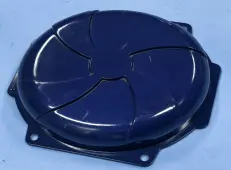
When choosing between a cast motor end cover and a machined alternative, the answer depends on your production volume, budget constraints, and quality expectations. For high-volume electric motor manufacturing requiring cost-effective solutions without sacrificing performance, casting motor end covers made from aluminum alloys like ADC12 offer excellent dimensional consistency, superior thermal management, and significant savings on per-unit costs. Machined covers, while delivering exceptional precision and surface finish, typically suit lower-volume applications where customization and tighter tolerances justify higher production expenses. Understanding these fundamental differences enables procurement managers to align manufacturing methods with operational goals and market demands.
Introduction
Electric motor assemblies require motor end covers to safeguard internals and align rotor and stator. These housings influence automotive, industrial automation, and power-producing motor lifetime, heat dissipation, and dependability. Choosing between casting and machining affects initial pricing, supply chain quality, and stability.
This study addresses global B2B buying managers, design engineers, and OEM executives. Workers are increasingly pressed to balance cost and quality. Cast or machined motor end covers cost more due to speedier delivery and millions of units sold yearly. Based on 20 years of manufacturing experience, our study addresses real procurement challenges.
Understanding Motor End Covers: Casting vs Machined
What Are Motor End Covers and Their Functions?
The shaft of electric motors passes through the stator housing; therefore, end covers are secured on both axial ends. These pieces secure the bearing groups, position the rotor, and support the motor unit. End caps provide mechanical safety and heat escape via fins and surfaces. This prevents motor overheating and efficiency loss. Covers are bolted to the stator body using precision bolt patterns to maintain air gaps between moving and static portions.
Material selection affects performance. Most motors nowadays are made of aluminum alloys because they transmit heat, are strong-to-weight, and don't rust. High-pressure die casting uses ADC12 aluminum alloy because it is more flexible with molten metal and has the mechanical properties for continuous motor running. Cast iron alternatives are robust and can handle severe duties, but they are too heavy for mobile equipment.
Casting Manufacturing Methods
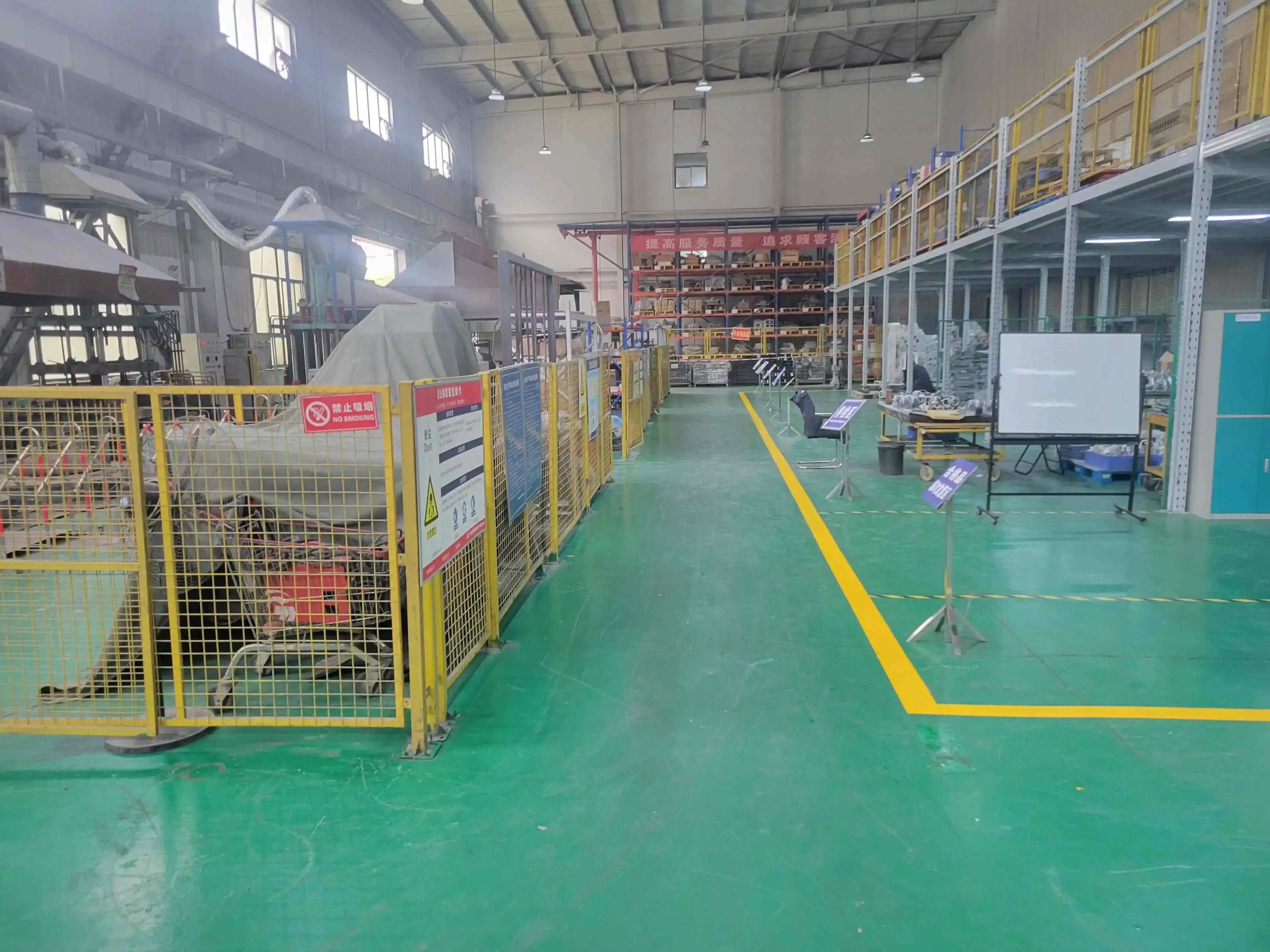
Put liquid metal into prepared molds to make motor end covers. This hardens the metal into near-net forms. Aluminum alloy is poured into steel dies at above 50 m/s in high-pressure die casting. This produces parts with wall thickness variations under 0.5 mm and surface roughness under 3.2μm. In less than 90 seconds, this approach can create 0.6-kilogram parts for mass manufacturing. Low-pressure casting fills molds from below with regulated pressure, reducing turbulence and gas entrapment and allowing larger pieces. Gravity casting motor end cover may be utilized for intricate designs with internal holes that don't need to be machined.
Machined Cover Production
Solid metal billets or forged blanks are used as starting materials for machining. Material is removed through CNC milling, turning, and drilling until the final shape is achieved. Programmable toolpaths are run by multi-axis machining centers, which can achieve tolerances of ±0.02mm and surface finishes of up to Ra 0.8μm. This method of subtractive manufacturing allows for endless geometric freedom, so design changes can be made without having to spend a lot of money on changing the tools. 40–60% of the material is wasted as chips and trash, which is very different from casting, which is very efficient (nearly net-shape). Lead times for made samples are days instead of weeks, which shortens the time it takes to make a new product.
Detailed Comparison: Casting Motor End Cover vs Machined Cover
Production Process and Cost Analysis
High-pressure die casting requires steel molds upfront. These molds cost $15,000 to $50,000, depending on part complexity and cavity count. More than 10,000 units are created each year, lowering the cost per unit for parts such as 0.6 kg ADC12 end covers to $2 to $5. Machines can create more than 1,000 pieces per day with 60–120 second casting cycles, meeting tight delivery dates for major projects.
Machined coverings don't need tools, but they cost more per unit since the machine works longer and wastes more material. A common end cover that takes 45 minutes to CNC manufacture costs $18–35. This implies machining is only suited for orders under 2,000 pieces or precise operations. During research, machining may be started in one week, whereas casting tool testing takes 6–9 weeks.
Material Properties and Performance Factors
Cast aluminum structures have consistent mechanical properties throughout their cross-sections. ADC12 metal has 240 MPa tensile strength and 3–5% elongation. Fine-grain microstructures from casting solidification make the material more fatigue-resistant under motor application's cyclic loading conditions. A thermal conductivity of 96 W/m·K facilitates heat transfer from motor windings to outside cooling surfaces.
Because they retain the parent material's worked properties, machined parts are frequently more ductile and impact-resistant than cast ones. Cutting doesn't modify how the material forms; therefore, its consistency remains. Surface integrity is excellent, and machined finishes eliminate casting faults such as porosity. Comparing comparable designs shows little weight difference. Casting enables you to integrate ribs and bosses that would otherwise be machined and assembled individually.
Common Quality Defects and Prevention
When dissolved gases solidify during casting, pores may develop. It might undermine the structure or cause leaks. Die casting factors including injection speed, melt temperature, and die preheating must be maintained to avoid gas trapping. Secondary CNC machining on cast blanks may disclose subsurface holes that necessitate vacuum filling or 2–5% production reject rates. Die wear must be managed to maintain batch dimensions. Important feature CPK values remain above 1.33 with regular maintenance.
Most machining faults are measurement errors induced by tool wear, thermal expansion, or workholding issues. Automatic inspection systems verify tolerances, and statistical process management may reduce failure rates below 1%. Tool condition and cutting settings affect surface finish. Tool replacement or parameter changes address these issues easily. Grinding's stability makes it more dependable than casting for quality.
Which Solution Fits Your Procurement Needs?
Volume Considerations and Economic Break-Even
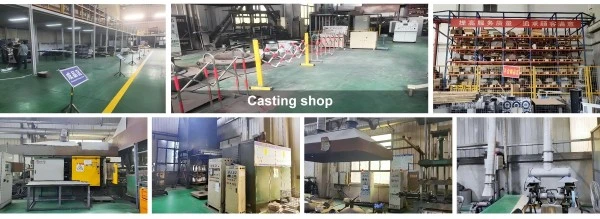
The amount of production is the main thing that determines whether to use casting or cutting. Break-even analysis shows that casting motor end cover can compete on price at about 5,000 units per year for simple shapes. This number drops to 3,000 units per year for complex shapes that take advantage of casting's shape-making benefits. When compared to machining, high-volume contracts that cover 50,000 to 500,000 pieces per year save 60 to 75 percent on each unit, which has a direct effect on how much motor assembly costs. With a daily production capacity of 1,000 pieces, Rongbao Enterprise can support both rapid prototype iterations through machining and mass production scaling through die casting.
Budget Priorities and Lead Time Pressures
Casting's economies of scale help procurement budgets that are limited by competitive pricing pressures, especially when tooling costs are spread out over multi-year supply agreements. Surface treatment costs must be included in the total landing cost analysis. Because cast parts are smooth when they are made, they don't need to be prepared as much before powder finishing or anodizing. When a new product needs to be introduced quickly, machining with no tools is best because it gives you more options. Once the design is set and the expected volume justifies the cost of tools, you can switch to casting.
Compliance and Quality Standards
ISO 9001:2015 certification makes sure that both manufacturing processes are managed in a systematic way. However, casting needs extra controls for the chemistry of the melt, the maintenance of the die, and the parameters for solidification. ISO 14001 and ISO 45001 standards show that a company cares about the environment and is committed to safety at work, which is necessary to participate in the global supply chain. The PPAP paperwork standards can be met by both casting and machining. First article approvals, material certifications, and dimensional inspection reports help the markets for both cars and heavy machinery.
Advantages and Disadvantages: Casting vs Machined Motor End Covers
Casting Advantages
The fundamental advantage of casting is that mass production is inexpensive. As manufacturing exceeds 10,000 pieces per year, unit costs fall. Design flexibility permits mounting bosses, cooling fins, and bearing pockets to be added without assembling the motor, lowering its cost. Material efficiency is about 95%, and scrap is low compared to cutting, which wastes material. Dies may be customized to handle diverse items while keeping prices low across all model ranges.
Casting cores and side actions allow complicated interior structures that are impractical to produce. For outdoor motor usage, powder coating sticks well to cast aluminum's somewhat rough as-cast appearance, making it rust-resistant. No need to acquire new equipment when a firm expands. Adding die holes to infrastructure boosts production.
Casting Limitations
Buying new tools for the first time can be expensive for projects with low volumes or unknown demand expectations. Design changes made after the tooling process require expensive changes to the die, which discourages engineering changes made late in the process. Porosity risks can be managed with process control, but they cause quality differences that are bigger than what can happen with machining. As-cast tolerances of ±0.3mm on important features may mean that they need to be machined again, which adds cost and complexity to the production process.

Machining Advantages
Geometric freedom without tooling limits speeds up product development and lets customers make changes that are unique to their needs. Tight tolerances of ±0.02mm and high-quality surface finishes get rid of problems with how the parts fit together and lower the friction at the bearing interfaces. You can choose from aluminum alloys, stainless steels, and other unique materials without any process limits. Due to machining's deterministic nature and real-time dimensional verification capabilities, quality consistency stays high.
Machining Limitations
The cost per unit is still too high for mass production, and the cost of putting together a motor could double compared to cast options. The amount of material waste that goes over 50% raises both the prices and the environmental worries of recycling scrap. Large contracts can't be scaled up because each machine can only make 10 to 30 pieces per day. To reach casting-equivalent capacities, a lot of money has to be spent on new equipment. When demand goes up faster than machines can handle, lead times get longer, and motor makers risk having to stop production lines.
Procurement Insights: Working with Casting Motor End Cover Suppliers
Manufacturer Qualifications and Certifications
ISO 9001:2015, ISO 14001, and ISO 45001 certifications reflect complete quality management systems when evaluating suppliers. These standards demand rigorous quality control, environmental preservation, and worker safety in all industrial activities. Mobility corporations benefit from automotive-grade IATF 16949, but not from industrial motors. Current customer factory audit reports include daily operational data not included in certificates.
Manufacturing capacity evaluations exceed certification. Process technology, equipment quality, and technical expertise are assessed. A vendor that does high-pressure die casting and CNC machining may hybridly machine cast blanks for accuracy. Twenty-year-old supplier Rongbao Enterprise understands processes, has strong customer relationships, and can profit in changing markets.
Quality Control and Inspection Protocols
Before melting and casting, incoming aluminum alloys pass spectrographic testing for ADC12 chemistry. In-process monitoring monitors die temperatures, injection pressures, and cycle lengths, and statistical process control discovers patterns before errors. Dimensional inspection using coordinate measuring equipment verifies essential elements of initial items and production samples, providing CPK data that confirms the operation can be done. Surface defect testing detects fractures and holes using dye penetrants.
All measurements should be documented, end caps that seal motors should be checked for leakage, and material certifications should describe how the alloy was made using mill test data. Shipping wooden boxes from Xi'an, China, to North America, Europe, and Asia is protected by packaging inspection.
Minimum Order Quantities and Customization Options
For profitable casting, orders must be 1,000–5,000 pieces. This justifies tool and setup costs. Established suppliers may handle smaller orders for customers or strategic partnerships. OEM and ODM solutions allow motor manufacturers to modify designs, mounting patterns, and functional characteristics to stand out in a crowded market. Die modifications allow specification variation, balancing engineering best practices and tool costs.
Discuss 6- to 9-week lead periods for new product launches, including tooling, sampling, and approval before mass production. Tooling validation and manufacturing conditions reduce repeat order lead times to 2–4 weeks. Vendor-managed inventory and consignment programs control demand and production.
Conclusion
Operating realities, manufacturing numbers, quality requirements, and budget must be considered while choosing between casting motor end cover. Casting is the most cost-effective approach to create more than 5,000 pieces per year because of economies of scale and near-net-shape material efficiency. Machining provides greater geometric flexibility and precision for samples, low-volume manufacturing, and exact dimensional accuracy. Fusion of cast blanks and secondary CNC operations enhances quality and cost for difficult applications. Procurement success requires production processes to match long-term corporate objectives and suppliers to provide a variety of process technologies, strong quality control, and helpful customer support.
FAQ
1. What precision limitations exist for casting motor end covers compared to machined versions?
Most parts can be made with measurement accuracy of ±0.15-0.3mm using high-pressure die casting. This is good enough for motor assembly needs where bearing pocket limits allow 0.05mm of space. Critical surfaces that need tighter tolerances, like shaft bearing bores, get extra CNC machining to get them to ±0.02mm. Covers that are machined keep tolerances of ±0.02mm on all features without having to go through any extra steps. However, this extra precision comes at a higher cost, which is only worth it when exactness is needed during assembly.
2. How can common casting defects be prevented in motor end cover production?
To stop pores, you need to keep an eye on the injection parameters, die venting, melt degassing, and melt degassing so that gas doesn't get trapped during cavity filling. With vacuum-assisted die casting, porosity can be cut down to less than 2% by volume, making the material suitable for use in pressure-tight situations. Monitoring die temperatures in real time stops cold shuts and filling that isn't done. Visual inspection and leak testing done automatically find broken parts before they are shipped. Vacuum impregnation can seal small holes in the structure if it doesn't affect the structural integrity.
3. When should procurement teams choose casting versus machining for motor end covers?
Choose casting when the number of units produced each year is more than 5,000, when combined features make the design easier, and when the goal is to save money on purchases. Machining is best for samples, small orders (less than 2,000 units), designs that change often, or tasks that need very high accuracy and surface quality. For middle numbers of 3,000 to 10,000 units per year, you might want to look at hybrid methods where key areas of cast blanks are machined. This will optimize both cost and performance.
Partner with Rongbao Enterprise for Your Motor End Cover Manufacturing Needs
Rongbao Enterprise is ready to help you with your motor-making needs by providing complete casting motor end cover solutions. They have been working with aluminum alloys for twenty years and have advanced die casting and CNC milling skills. Our factory in Xi'an makes 0.6 kg ADC12 end covers that are consistently of high quality, as shown by its ISO 9001:2015, ISO 14001, and ISO 45001 certifications. Our integrated manufacturing platform offers cost-effective solutions that meet international quality standards, whether you need to make more than 1,000 units per day or make OEM parts to exact specifications with precise CNC secondary operations and powder coating surface treatments.
Get in touch with our technical team to talk about your specific motor end cover needs, get detailed quotes, or set up factory audits that show off our full-chain manufacturing skills. Get in touch with us at steve.zhou@263.net or zhouyi@rongbaocasting.com to find out how working with a well-known casting motor end cover maker can help you get the best deals, lower your landed costs, and make sure your supply chain works well as your motor production grows.
References
1. ASM International Handbook Committee. "Casting Design and Performance." Materials Park: ASM International, 2009.
2. Boothroyd, Geoffrey, and Winston Knight. "Fundamentals of Machining and Machine Tools." CRC Press, 2006.
3. Campbell, John. "Complete Casting Handbook: Metal Casting Processes, Techniques and Design." Butterworth-Heinemann, 2015.
4. Kalpakjian, Serope, and Steven Schmid. "Manufacturing Engineering and Technology." Pearson Education, 2013.
5. Ravi, B. "Metal Casting: Computer-Aided Design and Analysis." PHI Learning, 2005.
6. Totten, George E., and D. Scott MacKenzie. "Handbook of Aluminum: Physical Metallurgy and Processes." Marcel Dekker, 2003.
Learn about our latest products and discounts through SMS or email