- English
- French
- German
- Portuguese
- Spanish
- Russian
- Japanese
- Korean
- Arabic
- Greek
- German
- Turkish
- Italian
- Danish
- Romanian
- Indonesian
- Czech
- Afrikaans
- Swedish
- Polish
- Basque
- Catalan
- Esperanto
- Hindi
- Lao
- Albanian
- Amharic
- Armenian
- Azerbaijani
- Belarusian
- Bengali
- Bosnian
- Bulgarian
- Cebuano
- Chichewa
- Corsican
- Croatian
- Dutch
- Estonian
- Filipino
- Finnish
- Frisian
- Galician
- Georgian
- Gujarati
- Haitian
- Hausa
- Hawaiian
- Hebrew
- Hmong
- Hungarian
- Icelandic
- Igbo
- Javanese
- Kannada
- Kazakh
- Khmer
- Kurdish
- Kyrgyz
- Latin
- Latvian
- Lithuanian
- Luxembou..
- Macedonian
- Malagasy
- Malay
- Malayalam
- Maltese
- Maori
- Marathi
- Mongolian
- Burmese
- Nepali
- Norwegian
- Pashto
- Persian
- Punjabi
- Serbian
- Sesotho
- Sinhala
- Slovak
- Slovenian
- Somali
- Samoan
- Scots Gaelic
- Shona
- Sindhi
- Sundanese
- Swahili
- Tajik
- Tamil
- Telugu
- Thai
- Ukrainian
- Urdu
- Uzbek
- Vietnamese
- Welsh
- Xhosa
- Yiddish
- Yoruba
- Zulu
Can a drain pipe have a 90 degree elbow?
A drain pipe can absolutely have a 90-degree elbow — and in many plumbing and industrial drainage systems, it's a standard solution. A cast elbow pipe rated for 90-degree turns allows fluid to change direction without interrupting flow integrity. When properly selected and installed, these fittings handle directional transitions efficiently. That said, choosing the right elbow type, material, and installation method matters significantly, especially in high-volume industrial applications where clogging, pressure drops, or joint failures can stall an entire production line.

Understanding 90-Degree Elbows in Drain Pipes
What Does a 90-Degree Elbow Actually Do?
A 90-degree elbow changes the flow of pipe at a right angle. It is essential in small areas where a straight run isn't possible. In drainage systems, these fittings help move rainwater or industrial flow around walls, beams, and equipment bases without having to reroute the pipe. As long as the fitting is used in a way that allows gravity flow or has cleaning access, the International Plumbing Code (IPC) says that 90-degree elbows can be used in drain lines.
Material fit plays a role in the choice. Because they are light and don't rust, PVC elbows are often used in industrial drains. Cast iron elbows meet ASTM A74 standards for sanitary drainage and are long-lasting and quiet. Different types of steel can handle higher pressures in industry settings. When exposed to chemicals, changing temperatures, and mechanical stress, each material reacts in a different way.
Common Challenges and Practical Fixes
Most people who have used 90-degree drain bends say that they make flow resistance higher. Sharp changes in slope cause turbulence, which can speed up the growth of sediment. To fix this, engineers often pair 90-degree elbows with long-radius designs (1.5D radius) when there is room, or they put cleanout ports next to elbow joints. The Uniform Plumbing Code says that slopes must be maintained at a rate of at least 1/4 inch per foot. This keeps water from standing at elbow joints.
Comprehensive Overview of Cast Elbow Pipes for Drainage
Manufacturing Processes and Material Properties
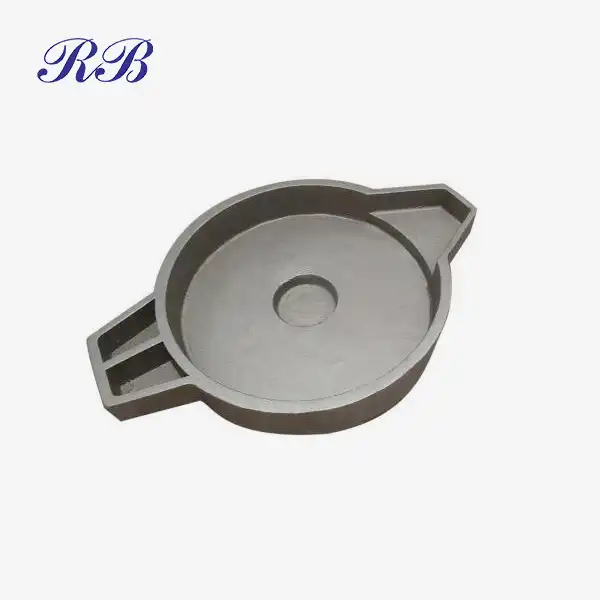
Different methods, like sand casting, investment casting, or die casting, are used to make a cast elbow pipe, depending on the size and shape requirements. Sand casting works best for making things with complicated shapes and in medium to large batches. The water drop channel part from Rongbao Enterprise is made from ZL101A aluminum alloy through sand casting, CNC machining, and shot blasting. It's an example of how casting can be used to make precise parts for specific drainage needs.
Cast iron, malleable iron, stainless steel, and carbon steel are all common materials used to make elbows. ASTM A536 says that ductile iron can withstand impacts and bend when loads are applied and removed. 304 or 316 grade stainless steel works great in places where it will rust. Carbon steel is a cost-effective way to make commercial drains that doesn't corrode. Aluminum ZL101A, which was chosen by Rongbao for this part, has a good strength-to-weight ratio (the finished part weighs only 0.56 kg), which lowers the structural load in systems with suspended drains.

Key Specifications That Drive Procurement Decisions
Usually, procurement engineers check cast elbow fittings against three groups of specifications. How well the elbow fits with nearby pipes and flanges depends on how accurately the dimensions are measured. The pressure number tells you if the fitting can handle surges in sewer lines that are under pressure. Whether the elbow uses ANSI, DIN, or JIS standards for its flanges affects how well it fits into existing systems. Rongbao's goods have ISO 9001:2015, ISO 14001, and ISO 45001 certifications, which show that they meet world standards for quality and size.
Comparing Cast Elbow Pipes with Other Elbow Types
Cast vs. Forged and Welded Elbows
Each way of making something has its own effect on how well it works. Cast elbows work well for medium-pressure uses and can handle complicated shapes. When elbows are forged under compressive force, the grains are denser, and they work better than cast versions in high-pressure, high-cycle environments, but they cost a lot more per unit. Welded joints, which are made from pieces of plate or pipe, give engineers more design options for large-diameter runs, but they also create heat-affected areas that can eventually become places where rust starts.
A cast elbow pipe is a good choice for general industrial drainage because it is affordable, easy to shape, and lasts a long time. It can carry process water, cooling runoff, or building stormwater. Forged alternatives should be thought about when the application calls for constant pressure above 600 psi or harsh chemical media.
Threaded vs. Socket Weld vs. Flanged Connections
Connection type affects installation speed, maintenance access, and leak risk. Here are the core distinctions relevant to drainage procurement:
- Threaded connections work well for low-pressure tasks with smaller diameters. They are easy to take apart for repair, but there is a small chance of leaks at the joint surfaces if the thread compound wears down.
- Socket weld connections make joints very strong for smaller pipe diameters (usually less than 2 inches), making a bond that is almost permanent and not easily broken by vibrations.
- Flanged connections dominate larger-diameter industrial drainage systems, which make it possible to take the whole system apart without cutting it. This makes maintenance easier in process facilities.
These differences have a direct effect on the total cost over the span. Flanged systems have higher hardware costs up front, but they have less downtime for long-term upkeep. This is a tradeoff that procurement managers at equipment makers carefully consider.
Stainless Steel vs. Carbon Steel Cast Elbows
Because it doesn't rust or react with chemicals, stainless steel is the best material for settings like food processing, pharmaceuticals, and sea drainage. Carbon steel is about 30–50% cheaper per fitting and works well in dry or slightly wet manufacturing areas. For procurement teams with yearly casting budgets between $70,000 and $450,000, this difference in cost gets a lot bigger when they place large orders. A key part of disciplined industrial buying is matching the material to the working setting instead of always using the best material.

How to Install a 90-Degree Cast Elbow in Drain Pipes: Best Practices
Pre-Installation Preparation
Before installing a 90-degree elbow, make sure that the centerline heights of the pipes on both the entry and exit sides match the shape of the elbow. Compare the pressure numbers to how the system is supposed to work. Get the right hardware for the connection (gaskets, pipe dope, or weld rods, based on the type of connection) and check the elbow's markings for accuracy against engineering plans. Surface cleanliness at the ends of pipes is a must; scale, burrs, or coatings at the joint interface make it more likely that a leak will happen.
Installation and Post-Installation Verification
Before you fix threaded joints or tack socket welds, make sure the ends of the pipes are lined up evenly. To make sure that gasket tension is spread out equally, cross-pattern bolt torquing is needed for flanged elbows. After the system is put together, it should be pressure-tested, usually at 1.5 times the maximum working pressure according to ASME B31.3 rules, before it is put into service. Flow testing under normal working conditions shows that the elbow junction does not have any partial blockages or misalignments. Writing down these steps cuts down on maintenance calls and helps with warranty claims if the fitting's performance changes later.
Procurement Guide for Cast Elbow Pipes in Drainage and Industrial Applications
Evaluating Suppliers: What Separates Reliable Sources
The most reliable cast elbow pipe providers have both approved quality management and production scale that can be shown. Certifications like ISO 9001:2015 show that the process is being followed correctly, and ISO 14001 and ISO 45001 show that the environment and workers' safety are being met. These are credentials that multinational equipment OEMs are increasingly looking for. In addition to credentials, buyers should look at the factory's ability to make a lot of items (Rongbao can make up to 5,000 pieces per run), the accuracy of the CNC machines used, and the consistency of the surface treatment (shot blasting for even surface profiles).
Logistical dependability is just as important. Rongbao sends finished parts in wooden boxes, which protect the parts during international shipping. This is useful for buyers going from Xi'an, China, to markets in North America, Southeast Asia, the Middle East, or South America.
Cost Drivers and Bulk Purchasing Strategy
When you make a volume promise, most casting supply chains will let you use tiered prices. Not only should you think about the cost per unit, but also the cost of amortizing tools over large orders, upgrading materials, and OEM/ODM customization fees. Rongbao Enterprise supports fully customized specs, which lets buyers consolidate orders for multiple components with a single seller instead of managing multiple vendor relationships. This is a real time and cost savings for procurement teams working on complex equipment builds.

Conclusion
Not only is a 90-degree curve in a drain pipe possible, it's often the best way to route the pipe in confined industrial settings. To choose the right fitting, you need to think about your drainage needs and then compare the material, connection type, pressure rating, and manufacturing process. For a reliable and affordable option, cast elbow pipes are best. These are especially those that are made by sand casting, finished with CNC machines, and certified to meet international quality standards. When you match the elbow specification to the real operating conditions, instead of over- or under-specifying, you get resilient drainage systems that don't need constant maintenance.
FAQ
Can a 90-degree elbow reduce drain flow rate?
Yes, a fast 90-degree turn does make flow more difficult than a steady bend. In gravity draining, this can slow the flow rate and cause sediment to build up near the elbow. This effect can be lessened by using long-radius bends (1.5D) and keeping the pipe slope correct. Any 90-degree fitting choice in a pressurized system should come with a Darcy-Weisbach pressure drop calculation.
What material is best for a cast drain elbow in industrial settings?
It depends on the way the message is being sent. ZL101A aluminum metal works well for water draining tasks where weight reduction is important. Ductile iron can handle places with a lot of impact. Corrosive chemicals can drain through stainless steel. Cost-effective, non-corrosive industrial drainage works well with carbon steel. In all situations, no one material stands out.
How many 90-degree elbows can a drain line have?
There is no limit on the number of elbows in most plumbing codes, but each one adds resistance. In straight horizontal runs, engineers usually limit the number of sharp 90-degree bends to three or less and make up for it with cleanout entry points. Using system flow models to make sure the elbow is in the right place before it is installed for good.
Does Rongbao offer customized drain elbow components?
Yes, Rongbao Enterprise offers full OEM/ODM customization, which includes custom specs, CNC machining, and surface treatment choices. They can make up to 5,000 pieces per run and have quality control that is ISO-certified.
Ready to Source Precision Cast Elbow Pipes? Contact Rongbao Enterprise
Rongbao Enterprise is a reliable company that has been making cast elbow pipes for 20 years. They have three ISO certifications and can do everything from sand casting to CNC finishing. We handle custom drainage parts in places around the world. You can email our team at steve.zhou@263.net or zhouyi@rongbaocasting.com, or you can go to rongbaocasting.com to see our full collection and get a price right away.
References
- International Code Council. International Plumbing Code (IPC). 2021.
- American Society of Mechanical Engineers. ASME B31.3: Process Piping. 2022.
- ASTM International. ASTM A74: Standard Specification for Cast Iron Soil Pipe and Fittings. 2022.
- ASTM International. ASTM A536: Standard Specification for Ductile Iron Castings. 2020.
- Uniform Plumbing Code. Uniform Plumbing Code (UPC). International Association of Plumbing and Mechanical Officials, 2021.
- Nayyar, Mohinder L. Piping Handbook. McGraw-Hill, 2000.
Learn about our latest products and discounts through SMS or email