- English
- French
- German
- Portuguese
- Spanish
- Russian
- Japanese
- Korean
- Arabic
- Greek
- German
- Turkish
- Italian
- Danish
- Romanian
- Indonesian
- Czech
- Afrikaans
- Swedish
- Polish
- Basque
- Catalan
- Esperanto
- Hindi
- Lao
- Albanian
- Amharic
- Armenian
- Azerbaijani
- Belarusian
- Bengali
- Bosnian
- Bulgarian
- Cebuano
- Chichewa
- Corsican
- Croatian
- Dutch
- Estonian
- Filipino
- Finnish
- Frisian
- Galician
- Georgian
- Gujarati
- Haitian
- Hausa
- Hawaiian
- Hebrew
- Hmong
- Hungarian
- Icelandic
- Igbo
- Javanese
- Kannada
- Kazakh
- Khmer
- Kurdish
- Kyrgyz
- Latin
- Latvian
- Lithuanian
- Luxembou..
- Macedonian
- Malagasy
- Malay
- Malayalam
- Maltese
- Maori
- Marathi
- Mongolian
- Burmese
- Nepali
- Norwegian
- Pashto
- Persian
- Punjabi
- Serbian
- Sesotho
- Sinhala
- Slovak
- Slovenian
- Somali
- Samoan
- Scots Gaelic
- Shona
- Sindhi
- Sundanese
- Swahili
- Tajik
- Tamil
- Telugu
- Thai
- Ukrainian
- Urdu
- Uzbek
- Vietnamese
- Welsh
- Xhosa
- Yiddish
- Yoruba
- Zulu
Why is aluminium used in die casting?
Aluminum is used in die casting because it combines low weight, good strength, easy mold filling, and wide finishing options in one material. Its density is about one-third that of steel, and molten aluminum fills thin walls and ribs well, which limits secondary machining. These traits also make aluminum die cast prototypes a practical way to test fit, strength, and heat behavior before a program moves to full tooling. In this article, I explain the material benefits, the prototype process, and the checks I recommend when you select a supplier for parts such as robot shells.

Why Aluminum Is a Preferred Die Casting Material?
Low Weight with Usable Strength
Aluminum is only about 2.7 g/cm³ dense, while steel is about 7.85 g/cm³ dense. That makes the difference so that joints and motors in a robot shell have less mass to move. This can help the building stay strong and save energy. The metal you pick is still important because you need to be strong. Aluminum, silicon, and magnesium are mixed together to make A356. It can be made stronger with T6 heat treatment, which involves heating it in a solution, letting it cool, and then making it age in a controlled way. People who want to buy something should always check the drawing and the purchase order to see what the requirements are for heat treatment and mechanical tests. Parts aren't always able to hold their weight just because they are light.
Castability, Thin Walls, and Integrated Features
It's easy for molten aluminum to flow into complicated holes. Alloys with silicon, like A356, melt at about 660 °C, and pure aluminum melts at about the same temperature. In one casting, a foundry can make thin walls, ribs, bosses, and mounting points. There are fewer parts and steps needed to put them together because of this. Because thick and thin parts of bot shells cool at different rates, it can be hard to control the wall thickness. This can leave weak spots or cause the shell to bend. A close look at the plan can help you find these spots early on. Small changes in thickness, big curves, and enough air flow can help the metal fill and harden evenly. That being said, I don't think this review is the most important part of the job.
Heat Transfer, Corrosion Resistance, and Recycling
Al alloys that are cast well move heat around. Like, A356 can move around 150 W/m·K of heat, so a shell can help electronics and drives cool down. Aluminum also makes a thin layer of natural oxide that protects it from rusting in regular air inside and in factories. The Aluminum Association says that recycling aluminum takes about 5% of the energy that is needed to make the metal in the first place. This is yet another good thing about recycling. The surface can be shot blasted, painted, powder coated, or anodized, but the finish needs to be right for the metal and the job. I believe that the finish should be set up ahead of time. One way to clean the surface and give it a uniform matte finish is to use shot blasting.
Aluminum Die Cast Prototypes: What They Are and How They Are Made
What Aluminum Die Cast Prototypes Are
These are test pieces or working models made of aluminum die cast prototypes that are die cast or cast in a way that is the same as the end process. In contrast to appearance models or CNC-machined samples, they show how real cast metal acts, including how the grains are structured, how the walls fill up, and how much they shrink. So, they can be used for parts of buildings that need to be checked out in real life or get customer approval. Each prototype is unique and checks the shape and fit. A pilot production then makes sure the process works again. Experts in the field say that making a sample of a metal casting helps engineers find weak spots and fill gaps before they start making the whole thing. Making changes to the design after the fact will cost less because of this.

How the Prototype Process Runs from CAD to Inspection
We will first look over your 3D CAD files and 2D models. Then, a design-for-manufacturing check looks at the walls' thickness, the draft, the ribs, the bosses, the parting lines, the gates, the vents, the ejection, and any risks like porosity and warpage. Then it's up to the provider to pick a method, like trial casting, low-pressure casting, fixed mold casting, or a mix of these. The cast is carefully melted and put into the mold. The team then cuts it to size, heat treats it if the alloy needs it, machines the important faces, applies the finish, and checks their work. Now I ask buyers for a goal plan, reports on measurements, and records of materials. These help me clear up and approve samples faster.
Why Low-Pressure Casting Suits A356 Parts
In low-pressure casting, the holding oven is below the block. It is under less than 1 bar of gas pressure that the liquid aluminum is pushed up a rising tube and into the hole. It presses down on the metal until it gets tough, then lets go of it. Everything that is still in the tube goes back to the burner. The fill is less rough because the metal comes in from the bottom. This makes it easier to keep the amount of air and metal particles low. It also gets stronger as it moves from the far end toward the riser. In other words, the raise keeps cutting metal as it shrinks. Some A356 robot shells need to be heated up and have thick, sound walls. These traits are good for them.
Performance Characteristics and Process Comparison
Dimensional Accuracy and Surface Condition
Tolerances for as-cast and machined parts are different, so I split them right away. CNC cutting is used to finish the sides that need to be very precise, like the bearing seats, sealing surfaces, holes, and threads. Casting is used for the main shape. Because these datums are on the drawing, the provider can't put strict limits on every feature. If they did, the costs of making, inspecting, and rejecting the part would go up. Paint, powder coat, anodize, or shot blast the surface to make it look like it was cast. Before production starts, I think everyone should agree on a reference sample and what kind of pores or marks are fine for the robot shells that can be seen.
Testing and Cost Structure
The sample and the plan are the same, as shown by tests. A CMM is often used to measure sizes, check for sharpness, look for leaks in sealed housings, and put the piece together on the real one. The metal was heated and strained to see if it became strong enough. This can be done on test bars or pieces cut from a casting. You should think about both price and quality. A fair price should have different lines for things like making the mold, casting, heating, milling, finishing, checking, packing, and shipping. You'll be able to see where the money goes and where a plan change could save it. Going back and making changes to work costs more, that's why an early design review usually pays for itself.
Casting Compared with CNC Machining, Sand Casting, and Investment Casting
How to make a prototype best depends on how many parts there are, what shape they are, how accurate they need to be, how much money you have, and how they will be made. It is very accurate to CNC machine from metal, and design changes can be made quickly for very small amounts. But a lot of stuff is taken away, and it doesn't act like casting. It works best for making big parts with rough edges that are only made a few at a time. Investment casting can handle fine features and some metals, but it costs more per part. Fixed mold and low-pressure casting are in the middle. They make sound metal and shapes that can be used again and again for medium volumes. When you need thin walls, built-in features, and the ability to make a lot of the same thing, aluminum die cast prototypes are the way to go. The sample way is the one I think you should use since it has the least chance of being made.

Applications and the Rongbao Enterprise A356 Robot Shell
Where Aluminum Die Cast Prototypes Are Used
The electronics, industrial equipment, robots, lights, market goods, and cars all make progress with the help of aluminum die cast prototypes. When working on cars, teams test battery covers, motor housings, and brackets in places where weight, strength, and consistency are important. Covers, mounting holes, EMI shielding, and heat escape are all checked by the people who make electronics. Parts like arm brackets, connecting frames, and outer shells are tested by robotics teams to make sure they are rigid, heavy, and fit together well. Durability and ease are checked on consumer goods. Along with what is needed for a regular prototype order, projects that deal with safety and flight need tracking, certified supplies, and inspection records. All of these groups use aluminum die cast prototypes to find issues with heat and assembly before the launch, when it's still inexpensive to make a change.
Product Specification: A356 Robot Shell
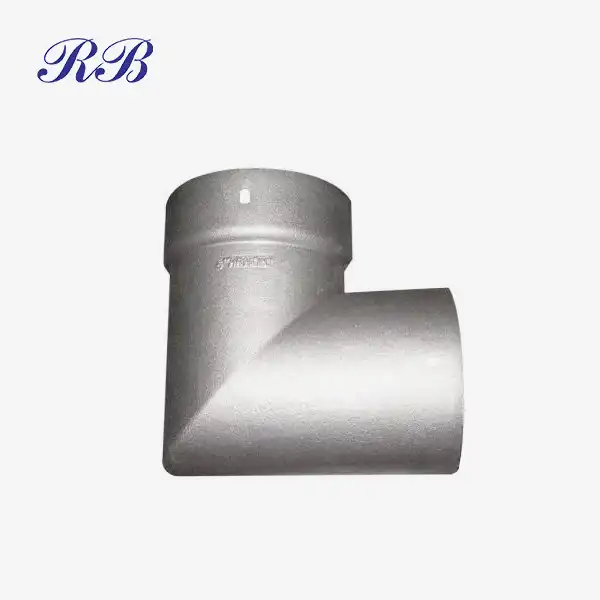
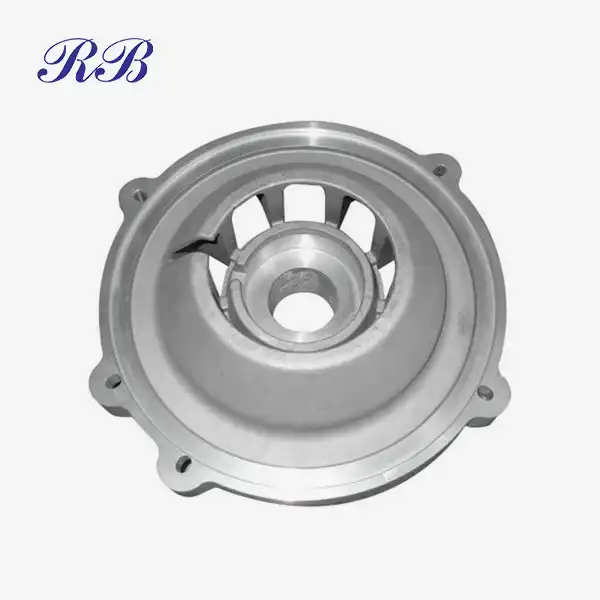
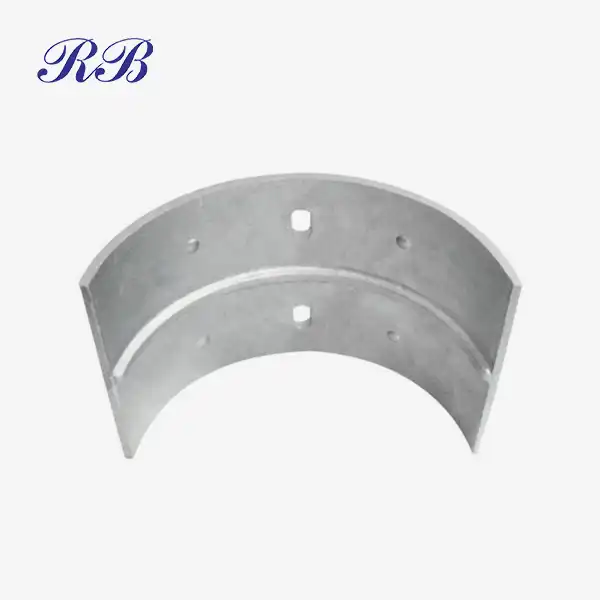
With a weight of 16.7 kg, the robot shell that Rongbao Enterprise makes is made from A356 aluminum. The low-pressure casting method is used to make it. CNC tools are used to shape and blast the shell, and it is shipped in a box to make it easy to ship. The specs we make must match your drawings, and we can do both OEM and ODM work. We can cast up to 5,000 of these parts in Xi'an, China, every month. The ISO 9001:2015, ISO 14001, and ISO 45001 marks are on file for our business. As a guide, please use these pictures. The final size, range, and finish will depend on the drawing you make.
Machining, Finishing, and Full-Chain Manufacturing
That's right, a shell is made when it comes out of the mold, not when it's done. We use CNC cutting to make sure that the sides, holes, and threads are all the same, and low-pressure casting to make the surface smooth. We can also cut very precisely, cast under high pressure, and cast by gravity. We can also make molds and treat the surface, so from planning to finishing, the whole project can be done by one team. From the time the raw materials come in until the finished product is sent out, we check everything. Buyers don't have to deal with as many sellers, and they can easily see who is responsible for fixing a measurement or surface.
How to Choose a Supplier and Avoid Common Mistakes
What to Check Before You Select a Supplier
A lot of your technical, cost, and time risks will be taken on by the supplier if you check their skills first. People who have worked with test tools, casting, CNC machining, surface finishing, inspection, and packing should be considered for the same job. Check out quality systems like ISO 9001, as well as records of how they were made, inspection reports, and certificates of materials. Ask about the company's ability, export papers, Incoterms, and the time it takes for engineers to respond. People from other countries should also do the same. Our team knows how to do these things because Rongbao Enterprise has been in this business for 20 years and sends about 70% of its goods to Europe, the US, and Japan. You can tell if a partner you can trust by how well they explain their design feedback and how well they build up to your goals.
How to Prepare a Buying Package
Every quote goes more quickly when the question is clear. List the reason for the order, such as making sure the process works, the fit is right, the temperature is right, or the customer approves. Then send the 3D CAD files, 2D drawings, mix and temper, important tolerances, surface treatment, test needs, quantity, packaging, and delivery information. Put a one-time sample, a small batch, and test amounts next to each other. Because they are spread out among the parts, the cost of the tools changes the unit price. For robots, where the design is often kept secret, make sure you know the privacy rules before you share files. The first item should be approved based on the model, the inspection report, and the acceptance criteria. It should then be kept as a reference sample.
Common Mistakes and How to Avoid Them
To avoid most problems, pick the wrong materials, set too strict standards, skip the design review, and pay too much attention to the unit price. Changes and flaws in the tools should be fixed on the screen, not in the steel. Rough edges, uneven wall thickness, not enough draft, deep pockets, and bad gate or vent placement are some of the things that can lead to flaws and tooling changes. Setting strict specs for every part will raise the cost, so only mark the measurements that are necessary for quality. Also, be fair when you rate samples because they may not have been made with the same tools or in the same conditions as mass production. Lastly, don't just pick something based on how light it is; also think about how strong it is, how well it resists rust, how much heat it needs, and how it's finished. Tests must be done on aluminum die cast prototypes to make sure they meet the important requirements.
Conclusion
If you want to die cast something, aluminum is a good choice because it is strong enough, doesn't rust, has a low density, and can fill thin-walled molds. It can also be finished with shot blasting and recycled. With A356, you can add strength that can be changed by heat. Low-pressure casting fills the mold from below under controlled pressure, which is good for making a robot shell. Aluminum die cast prototypes let teams check how things fit, how strong they are, how they look, and how they respond to heat before they make the real thing. When you compare CNC machining, sand casting, and investment casting, the best method depends on how many parts you need, their shape, and how accurate you need them to be. If you have clear drawings, realistic tolerances, clear inspection criteria, and a supplier who can cast, machine, finish, and inspect, you can be sure of the best results.

FAQ
What are aluminum die cast prototypes used for?
They check the fit, function, assembly, heat behavior, look, and ability to go through the process before they make the whole tool. Because they are made of real cast metal, aluminum die cast prototypes don't behave the same way as a mechanical copy.
Is casting cheaper than CNC machining for prototypes?
Rules aren't always useful because they depend on the number, the tools used, the shape, and the finish. CNC machining is good for small runs and often changing the design. Casted parts are cheaper when the cost of the tools is spread out over more of them.
What affects lead time and tolerance?
What happens after the machine is done, the part size, the alloy, the tools, the process control, and the tools all have an impact. Early on, you should decide what qualities are the most important. As-cast tolerances are not the same as machined tolerances. After that, our team can confirm a time for your drawing.
What should I send to receive a quote?
Send your 3D CAD files, 2D drawings, metal and temper, amount, key tolerances, surface finish, testing needs, and the date by which you need the goods to come. Once our engineers know these things, they can give you accurate design feedback and prices.
Request Aluminum Die Cast Prototypes from Rongbao Enterprise
Rongbao Enterprise has been in business for 20 years and is approved by ISO 9001, ISO 14001, and ISO 45001 to accept your 3D files and drawings. They can make aluminum die cast prototypes. Laser cutting, shot blasting, and low-pressure casting are all done by the same team for OEM/ODM projects. Our engineers will look over your plan and let you know what they think. Send an email to steve.zhou@263.net or zhouyi@rongbaocasting.com with more information, or visit rongbaocasting.com.
References
- ASM Handbook, Volume 15: Casting (ASM International), 2008
- Aluminum Alloy Castings: Properties, Processes, and Applications (ASM International), 2004
- Complete Casting Handbook (Butterworth-Heinemann), 2011
- Aluminum and Aluminum Alloys, ASM Specialty Handbook (ASM International), 1993
- Product Specification Standards for Die Castings (North American Die Casting Association), 2015
- Aluminum: The Element of Sustainability (The Aluminum Association), 2011
Learn about our latest products and discounts through SMS or email