- English
- French
- German
- Portuguese
- Spanish
- Russian
- Japanese
- Korean
- Arabic
- Greek
- German
- Turkish
- Italian
- Danish
- Romanian
- Indonesian
- Czech
- Afrikaans
- Swedish
- Polish
- Basque
- Catalan
- Esperanto
- Hindi
- Lao
- Albanian
- Amharic
- Armenian
- Azerbaijani
- Belarusian
- Bengali
- Bosnian
- Bulgarian
- Cebuano
- Chichewa
- Corsican
- Croatian
- Dutch
- Estonian
- Filipino
- Finnish
- Frisian
- Galician
- Georgian
- Gujarati
- Haitian
- Hausa
- Hawaiian
- Hebrew
- Hmong
- Hungarian
- Icelandic
- Igbo
- Javanese
- Kannada
- Kazakh
- Khmer
- Kurdish
- Kyrgyz
- Latin
- Latvian
- Lithuanian
- Luxembou..
- Macedonian
- Malagasy
- Malay
- Malayalam
- Maltese
- Maori
- Marathi
- Mongolian
- Burmese
- Nepali
- Norwegian
- Pashto
- Persian
- Punjabi
- Serbian
- Sesotho
- Sinhala
- Slovak
- Slovenian
- Somali
- Samoan
- Scots Gaelic
- Shona
- Sindhi
- Sundanese
- Swahili
- Tajik
- Tamil
- Telugu
- Thai
- Ukrainian
- Urdu
- Uzbek
- Vietnamese
- Welsh
- Xhosa
- Yiddish
- Yoruba
- Zulu
Low Pressure Die Casting VS High Pressure Die Casting
In the realm of metal casting, two prominent techniques stand out: low pressure die casting (LPDC) and high pressure die casting (HPDC). Both methods have their unique characteristics, advantages, and applications in various industries. This article aims to provide a detailed comparison between these two casting processes, focusing on their core principles, pressure differences, molds and equipment, and the resulting casting quality.
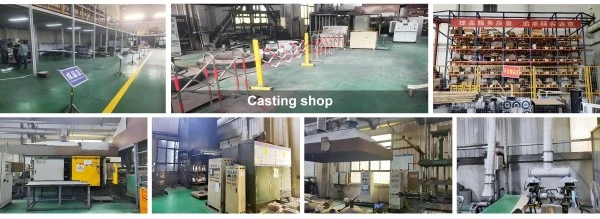
Core Principle and Pressure Difference
The fundamental distinction between low pressure die casting and high pressure die casting lies in the method of introducing molten metal into the die cavity and the pressure applied during the process.
Low pressure die casting operates on a relatively simple principle. The process begins with molten metal being placed in a sealed, pressurized furnace located below the die. As the name suggests, low pressure - typically ranging from 0.3 to 1.5 bar (30 to 150 kPa) - is applied to the surface of the molten metal. This pressure forces the metal upwards through a feed tube and into the die cavity. The metal fills the cavity from the bottom up, ensuring a controlled and even flow.
In contrast, high pressure die casting employs significantly higher pressures, usually between 20 to 120 MPa. In this process, molten metal is injected at high speed and under high pressure into a metal die. The metal is forced into all parts of the die cavity, including thin sections, resulting in precise, complex shapes with excellent surface finish.
The pressure difference between these two methods significantly impacts the casting process and the final product characteristics. Low pressure die casting's gentler approach allows for better control over the solidification process, resulting in improved mechanical properties and reduced porosity. High pressure die casting, with its rapid injection and high pressure, excels in producing thin-walled, complex parts with excellent dimensional accuracy.
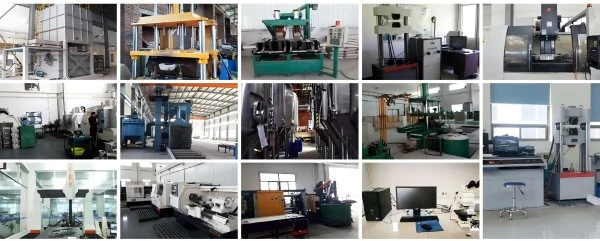
Molds and Equipment
The molds and equipment used in low pressure and high pressure die casting differ substantially, reflecting the unique requirements of each process.
In low pressure die casting, the mold, also known as the die, is typically made of steel or cast iron. The die is mounted above the furnace containing the molten metal. The lower part of the die incorporates a ceramic-lined steel tube, called the riser tube or feed tube, which extends into the molten metal. This setup allows for the controlled upward flow of metal into the die cavity.
The equipment for LPDC includes:
- A sealed furnace for holding the molten metal
- A pneumatic or hydraulic system for applying pressure
- The die, typically split into two or more parts for easy removal of the casting
- A cooling system to control the solidification rate
High pressure die casting, on the other hand, requires more robust equipment due to the higher pressures involved. The die in HPDC is typically made from tool steel to withstand the high pressures and temperatures. These dies are more complex, often incorporating moving parts (slides or cores) to create intricate shapes.
The HPDC equipment includes:
- An injection system (cold chamber or hot chamber) for introducing molten metal into the die
- A hydraulic system capable of generating and maintaining high pressures
- The die, which is mounted on a die casting machine
- A sophisticated cooling system to rapidly solidify the casting
- Ejector pins to remove the casting from the die
The choice between LPDC and HPDC equipment depends on various factors, including the desired production volume, part complexity, and material properties. LPDC equipment is generally less expensive and easier to maintain, making it suitable for smaller production runs. HPDC equipment, while more costly, offers higher production rates and is better suited for large-scale manufacturing.

Casting Quality
The quality of castings produced by low pressure and high pressure die casting methods can vary significantly, each with its own strengths and limitations.
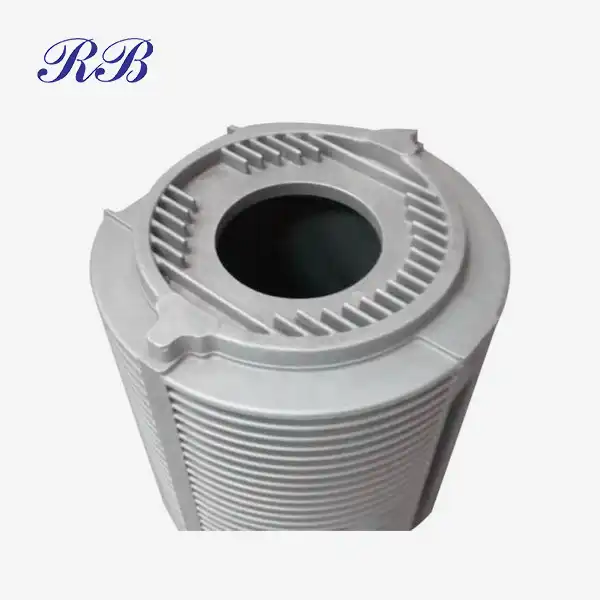
Low pressure die casting generally produces castings of higher metallurgical quality. The controlled filling of the die cavity from bottom to top results in less turbulence and gas entrapment, leading to reduced porosity. This process allows for better control over the solidification rate, resulting in a finer grain structure and improved mechanical properties. LPDC is particularly well-suited for producing parts that require high integrity and good mechanical properties, such as automotive wheels and cylinder heads.
Some key quality characteristics of LPDC include:
- Reduced porosity and gas entrapment
- Improved mechanical properties due to controlled solidification
- Good surface finish
- Ability to cast thicker sections compared to HPDC
- Lower levels of internal stress in the casting
High pressure die casting, while capable of producing parts with excellent surface finish and dimensional accuracy, can sometimes face challenges with internal quality. The high-speed injection of metal can lead to increased turbulence and gas entrapment, potentially resulting in porosity issues. However, advancements in die design and process control have significantly mitigated these issues in recent years.
Quality characteristics of HPDC include:
- Excellent surface finish
- High dimensional accuracy
- Ability to produce thin-walled and complex shapes
- High production rates
- Potential for some porosity, particularly in thicker sections
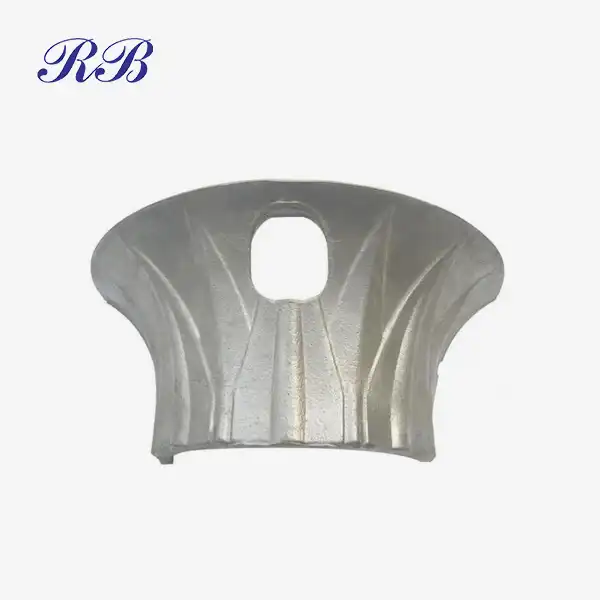
The choice between LPDC and HPDC often depends on the specific requirements of the part being produced. For components requiring high strength and integrity, such as those in the aerospace or automotive industries, LPDC might be preferred. For parts with complex geometries or those requiring high production rates, such as in the electrical and electronic industry, HPDC could be the better choice.
At Rongbao Enterprise, we specialize in both low pressure and high pressure die casting techniques, allowing us to offer tailored solutions to meet the diverse needs of our clients across various industries. Our expertise in aluminum alloy casting and precision processing, combined with our advanced production methods, enables us to deliver high-quality components that meet the stringent requirements of equipment manufacturers.
Contact Rongbao Enterprise
Both low pressure die casting and high pressure die casting have their unique advantages and applications. LPDC excels in producing high-quality castings with good mechanical properties, making it ideal for parts that require high integrity. HPDC, on the other hand, is unmatched in its ability to produce complex, thin-walled parts at high production rates.
The choice between these two methods depends on various factors, including the desired part geometry, production volume, material properties, and end-use requirements. As technology advances, both processes continue to evolve, with improvements in die design, process control, and simulation tools enhancing the quality and efficiency of both methods.
At Rongbao Enterprise, we leverage our expertise in both LPDC and HPDC to provide optimal solutions for our clients' casting needs. Our commitment to quality, as evidenced by our ISO 9001:2016 certification, ensures that we deliver components that meet the highest standards of the automotive, aerospace, medical, and electrical industries.
For more information about our die casting services and how we can help meet your specific requirements, please contact us at zhouyi@rongbaocasting.com or steve.zhou@263.net. Our team of experts is ready to assist you in choosing the best casting solution for your project.
References
- Campbell, J. (2011). Complete Casting Handbook: Metal Casting Processes, Techniques and Design. Butterworth-Heinemann.
- Andresen, B. (2005). Die Casting Engineering: A Hydraulic, Thermal, and Mechanical Process. CRC Press.
- Street, A. C. (2003). The Diecasting Book. Portcullis Press Ltd.
- ASM International. (2008). ASM Handbook, Volume 15: Casting. ASM International.
- Vinarcik, E. J. (2003). High Integrity Die Casting Processes. John Wiley & Sons.

Learn about our latest products and discounts through SMS or email