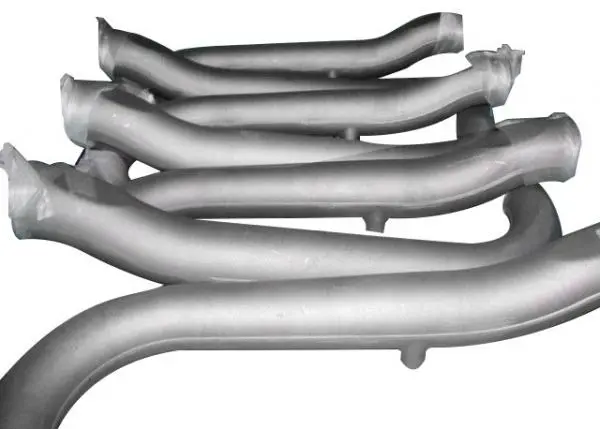
Mold Materials & Process
The Fundamentals of Gravity Die Casting
Gravity die casting, also known as permanent mold casting, utilizes metal molds typically made from cast iron or steel. In this process, molten metal is poured into the mold cavity and allowed to solidify under the influence of gravity.Compared to sand casting, the use of metal molds allows for greater surface polish and quicker production cycles.
Sand Casting: A Time-Tested Technique
Sand casting, on the other hand, employs disposable sand molds. Using this ancient technique, a design is made in the sand, removed to leave an imprint, and then molten metal is poured into the resultant hollow. While sand casting offers greater design flexibility, it generally results in slower production rates and rougher surface finishes than gravity die casting, also known as gravity casting.
Comparing Mold Longevity and Costs
The molds used in gravity die casting are more durable and can be used for thousands of castings before requiring replacement. For large manufacturing runs, this durability results in cheaper costs per unit.Sand molds, however, are single-use and must be recreated for each casting, making them more cost-effective for low-volume or prototype production.
Dimensional Accuracy & Surface Finish
Precision in Gravity Die Casting
Gravity die casting typically achieves superior dimensional accuracy and consistency compared to sand casting. The rigid metal molds maintain their shape throughout multiple casting cycles, resulting in parts with tighter tolerances and more repeatable dimensions.In sectors like automotive and aerospace, where component fit and performance are crucial, this accuracy is very useful.
Surface Quality Considerations
The surface finish of gravity die cast (gravity casting) parts is generally smoother and more uniform than that of sand cast components. This improved surface quality often reduces or eliminates the need for extensive post-casting finishing operations, saving time and costs in the production process. Sand cast parts, while more prone to surface irregularities, can still achieve acceptable finishes with proper techniques and post-processing.
Balancing Accuracy and Flexibility
While gravity die casting excels in producing parts with consistent dimensions and smooth surfaces, sand casting offers greater flexibility in terms of part geometry and complexity. Sand molds can accommodate more intricate designs and internal features that might be challenging to achieve with metal dies.When choosing a casting technique, this trade-off between accuracy and creative flexibility is crucial.
Part Size & Wall Thickness
Size Limitations in Gravity Die Casting
Gravity die casting is generally limited to smaller and medium-sized parts, typically weighing up to about 50 kg. The size constraints are primarily due to the practical limitations of handling and manipulating large metal molds. However, within this range, gravity die casting can produce parts with excellent dimensional control and thin wall sections.
The Versatility of Sand Casting
Sand casting and gravity casting excel in their ability to produce parts of virtually any size, from small components to massive castings weighing several tons. This versatility makes sand casting the preferred method for large, one-off castings or low-volume production of oversized parts. Additionally, sand casting can more easily accommodate varying wall thicknesses within the same part.
Optimizing Wall Thickness
Gravity die casting generally allows for thinner wall sections compared to sand casting, thanks to the rapid cooling rates achieved with metal molds. The automobile and aerospace sectors, where weight reduction is essential, benefit greatly from this capacity.Sand casting, while capable of producing thin-walled sections, may require additional design considerations to ensure proper metal flow and solidification.
In Conclusion
Both gravity die casting (or gravity casting) and sand casting have their unique strengths and applications. Gravity die casting offers superior dimensional accuracy, excellent surface finish, and is well-suited for high-volume production of smaller parts with thin walls.Sand casting, then again, gives unmatched flexibility in terms of portion measure and plan complexity, making it perfect for low-volume generation and large-scale components.
Factors like production volume, component size, dimensional requirements, surface polish requirements, and overall cost-effectiveness for your particular application should all be taken into account when selecting one of these casting techniques.By carefully evaluating these aspects, you can select the most appropriate casting technique to meet your manufacturing goals.

Gravity Casting Supplier: Rongbao Enterprise
One of the top manufacturers and suppliers of gravity casting solutions is Rongbao Enterprise. Since its establishment in 2003, Rongbao has gained over twenty years of experience and become a pioneer in the precise processing and casting of aluminum alloys.
Rongbao Enterprise specializes in providing customized gravity casting solutions with competitive pricing. Their expertise extends to a wide range of applications, including:
- Customized aluminum die casting robot arm parts for industrial automation
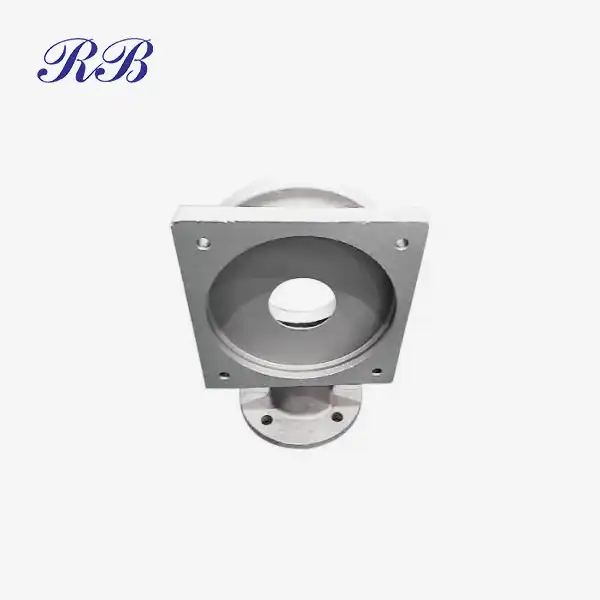
- Aluminum gravity cast flanges for various covers and enclosures
- Custom aluminum cast coupling flanges for fire pump bearing covers
- Threaded floor flanges for food machinery installation
- Casting lamp holders for decorative Roman columns
- Cast coupling flanges for telecom equipment support
- Stainless steel flanges for fire protection system components
With a commitment to quality, innovation, and environmental sustainability, Rongbao Enterprise has earned certifications in ISO 9001:2016 for Quality Management, ISO 14001 for Environmental Management, and ISO 45001 for Occupational Health and Safety Management.70% of their goods are exported to markets in the US, Europe, and Japan, indicating their worldwide reach and stellar reputation.
If you're in the market for precision gravity cast components or seeking to optimize your manufacturing processes, Rongbao Enterprise offers the expertise and capabilities to meet your needs.Together, you and their team of knowledgeable engineers and technicians may create unique solutions that meet your unique needs.
Ready to explore how Rongbao's gravity casting expertise can benefit your projects? Take the next step by reaching out for a free sample or consultation. Contact Steve Zhou at steve.zhou@263.net or Zhou Yi at zhouyi@rongbaocasting.com to discuss your gravity casting needs and discover how Rongbao Enterprise can deliver the high-quality, cost-effective solutions your business demands.