- English
- French
- German
- Portuguese
- Spanish
- Russian
- Japanese
- Korean
- Arabic
- Greek
- German
- Turkish
- Italian
- Danish
- Romanian
- Indonesian
- Czech
- Afrikaans
- Swedish
- Polish
- Basque
- Catalan
- Esperanto
- Hindi
- Lao
- Albanian
- Amharic
- Armenian
- Azerbaijani
- Belarusian
- Bengali
- Bosnian
- Bulgarian
- Cebuano
- Chichewa
- Corsican
- Croatian
- Dutch
- Estonian
- Filipino
- Finnish
- Frisian
- Galician
- Georgian
- Gujarati
- Haitian
- Hausa
- Hawaiian
- Hebrew
- Hmong
- Hungarian
- Icelandic
- Igbo
- Javanese
- Kannada
- Kazakh
- Khmer
- Kurdish
- Kyrgyz
- Latin
- Latvian
- Lithuanian
- Luxembou..
- Macedonian
- Malagasy
- Malay
- Malayalam
- Maltese
- Maori
- Marathi
- Mongolian
- Burmese
- Nepali
- Norwegian
- Pashto
- Persian
- Punjabi
- Serbian
- Sesotho
- Sinhala
- Slovak
- Slovenian
- Somali
- Samoan
- Scots Gaelic
- Shona
- Sindhi
- Sundanese
- Swahili
- Tajik
- Tamil
- Telugu
- Thai
- Ukrainian
- Urdu
- Uzbek
- Vietnamese
- Welsh
- Xhosa
- Yiddish
- Yoruba
- Zulu
How accurate is sand casting?
For most uses, sand casting can achieve physical limits of ±0.8 to 1.6mm (±0.03 to 0.06 inches), and the surface finish can be anywhere from 125 to 250 microinches Ra. Even though it isn't as precise as die casting or investment casting, it's accurate enough for many industry parts and doesn't cost nearly as much for the tools. The accuracy rests on things like the quality of the design, the type of sand used, the temperature of the molten metal, and the skill of the foundry. When this flexible manufacturing process meets their dimensional needs, buying professionals can make better choices when they know about these factors.
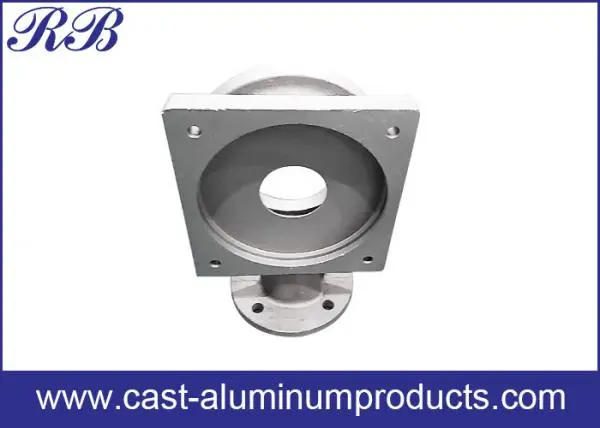
Understanding Sand Casting Accuracy
Dimensional Tolerances and Surface Quality Standards
In metal casting, the correctness of the dimensions depends on how the pattern design, mold materials, and process control work together. Normal sand casting tolerances are between ±0.8mm and ±1.6mm for most parts, but skilled foundries can get even better results and hit ±0.5mm tolerances with careful process optimization. The quality of the surface finish is between 125 and 250 microinches Ra, which is good enough for most structural uses but needs to be machined for precise contact surfaces.
The method of making the mold cavity has a direct effect on the end part's size. Green sand molds, which are made of clay cement and water, are accurate enough for most uses and are cheaper than other options. Resin-bonded sand systems have better surface finish quality and physical stability, so they can be used for parts that need to be more precise. When used correctly, no-bake sand molds can achieve margins of less than 0.3 mm, which is the best level of accuracy possible for sand casting.
Critical Factors Affecting Casting Precision
Accurate casts depend on the quality of the patterns. Especially for production runs of more than 100 pieces, metal patterns are more stable in terms of size than wood designs. Pattern wear, thermal expansion during filling, and mold parting line alignment all have a big effect on the accuracy of the end part. Draft angles of 1-3 degrees make it easier to remove patterns while reducing mold damage that could affect the accuracy of the measurements.
Shrinkage of molten metal is one of the most important things to think about when trying to reach goal dimensions. During solidification, iron ingots shrink by 1% to 1.3% and aluminum alloys shrink by about 1.3% to 1.6%. Pattern makers include shrinking adjustments to account for this effect and make sure that finished castings are the right size. The design of the gates affects the flow patterns of metal, which changes the accuracy of the dimensions and the quality of the surface by controlling the filling rates and lowering the noise.
Comparison with Alternative Casting Methods
Die casting allows for much smaller standards of ±0.1 to 0.2mm, but it costs a lot of money to buy the tools needed, anywhere from $50,000 to $200,000 per die set. The accuracy of investment casting is ±0.13mm, and the surface treatments are better. However, the method is more complicated, and each piece costs more. Sand casting is the best way to get the best mix of accuracy, tooling costs, and production freedom, especially for parts that need to be made in small quantities or that weigh more than 10 kilograms.
Permanent mold casting is more accurate than sand casting, and the cost of the tools is still fair for medium-volume production. However, geometry complexity limits mean that it can only be used on simple forms. Centrifugal casting is very accurate for making circular parts, but it's not very flexible when it comes to making parts with complex shapes, which is where sand methods shine.
Common Sand Casting Defects and Their Impact on Accuracy
Porosity and Internal Defects
The growth of pores seriously affects both the accuracy of measurements and the strength of structures. When gases dissolved in liquid metal form bubbles during solidification, they weaken the structure of the casting by forming holes inside it. This is called gas porosity. Shrinkage porosity forms in places where metal isn't fed enough during solidification, like in heavy parts or gating systems that aren't built well.
Before cutting starts, nondestructive testing methods like X-ray screening and ultrasonic testing find any internal porosity. To keep porosity to a minimum, modern foundries use statistical process control to keep an eye on gas content, filling temperatures, and cooling rates. Using the right degassing methods and the best gating design will keep gases from getting trapped and make sure there is enough flow to avoid shrinking flaws.
Surface Irregularities and Dimensional Variations
Surface flaws like sand particles, metal entry, and rough surfaces have a direct effect on the accuracy of the measurements and need extra finishing steps. Sand inclusions happen when mold erosion brings bits into the flow of molten metal. This makes the surface uneven, which changes both how it looks and how consistent its dimensions are. When metal goes through sand grains, it makes surfaces that are rough and need a lot of work to be finished properly.
Mold shift during filling causes differences in size that could make casts useless without fixing them with machine work. Using the right clamping methods and distributing the weight evenly keeps the mold from moving while the metal is being filled. A flask's design should include enough wall thickness and the right cope-and-drag arrangement to keep the dimensions stable during the sand casting process.
Warping and Distortion Prevention
When things are cooled, thermal stresses can cause warping that makes it hard to get the measurements right, especially in parts with thin walls or shapes that aren't symmetrical. Controlled cooling rates, which can be achieved through good mold design and heat treatment methods, keep thermal stress levels low. By placing chills and padding materials in a smart way, you can control the rate of solidification and lower the potential for damage.
Castings may change size during later machining processes because of residual stress patterns. Before precision machining starts, stress release heat treatment methods keep the casting's measurements stable. Knowing how a material reacts to thermal cycle helps foundries plan for and fix changes in dimensions, making sure that final parts meet the requirements.
Design Tips and Best Practices to Enhance Sand Casting Accuracy
Strategic Design Modifications
Using a draft angle of between 1-3 degrees makes pattern removal easier while reducing mold damage that affects the integrity of the dimensions. Different cooling rates can cause bending and changes in size, but uniform wall thickness design stops that from happening. Large fillet radii at section changes lower stress densities and improve the strength of the mold and the way metal flows.
When figuring out the shrinkage limit, you have to take into account the casting shape and the rate of contraction for each alloy. Allowances for shrinking of 1.3 to 1.6% are needed for aluminum alloys and 1.0 to 1.3% are needed for iron casts. Based on thermal gradient analysis and solidification pattern models, complex shapes may need different shrinkage rates in different directions.
Core Placement and Mold Design Optimization
By setting up the right support and opening, the placing of the sand core has a big effect on the accuracy of the measurements. Core prints keep things in place while letting them expand when they get hot during pours. If there is enough core releasing, gas pressure won't build up and change the shape of the core or make it move during metal filling.
Multiple parting line designs make it possible to make things with complicated shapes while still being reasonably accurate. Stepped parting lines can handle undercuts without needing extra pieces that make putting together the mold harder. Strategic core division makes it possible for complex internal routes to be built while still maintaining precise size control through careful building steps.
Process Parameter Control
Optimizing the pouring temperature strikes a balance between the need for flow and the need to minimize thermal stress. Too high of temperatures can cause changes in shrinking and thermal stresses, while too low of temperatures can lead to cold shuts and partial filling. Temperature tracking tools make sure that the temperature stays the same, which helps keep the dimensions stable from one production batch to the next.
Controlling the cooling rate through the design of the mold affects both the accuracy and the qualities of the material. Strategic placement of chillers speeds up cooling in heavy areas and stops flaws caused by shrinkage. Mold coating treatments improve the finish on the surface and act as thermal shields to control the rate at which heat is extracted during solidification.
Procurement Insights: Buying Accurate Sand Castings
Supplier Evaluation Criteria
Quality approval systems like ISO 9001, IATF 16949, and AS9100 show that a foundry is dedicated to using uniform methods and keeping an eye on dimensions. Implementing statistical process control gives us numerical proof of our ability to keep limits over long production runs. Calibration records for measuring tools make sure that measurements are correct throughout the whole manufacturing process.
Foundries are investing in improving accuracy by using new technologies like 3D printing for templates, computer-aided gating design, and automatic filling systems. Using simulation software to guess shrinking, heat stress, and defect formation shows high level of technical skill, which leads to better casting quality.
Quality Metrics and Documentation
Before production numbers start, first item inspection records provide standard dimensional verification. Capability studies show that the process has statistical control over important measurements and surface finish factors. The certificate of compliance makes sure that the material's makeup and heat treatment meet the standards of the specification.
The number of inspections and sample plans must match the volume and criticality needs of the output. For high-volume car uses, 100% dimensional verification may be needed, while random sampling methods may be used for construction equipment parts. Non-destructive testing methods, such as X-ray and acoustic screening, find problems inside products before they are shipped.
Rapid Prototyping and Custom Services
With prototype casting services, you can make sure that your idea works before you spend money on production tools. 3D printed models make it easy to make many changes quickly and check the size of design ideas. Virtual pattern libraries cut down on wait times for repeat orders and make sure that the same dimensions are used for all production efforts.
It is possible to make custom metals to meet specific material needs that normal alloys can't meet. Heat treatment optimization services make sure that the qualities of the material match the needs of the application while keeping the dimensions stable. Value-added services, such as machining and surface treatment, make it easier to handle the supply chain by offering full solutions for parts.
Conclusion
The realistic accuracy of sand casting's dimensions is ±0.8 to 1.6 mm, and it can be used for a wide range of complex geometries, big parts, and different material needs. When you know the limits of a process and how to improve it, you can make smart choices about buying that balance the need for accuracy with the need to save money. Choosing the right supplier, working together on the design, and taking quality control steps are all important for making sure that applications ranging from car parts to industrial tools work well. The key is to match the casting process's powers with the exact size needs of the part, while also using the foundry's knowledge to get the best results within the limits of the project.
Partner with Rongbao Enterprise for Precision Sand Casting Solutions
Rongbao Enterprise has been making accurate, reliable castings for 20 years, meeting the high standards of makers of cars, building equipment, and industrial machinery. We have ISO 9001, ISO 14001, and ISO 45001 certifications to back up our wide range of manufacturing services, which include high-pressure die casting, low-pressure casting, gravity casting, and precision cutting. Since 70% of our production goes to markets in Europe, the United States, and Japan, we know what high standards those markets expect. From concept to delivery, our sand casting experts work with your engineering teams to make sure that the parts are made correctly and to the right size. Are you ready to talk about the needs of your project? Get in touch with our team at steve.zhou@263.net or zhouyi@rongbaocasting.com to find out how our sand casting manufacturer services can help you with your next project to make a part.
FAQ
What tolerances can sand casting realistically achieve?
For most uses, standard sand casting tolerances range from ±0.8mm to ±1.6mm. In ideal situations, skilled foundries can get as close as ±0.5mm. How well a tolerance is met depends on the size of the part, how complicated its shape is, and how well the maker can control the process. Surface finishes are usually between 125 and 250 microinches Ra, which is good for structural uses but usually needs to be machined for precise surfaces.
How does sand casting accuracy compare to die casting?
The tolerances for die casting are ±0.1 to 0.2mm, while the tolerances for sand casting are ±0.8 to 1.6mm. Sand casting, on the other hand, can handle bigger parts, more complicated shapes, and a wider range of materials for much less money. Because of the trade-off in accuracy, sand casting is often the best choice for small-scale production or parts that need special metals.
Can sand casting produce aerospace-quality components?
Sand casting produces many aircraft parts, like structural frames, housings, and non-critical engine parts, are made by sand casting. Precision investment casting is often needed for main flight parts, but sand casting accuracy can work in many aerospace uses as long as it is combined with the right machining processes. Aerospace quality standards are met when foundries have the right approval and quality control methods in place.
What factors most significantly impact sand casting accuracy?
Pattern quality, choosing the right mold material, and process control are the main factors that affect accuracy. Compared to wood patterns, metal designs are more stable in terms of their dimensions. Green sand models are less accurate than resin-bonded sand methods. Temperature control, compensating for shrinking, and using the right gates all have a big impact on the finished dimensions.
References
- Campbell, John. "Complete Casting Handbook: Metal Casting Processes, Metallurgy, Techniques and Design." Butterworth-Heinemann, 2015.
- Brown, John R. "Foseco Foundryman's Handbook: Facts, Figures and Formulae." Elsevier Science & Technology, 2000.
- Beeley, Peter R. "Foundry Technology." Butterworth-Heinemann, 2001.
- ASM International. "ASM Handbook Volume 15: Casting." ASM International Materials Park, 2008.
- Stefanescu, Doru M. "Science and Engineering of Casting Solidification." Springer International Publishing, 2015.
- Heine, Richard W. "Principles of Metal Casting." McGraw-Hill Education, 1967.

Learn about our latest products and discounts through SMS or email